
Nioh 3 review: fast-paced freedom
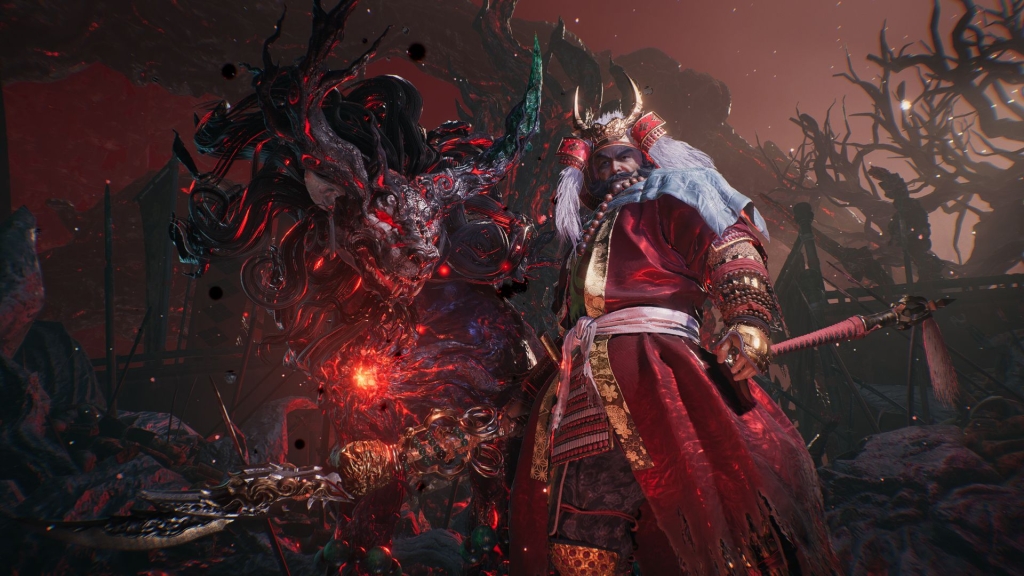
Nioh 3 Review: A Soulful Evolution That Raises the Bar
Six years after the last mainline entry (and a brief detour to Ancient China with Wo Long: Fallen Dynasty), Team Ninja’s premier soulslike series makes its triumphant return with Nioh 3. And trust me, this was absolutely worth the wait.
Review at a Glance
- Platform reviewed: PC
- Available on: PS5, PC
- Release date: February 6, 2026
Nioh 3 will feel immediately familiar to veterans of the series, but it’s clear Team Ninja has been taking notes from its other recent releases. The semi-open-world structure feels reminiscent of Rise of the Ronin, while the new style shift mechanic bears similarities to the moveset variety in Ninja Gaiden 4 or Stranger of Paradise: Final Fantasy Origin.
In essence, Nioh 3 feels like the culmination of everything Team Ninja has been working toward over the past decade. It’s a brilliant evolution of what made the series special—maintaining that lightning-fast combat and dizzying build variety—while introducing fresh elements that make this feel like a genuinely new experience.
As someone who adores Nioh 2 and considers it one of the best soulslike games ever made, I wasn’t sure Team Ninja could top it. But after spending considerable time with Nioh 3, I’m not sure I can go back to the previous formula.
That said, it’s not without its issues. Performance on PC is inconsistent—graphics options are plentiful, but the game struggles in denser environments and has a tendency to force DLSS, at least on my setup. The Ninja Style, while incredibly fun, feels slightly over-tuned. Enemies simply can’t keep up with your enhanced mobility, and the trade-off of not being able to replenish stamina via Ki Pulse isn’t much of a penalty.
Features like fast-travel between shrines, free respecs at any time, and the versatility of the style-switching system make Nioh 3 feel overall a bit easier than its predecessors. While it’s not as forgiving as Wo Long (with its incredibly generous parry system), there’s a more lenient difficulty curve that should welcome newcomers but might frustrate series diehards who won’t feel truly challenged until much later in the game.
Shifting Across Time
In the original Nioh, players controlled a set character—Irish swordsman William. Nioh 2 introduced character creation but relegated us to an unnamed protagonist. Nioh 3 strikes a balance between these approaches. We play as Tokugawa Takechiyo, but we maintain full control over their appearance and gender through the returning character creator.
After a brief tutorial, Takechiyo is thrust back in time to Japan’s Warring States period when their brother, Kunimatsu, stages a coup driven by jealousy over Takechiyo being chosen to succeed the shogunate. There, players ally with Tokugawa Ieyasu to prevent legendary warlord Takeda Shingen—in league with an army of yokai—from claiming power for himself.
The story begins in typical Nioh fashion. You’ll team up with (or face off against) historical figures from the period, including Hattori Hanzo and Ii Naotora. And roving bandits will be the least of your worries, as Japan has once again been overrun by yokai—demonic entities that take on various monstrous forms.
What’s different this time is the scope. While previous Nioh games typically took place over several years, Nioh 3 expands this concept to feature events across multiple generations and various time periods—each offering a completely new map to explore. The variety of locales is genuinely impressive, and Team Ninja has done a wonderful job providing a broad range of settings, some of which came completely out of left field.
It Takes Two (Styles)
So how’s the combat? Team Ninja has taken a boldly different approach this time around. The core gimmick of Nioh 3‘s combat is its dual styles. Samurai Style is, broadly speaking, Nioh as you know it. You can switch between mid, high, and low stances for various moves depending on your weapon type of choice. New here are Martial Arts, which you can activate after filling a gauge by landing attacks or successfully guarding. This style feels notably stronger and weightier than what I was used to in Nioh 2.
This creates a clear divide between Samurai and Ninja styles. The latter is much more agile—you move considerably faster in combat, and your dodging ability and attack speed are greatly enhanced. As mentioned, Ninja’s trade-off is that you can’t recover Ki via Ki Pulses as you can in Samurai Style. However, you recover Ki very quickly while in this form, which offsets the drawback quite a bit, at least in the first half of the game before the challenge really ramps up.
Ninja Style was definitely my preferred way to play much of Nioh 3. And given that Samurai and Ninja have their own unique weapon types and armor sets—of which you can form loadouts for both—you could certainly pick one style and stick with it. But as I progressed through the game, I found plenty of scenarios that played to the strengths of both.
Ninja’s ability to use magic, for example, makes it great for crowd control and dispatching enemies with elemental weaknesses. Samurai is fantastic in one-on-one duels against tougher opponents, as proper use of Martial Arts can quickly drain an opponent’s Ki for a quick and easy critical hit.
Get Out There
Nioh 3‘s shift to open field level design brings many worthwhile changes. You’ll no longer pick missions from a simple map screen. Instead, more detailed levels are integrated into a larger, explorable environment.
Each explorable area is divided into smaller parts, each with an exploration level. You’ll passively increase this as you explore, including finding new shrines, treasure chests, or clearing bases overrun by bandits or yokai. Increasing the exploration level of an area will gradually reveal things you can find within.
Getting as much exploration done as possible is definitely worth it. You’ll often find textbooks that allow you to learn new skills and Martial Arts, as well as no shortage of Samurai and Ninja’s Locks. These automatically grant you a skill point for their respective style and the weapon types therein. No longer do you have to grind out weapon usage to earn these skill points. If you find a new weapon type you’re desperate to try, you can load some points into it with little hassle.
That’s doubly true in Nioh 3, as you can freely reset and reallocate skill points at zero cost. I love this change, as it means you’re more actively encouraged to settle into a build that’s right for you.
Like in Code Vein 2, if you fancy a quick build change in Nioh 3, it’s blissfully easy to do. This also goes for your more general stats, which you level up at shrines. And handily, a diagram on this screen will let you know which stats work best for each weapon type. Super convenient, and means you’ll be spending less time stressing over builds and more time trying them out.
Thorough exploration also ties into the revamped Titles system, which is now broken down into categories and offers various permanent buffs and stat increases, such as healing item drop rates, stealth effectiveness (yes, you’ll really be racking up the backstabs in Nioh 3), and general melee attack damage against certain foes. Basically, actions like taking over bases or simply dispatching enemies in either Style will earn you points in their respective categories, which you can periodically redeem in the Titles menu.
There’s just a lot of stuff that contributes to your overall power in Nioh 3. To the point where it can make the first couple of chapters a bit of a cakewalk. Bosses, by and large, still present a steep challenge, and you’ll still run into a fair few gatekeepers to your progress. But overall, I’d say Nioh 3 is a touch easier than its direct predecessor.
Feeling the Heat
That is, of course, until you reach one of several Crucible areas. Crucibles are another addition I really love. Effectively acting as mid and end-of-chapter levels, a Crucible is an enormous yokai realm that comes with various gameplay modifiers—one of which is a reduction to your maximum health upon taking damage.
This makes Crucibles particularly dangerous. However, the rewards for exploring within are very much worth it, as it’s in these areas that you’ll typically find higher-end gear and earn more experience generally upon killing enemies. Crucibles are definitely a step-up in difficulty, and the demonic tone shift within them provides a suitably climactic bookend to each major area.
I didn’t think it was possible for Team Ninja to one-up Nioh 2 in as many ways as it has with Nioh 3, but I’m beyond pleased that it does. It’s a fresh-feeling take on the soulslike formula in general, combining Nioh‘s satisfyingly quick action with a richer, more fleshed-out world to explore.
The game could definitely use some work on PC in the performance department, and there are certainly some enemy types I wish the developer had left in the past (the snake-like Nure-Onna is the bane of my existence). But crucially, it’s a game I’ve often been unable to put down, if only to see what kinds of wonderful locations and bosses await around each and every corner.
Should I Play Nioh 3?
Play it if…
- You’re a fan of the Nioh series or soulslike games in general
- You enjoy fast-paced, skill-based combat with deep customization
- You appreciate games that blend historical settings with supernatural elements
- You want a challenging but accessible entry point to the genre
Don’t play it if…
- You prefer slower, more methodical combat
- You’re looking for a purely realistic historical experience
- You struggle with games that have steep learning curves
- You dislike games with limited accessibility options
Accessibility
Nioh 3 has some basic accessibility options. Full controller assignment and keybinds are supported. Subtitle options include size and the ability to display the speaker, and sound effect captions are available.
Colorblind settings are limited, but there is an option to alter the color perception settings of important text and loot rarity color patterns. There’s also an option for the game to play a sound effect when you get near an object that you can interact with, such as doors, characters, and items.
How I Reviewed Nioh 3
My playthrough of Nioh 3 lasted around 50 hours, including the main campaign and a huge chunk of exploration and side objectives.
I played the game on PC (via Steam) for this review, with an Nvidia GeForce RTX 5060 GPU and primarily using the 8BitDo Ultimate 2 as my controller of choice. I also made use of the Nacon RIG 900 Max HS gaming headset to experience the game’s atmospheric audio design.
First reviewed February 2026
Tags: #Nioh3 #TeamNinja #Soulslike #ActionRPG #GamingReview #PCGaming #PS5 #WarringStates #Yokai #Samurai #Ninja #GameReview #MustPlay #GamingNews #TechRadarReview
Viral Sentences:
- “Nioh 3 is the soulslike evolution we didn’t know we needed”
- “Team Ninja has outdone themselves with this masterpiece”
- “The dual-style combat system is an absolute game-changer”
- “Nioh 3 makes me question if I can ever go back to Nioh 2”
- “This is what happens when developers truly understand their craft”
- “Crucibles are the perfect blend of challenge and reward”
- “Nioh 3 proves that sometimes, waiting six years is absolutely worth it”
- “The most accessible soulslike that still respects the genre’s roots”
- “Team Ninja has created a combat system that’s both familiar and revolutionary”
- “Nioh 3 is the culmination of a decade of game design excellence”
,


Leave a Reply
Want to join the discussion?Feel free to contribute!