
Senators grill Waymo and Tesla over robotaxi safety, liability, and China
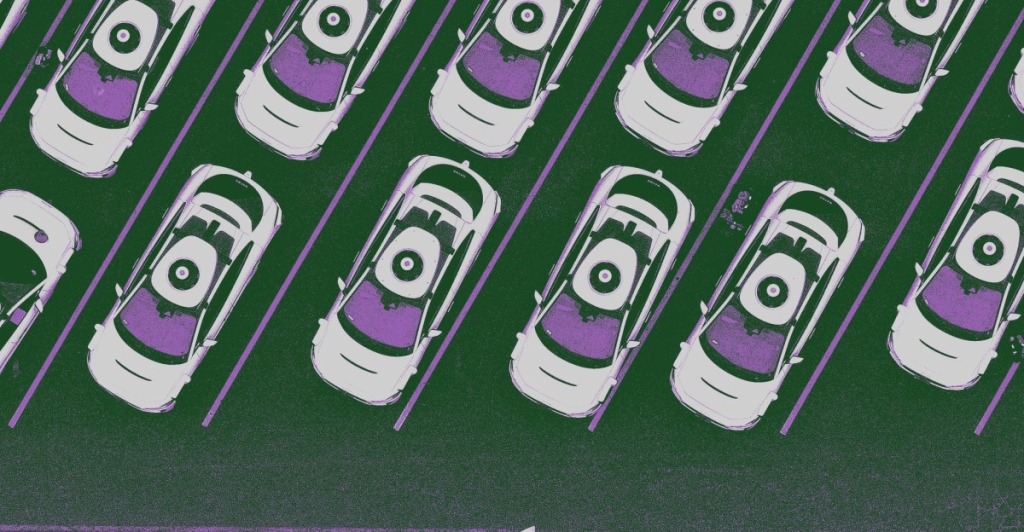
Senate Hearing on Autonomous Vehicles: Heated Debate Over Safety, Liability, and China’s Rising Influence
In a pivotal two-hour Senate hearing Wednesday, top executives from Waymo and Tesla faced intense scrutiny from lawmakers over the future of self-driving cars in America. The hearing, led by Sen. Ted Cruz (R-TX), highlighted the deep divisions in Congress over how to regulate autonomous vehicles (AVs) while addressing mounting safety concerns and geopolitical competition.
The Safety Question Dominates
Both Waymo and Tesla executives emphasized safety as their guiding principle, but lawmakers were quick to challenge their claims with specific incidents.
Waymo faced pointed questions about its decision to use Chinese-made vehicles for its next-generation robotaxi platform and several troubling incidents where its vehicles failed to stop behind school buses during student pickups. The company’s recent incident in Santa Monica, California, where a robotaxi struck a child at low speed, also drew significant attention.
“We are collecting data across different lighting patterns and conditions, integrating those learnings into our system,” said Mauricio Peña, Waymo’s chief safety officer. However, he notably failed to mention that Waymo’s vehicles were recorded illegally passing stopped school buses even after issuing a software update meant to address the problem.
Tesla’s Lars Moravy, vice president of vehicle engineering, argued that “for America to lead in AV technology, we must modernize regulations that inhibit the industry’s ability to innovate.” He emphasized that current federal regulations haven’t kept pace with technological advancements like electric drivetrains, automated driving systems, and over-the-air software updates.
Tesla Under Fire for Marketing and Safety Practices
Sen. Maria Cantwell (D-WA) delivered a blistering critique of Tesla’s practices, particularly its marketing of Autopilot technology. “Tesla was allowed to market their technology, which they knew needed human supervision, as Autopilot because there were no federal guardrails,” she stated.
Cantwell also raised alarms about the National Highway Traffic Safety Administration (NHTSA) losing 25 percent of its workforce under Elon Musk’s DOGE initiative, leaving the Office of Automation with only four staff members at one point. “Are we going to just continue to let people die in the United States?” she asked. “Without strong federal oversight, it’s no wonder states are seeking to fill the void.”
The China Factor Looms Large
China emerged as a major point of contention during the hearing. Autonomous Vehicle Industry Association CEO Jeff Farrah warned legislators that China could become the “global leader” in autonomous vehicles without congressional action.
The issue hit particularly close to home for Waymo when Sen. Bernie Moreno (R-OH) pressed the company on its decision to use Chinese-made vehicles. Current US law prohibits importing vehicles with autonomous or connectivity software originating from China, but Peña explained that the Geely-made vehicles are stripped of all their software before arriving in the US.
“So giving a natural market to a Chinese company to ship us cars is making us better and creating more jobs for Americans?” Moreno said. “That’s completely ridiculous.”
Liability, Arbitration, and Remote Operations
Binding arbitration emerged as another flashpoint, with Cantwell declaring she would not support legislation that barred injured parties from suing robotaxi companies. Sen. Bernie Moreno expressed concern about driverless car companies relying on lengthy terms and conditions or arbitration clauses to limit accountability.
The hearing also addressed the role of remote operators in robotaxi operations. Sen. Ed Markey (D-MA) revealed that while some of Waymo’s operators are based in the United States, others are located abroad, specifically in the Philippines. Peña was unable to provide a percentage breakdown, which Markey criticized as alarming given the safety-critical nature of the role.
Markey also criticized Tesla for failing to put geographic limitations on its Autopilot and Full Self-Driving features, arguing that the company is failing to follow the best practices of every other AV company. “Tesla is putting American lives at risk,” Markey fumed. “And that is unconscionable.”
The Path Forward Remains Uncertain
Despite the intense scrutiny and heated exchanges, it remains unclear whether Congress can pass meaningful legislation to regulate autonomous vehicles. Cruz suggested the Surface Transportation Reauthorization Act could be a vehicle for AV regulations, but lawmakers remain deeply divided on the issue.
The hearing revealed a fundamental tension: while both companies claim safety as their priority, specific incidents and broader concerns about accountability, foreign influence, and regulatory oversight continue to raise doubts about the readiness of autonomous vehicles for widespread deployment on American roads.
As the AV industry continues to evolve at breakneck speed, the question remains whether Congress can act quickly enough to ensure American leadership in this critical technology while protecting public safety and maintaining national security.
Tags: #AutonomousVehicles #SelfDrivingCars #Waymo #Tesla #SenateHearing #AVRegulation #ChinaTech #Robotaxis #TransportationPolicy #RoadSafety
ViralSentences: “Tesla is putting American lives at risk.” “Are we going to just continue to let people die in the United States?” “That’s completely ridiculous.” “Without strong federal oversight, it’s no wonder states are seeking to fill the void.” “For America to lead in AV technology, we must modernize regulations.”
,
Leave a Reply
Want to join the discussion?Feel free to contribute!