
After decades of study I still find myself in awe, says biochemist
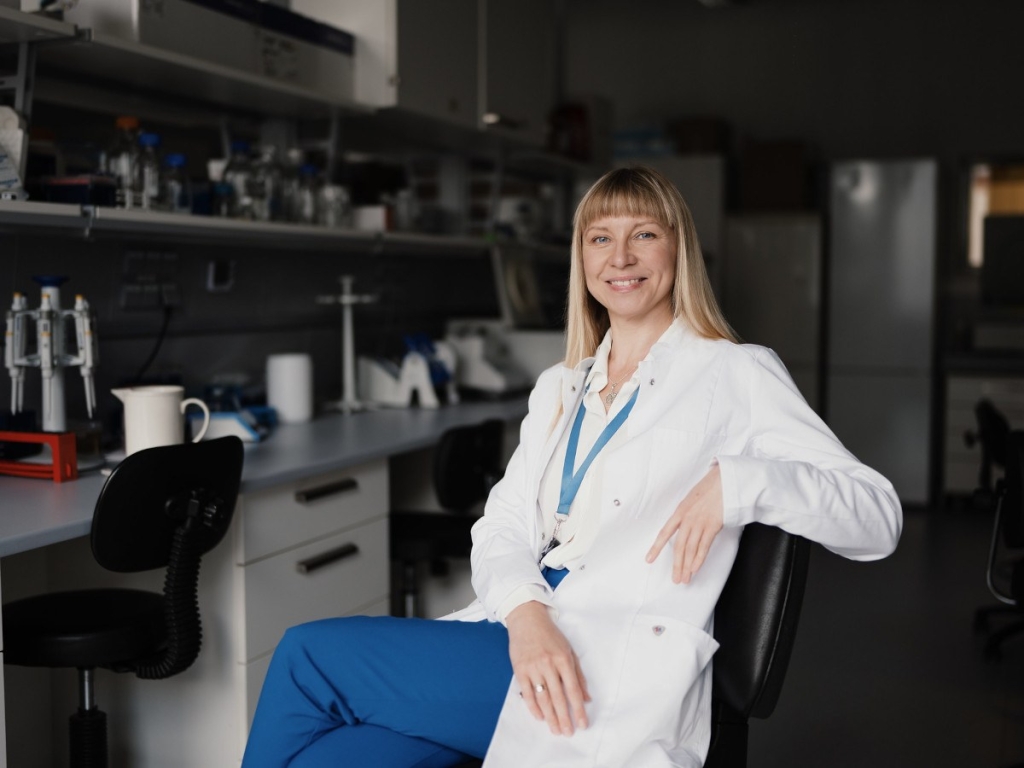
The Miraculous Complexity of the Human Body: A Deep Dive into Gene Regulation and Epigenetics
In a world where we often take our bodies for granted, Dr. Miglė Tomkuvienė, a distinguished senior researcher in biochemistry and epigenetics at Vilnius University, invites us to pause and marvel at the extraordinary complexity that exists within each of us. Our bodies, she explains, are nothing short of a miracle—a symphony of tens of thousands of genes working in perfect harmony across tens of trillions of cells. To a single bacterium, the human gut alone could seem like an entire universe, teeming with life and activity.
Dr. Tomkuvienė’s fascination with the human body stems from decades of rigorous scientific inquiry. “After decades of studies, I still sometimes find myself in awe contemplating how it works,” she shares. “It’s organized through layers of complexity, from nanometre-long molecules to those a bit more than 1.6 meters—my height.” This awe-inspiring complexity is not just a testament to the beauty of life but also a reminder of the intricate systems that sustain us.
At the heart of Dr. Tomkuvienė’s research lies the study of rare genetic mutations and deviations in select patients, conducted in collaboration with medical professionals. The goal? To unravel the mechanisms of gene regulation—the process by which the timing, location, and amount of gene expression are controlled. This research is pivotal in understanding human body development, the molecular pathways of disease, and paving the way for next-generation diagnostics and therapies for conditions with underlying epigenetic causes.
“Every cell of the human body carries the same genome,” Dr. Tomkuvienė explains, “but, amazingly, they form a variety of different organs. It comes down to tiny molecular machines called epigenetic regulators, which act on our DNA. They fine-tune different gene expressions for the needs of every cell.” When this delicate harmony falters, so does our health. It’s a reminder of how interconnected and finely balanced our biological systems are.
Breaking Down the Complexity
For many, grasping the sheer complexity of the human body can be a daunting task. Dr. Tomkuvienė offers a perspective that helps us appreciate the scale of this complexity. According to the latest data, the human body comprises 78 recognized organs, built from roughly 200 tissue types, creating between 30 trillion and 40 trillion cells in total. These cells operate on the genetic information of 20,000 to 30,000 protein-coding genes and additional regulatory DNA sequences.
“And this is only a fraction of the complexity our body has to deal with every day,” she notes. For us to remain healthy, all these parts and layers must function in harmony. Scientists often adopt a reductionist approach, studying one gene, one protein, or one organ at a time. However, Dr. Tomkuvienė emphasizes that these elements are deeply interconnected, making the generation of new findings and treatments a complex endeavor.
The challenges of aging and cell degeneration, she points out, are not new. They are woven into our evolutionary history, likely beginning when complex life first emerged on Earth. While these issues won’t be resolved overnight, the progress made in scientific research is crucial for improving the quality of life today. “Life expectancy nowadays is around 80 years old in the Western world,” she says, “but often people can only expect roughly 65 of those years to be free of disability or disease.” The burden of chronic, age-related diseases is immense, affecting not only individuals but also straining medical systems, economies, and social environments.
Dr. Tomkuvienė envisions a future where society as a whole strives to extend the expectancy of healthy life. “If we all—not only scientists but the whole of society—seek to extend the expectancy of healthy life, that would bring benefits for all,” she asserts. “People would stay active, productive, and—hopefully—happier for longer. The funds that are now spent on medical care would be available for other needs, leading to a more prosperous society.”
In collaboration with medical doctors, fellow scientists, and other key industry players, Dr. Tomkuvienė is hopeful that her team can not only reach a wider audience with their findings but also paint a broader picture of life, health, and longevity. For her, the most exciting aspect of a career in biochemistry is the “miracle of life—how it’s built, programmed using the genetic language of DNA, how it interacts with the environment, learns even at the molecular, epigenetic level, and evolves.”
She recalls the thrill of discovery: “The moment when you find out something new about the biochemistry of life and you know that this is the time when you are the only person in the world who knows it, and then you go share it with colleagues, peers, and society.” It’s a testament to the collaborative and ever-evolving nature of scientific inquiry.
As we reflect on Dr. Tomkuvienė’s insights, we are reminded of the profound complexity and resilience of the human body. It’s a call to appreciate the miracle of life within us and to support the scientific endeavors that seek to unlock its secrets for the betterment of all.
Tags: #GeneRegulation #Epigenetics #HumanBody #Biochemistry #Longevity #HealthScience #MolecularBiology #GeneticResearch #CellularComplexity #MedicalInnovation #AgingResearch #DNA #GeneExpression #ScientificDiscovery #HealthAndWellness #FutureOfMedicine #LifeExpectancy #CellularHarmony #EpigeneticRegulators #HumanGenome #MedicalBreakthroughs #HealthierSociety #ScientificProgress #BiologicalComplexity #CellularDevelopment #DiseasePrevention #GeneticMutations #EpigeneticCauses #MolecularMachines #HumanHealth #ScientificCollaboration #BiologicalSystems #GeneticLanguage #CellularLearning #EvolutionaryHistory #HealthierLife #MedicalAdvancements #ScientificInquiry #BiologicalMiracles #GeneticInformation #CellularHarmony #HealthScienceResearch #MedicalDiscoveries #GeneticComplexity #BiologicalHarmony #CellularFunction #GeneticResearch #EpigeneticScience #HealthAndLongevity #BiologicalResearch #CellularMechanisms #GeneticHarmony #HealthInnovation #ScientificUnderstanding #CellularComplexity #BiologicalDiscovery #GeneticRegulation #HealthAndScience #CellularHarmony #GeneticResearch #EpigeneticScience #HealthAndLongevity #BiologicalResearch #CellularMechanisms #GeneticHarmony #HealthInnovation #ScientificUnderstanding #CellularComplexity #BiologicalDiscovery #GeneticRegulation #HealthAndScience
Viral Sentences:
- “Our bodies are a miracle, built of tens of thousands of genes, playing in harmony in tens of trillions of cells.”
- “Every cell of the human body carries the same genome, but they form a variety of different organs.”
- “The moment when you find out something new about the biochemistry of life and you know that this is the time when you are the only person in the world who knows it.”
- “If we all—not only scientists but the whole of society—seek to extend the expectancy of healthy life, that would bring benefits for all.”
- “The chronic, usually age-related diseases that diminish the quality of our lives is a huge burden not only for a person but also has vast implications for the medical system, economics, and social environment.”
- “Life expectancy nowadays is around 80 years old in the Western world, but often people can only expect roughly 65 of those years to be free of disability or disease.”
- “It’s still the miracle of life—how it’s built, programmed using the genetic language of DNA, how it interacts with the environment, learns even at the molecular, epigenetic level, and evolves.”
- “For us to be healthy, all these parts and layers have to function in harmony.”
- “The most up-to-date information we have shows that the human body has 78 recognized organs, built of roughly 200 tissue types, creating between 30 trillion and 40 trillion cells in total.”
- “The burden of chronic, age-related diseases is immense, affecting not only individuals but also straining medical systems, economies, and social environments.”
,


Leave a Reply
Want to join the discussion?Feel free to contribute!