
Scientists Scanned a Black Rock From Mars And Found Something Surprising : ScienceAlert
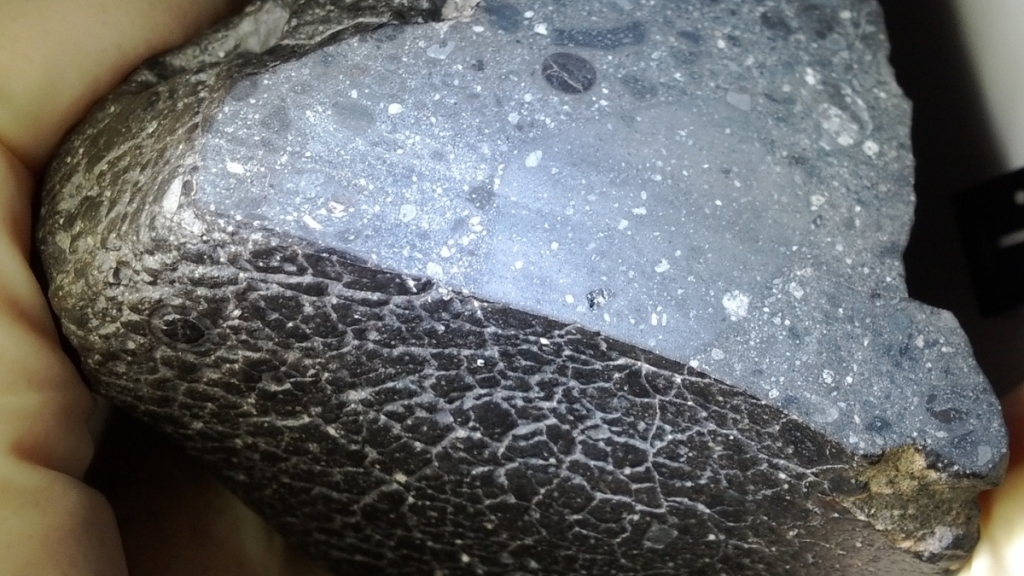
A groundbreaking new study has revealed that one of the most famous Martian meteorites ever found—NWA 7034, also known as “Black Beauty”—may hold far more water than previously thought, thanks to the use of cutting-edge non-destructive scanning technology.
Black Beauty is no ordinary space rock. It’s a 4.48-billion-year-old chunk of Mars, blasted off the Red Planet by an ancient impact and eventually landing on Earth. Its striking appearance and scientific significance have made it a prized specimen for researchers. Until now, studying such meteorites often meant sacrificing small portions—crushing or dissolving them—to unlock their secrets.
But a team led by Estrid Naver of the Technical University of Denmark has changed the game. Using advanced CT scanning techniques—both X-ray and neutron-based—they examined Black Beauty without damaging it. These scans allowed them to peer deep inside the meteorite and identify previously undetected “clasts,” or small rock fragments embedded within.
Among these clasts, the researchers discovered something extraordinary: Hydrogen-rich Iron oxyhydroxide (H-Fe-ox) deposits. Though these clusters made up only 0.4% of the sample’s volume, they contained up to 11% of the meteorite’s total water content. Considering Black Beauty itself holds an estimated 6,000 parts per million of water—a remarkably high amount for a Martian rock—this discovery is nothing short of revolutionary.
What makes this even more exciting is the broader implication: these findings align with recent discoveries by NASA’s Perseverance rover at Mars’ Jezero Crater, which also pointed to the presence of ancient liquid water. The fact that Black Beauty, from a completely different region of Mars, shows similar evidence suggests that water was once widespread across the planet’s surface.
The implications stretch beyond Mars. The non-destructive CT scanning methods used in this study could revolutionize how we analyze future samples from space missions, including potential Mars Sample Return missions. While such missions have faced setbacks, the technology is ready and waiting—offering a glimpse into a future where we can study pristine extraterrestrial materials without ever breaking them apart.
As scientists continue to unlock the secrets of Black Beauty and other Martian meteorites, one thing is clear: the story of water on Mars is far from over—and neither is our quest to understand the Red Planet’s ancient past.
#Mars #Meteorite #BlackBeauty #WaterOnMars #SpaceScience #PlanetaryGeology #MartianRock #NonDestructiveTesting #CTScanning #NeutronImaging #PerseveranceRover #MarsSampleReturn #ExtraterrestrialWater #AncientMars #SpaceExploration #ScienceNews #UniverseToday #EstridNaver #TechnicalUniversityOfDenmark #JezeroCrater #MartianImpact #SpaceRock #PlanetaryScience #Astronomy #NASA #MarsDiscovery #ViralScience #TechNews #SpaceTech #CosmicDiscovery #MarsHistory,


Leave a Reply
Want to join the discussion?Feel free to contribute!