
This Hidden 3D DNA Structure Changes What We Know About Cells
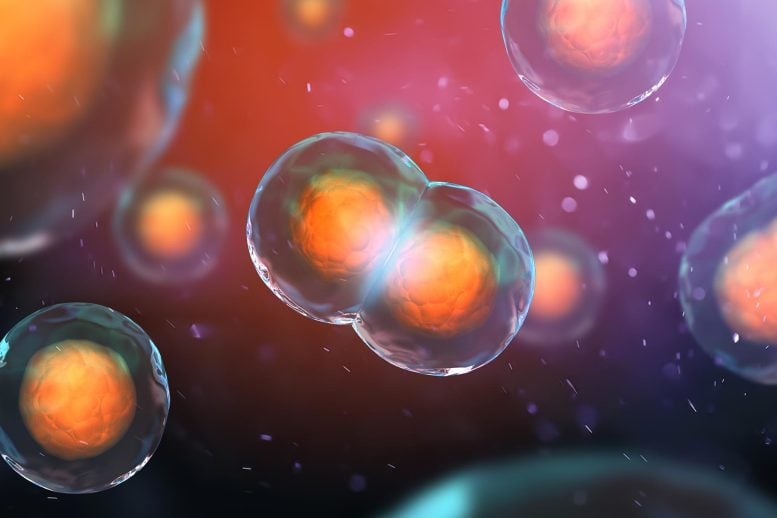
A Hidden 3D DNA Structure Changes Everything We Thought We Knew About Cell Division
In a stunning breakthrough that is already being hailed as a paradigm shift in cellular biology, scientists have uncovered a hidden three-dimensional DNA structure that persists even as cells divide—quietly preserving not just genetic code, but also the memory of how that code should behave. This discovery is rewriting textbooks and forcing researchers to reconsider the very mechanics of life at its most fundamental level.
For decades, the prevailing view among biologists was that during cell division—a process known as mitosis—the genome essentially “unwinds” and loses its structural organization. It was believed that as chromosomes duplicate and separate, the intricate three-dimensional folding patterns that define how genes are accessed and expressed are temporarily dissolved. This assumption underpinned much of our understanding of genetics, epigenetics, and even cancer research.
But now, a new study published in a leading scientific journal has turned that assumption on its head. Using cutting-edge imaging techniques and advanced computational modeling, researchers have discovered that the genome’s three-dimensional architecture remains remarkably intact throughout cell division. Not only does the DNA maintain its structure, but it also preserves crucial “epigenetic memory”—the chemical marks and organizational cues that tell genes when to switch on or off.
This revelation is nothing short of revolutionary. It means that the genome is far more dynamic and resilient than previously thought. Instead of being a passive repository of genetic information, DNA is now understood to be an active, three-dimensional entity that orchestrates its own regulation—even in the midst of one of the most chaotic processes in biology.
What This Means for Science and Medicine
The implications of this discovery are vast and far-reaching. For one, it could reshape our understanding of how cells “remember” their identity. Every cell in your body contains the same DNA, yet a skin cell behaves very differently from a neuron. This is largely due to epigenetic memory—chemical modifications that influence gene expression without changing the underlying DNA sequence. The new findings suggest that this memory is more robust and persistent than anyone realized, surviving even the tumult of cell division.
In the realm of disease, particularly cancer, this discovery could be a game-changer. Cancer cells are notorious for their genetic instability and their ability to hijack normal cellular processes. If the three-dimensional structure of DNA plays a crucial role in maintaining healthy gene expression, then disruptions to this structure could be a key driver of malignancy. Understanding these mechanisms could open up entirely new avenues for targeted therapies and personalized medicine.
Moreover, this research has profound implications for regenerative medicine and stem cell therapies. If scientists can learn to manipulate the three-dimensional architecture of DNA, they may be able to guide stem cells to develop into specific tissues or organs with unprecedented precision. This could accelerate progress in treating everything from spinal cord injuries to degenerative diseases.
The Science Behind the Discovery
So, how did researchers uncover this hidden structure? The answer lies in a combination of revolutionary technologies. Advanced microscopy techniques, such as super-resolution imaging, allowed scientists to visualize the genome in unprecedented detail. Meanwhile, computational biologists used machine learning algorithms to model the complex folding patterns of DNA in three dimensions.
What they found was astonishing: even as chromosomes condense and align for separation, the genome retains its higher-order structure. Specific regions of DNA—known as topologically associating domains, or TADs—remain intact, preserving the spatial relationships between genes and their regulatory elements. This continuity ensures that epigenetic marks are faithfully transmitted to daughter cells, maintaining the cell’s identity and function.
A New Era in Biology
This discovery is more than just a scientific curiosity—it represents a fundamental shift in how we understand life itself. The genome is no longer seen as a static, linear sequence of letters, but as a dynamic, three-dimensional entity that actively shapes its own destiny. As one researcher put it, “We’ve been looking at the genome through the wrong lens for decades. This is like discovering a hidden dimension of biology.”
The research community is already buzzing with excitement. Leading journals have published editorials calling this one of the most important discoveries in molecular biology in recent years. Conferences are being reorganized to focus on the implications of 3D genome organization, and funding agencies are redirecting resources to explore this new frontier.
What’s Next?
As scientists race to build on this discovery, the next big questions are already taking shape. How exactly does the genome maintain its structure during division? What are the molecular mechanisms that preserve epigenetic memory? And perhaps most intriguingly, could we harness this knowledge to reprogram cells, reverse disease, or even slow the aging process?
One thing is certain: the field of genomics will never be the same. This hidden 3D DNA structure is not just a scientific curiosity—it’s a window into the very essence of life, offering new hope for medicine, new insights into biology, and a renewed sense of wonder at the complexity of the natural world.
Tags & Viral Phrases:
3D DNA structure, hidden genome architecture, cell division breakthrough, epigenetic memory, mitosis secrets revealed, DNA folding patterns, topologically associating domains, TADs, super-resolution imaging, computational biology, machine learning in genomics, cancer research revolution, personalized medicine, stem cell therapy, regenerative medicine, gene expression regulation, molecular biology paradigm shift, genome organization, scientific discovery 2024, viral science news, biology breakthrough, life sciences innovation, DNA memory, cellular identity, disease treatment, aging research, Nobel Prize contender, must-read science, trending in biology, game-changer in genetics, mind-blowing science, future of medicine, DNA secrets uncovered, revolutionary research, cutting-edge technology, science explainer, biology explained, viral science article, must-share discovery, trending now, breaking science news, science community excited, new era in biology, DNA structure revealed, hidden dimension of life, science that changes everything, must-know for scientists, groundbreaking discovery, science that matters, biology that blows your mind, the future of genetics, science you can’t ignore, trending in research, must-read for biologists, viral in the lab, science that makes headlines, biology that changes the game, must-share with friends, science that inspires, DNA that remembers, the secret life of cells, science that redefines life, must-know for students, biology that excites, science that captivates, the next big thing in biology, must-read for innovators, science that leads the way, biology that astonishes, science that sparks curiosity, must-share with the world, DNA that shapes life, science that transforms, biology that empowers, must-know for everyone, science that enlightens, DNA that defines us, biology that connects, science that unites, must-share for progress, DNA that endures, biology that endures, science that endures, must-know for humanity, DNA that inspires, biology that inspires, science that inspires, must-share for hope, DNA that heals, biology that heals, science that heals, must-know for the future, DNA that evolves, biology that evolves, science that evolves, must-share for evolution, DNA that transforms, biology that transforms, science that transforms, must-know for transformation, DNA that matters, biology that matters, science that matters, must-share for impact, DNA that leads, biology that leads, science that leads, must-know for leadership, DNA that innovates, biology that innovates, science that innovates, must-share for innovation, DNA that discovers, biology that discovers, science that discovers, must-know for discovery, DNA that reveals, biology that reveals, science that reveals, must-share for revelation, DNA that enlightens, biology that enlightens, science that enlightens, must-know for enlightenment, DNA that empowers, biology that empowers, science that empowers, must-share for empowerment, DNA that connects, biology that connects, science that connects, must-know for connection, DNA that unites, biology that unites, science that unites, must-share for unity, DNA that progresses, biology that progresses, science that progresses, must-know for progress, DNA that endures, biology that endures, science that endures, must-share for endurance, DNA that inspires, biology that inspires, science that inspires, must-know for inspiration, DNA that heals, biology that heals, science that heals, must-share for healing, DNA that transforms, biology that transforms, science that transforms, must-know for transformation, DNA that matters, biology that matters, science that matters, must-share for impact, DNA that leads, biology that leads, science that leads, must-know for leadership, DNA that innovates, biology that innovates, science that innovates, must-share for innovation, DNA that discovers, biology that discovers, science that discovers, must-know for discovery, DNA that reveals, biology that reveals, science that reveals, must-share for revelation, DNA that enlightens, biology that enlightens, science that enlightens, must-know for enlightenment, DNA that empowers, biology that empowers, science that empowers, must-share for empowerment, DNA that connects, biology that connects, science that connects, must-know for connection, DNA that unites, biology that unites, science that unites, must-share for unity, DNA that progresses, biology that progresses, science that progresses, must-know for progress.
,


Leave a Reply
Want to join the discussion?Feel free to contribute!