
ICE and CBP’s Face-Recognition App Can’t Actually Verify Who People Are
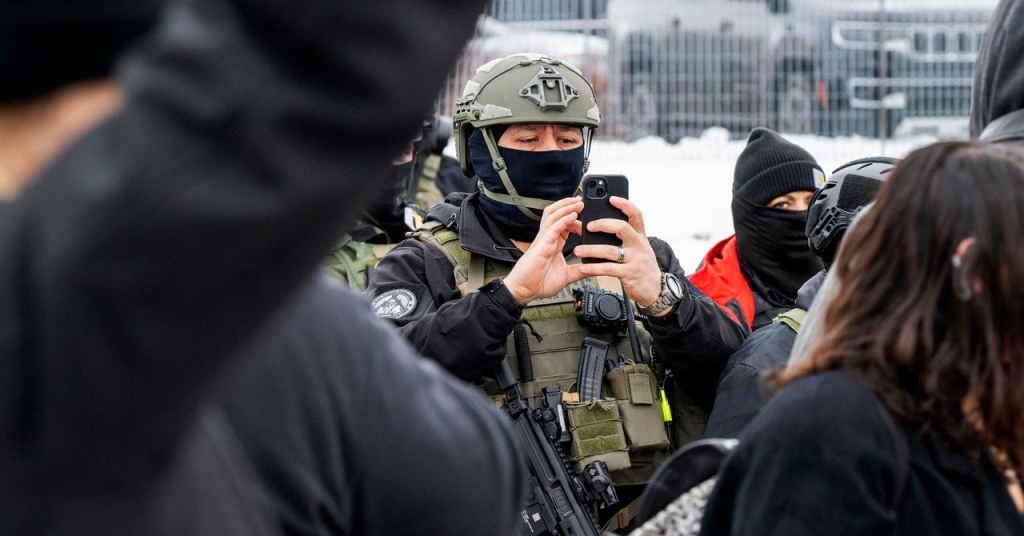
DHS Deploys “Mobile Fortify” Facial Recognition App to Immigration Agents Nationwide—But It Can’t Actually Verify Identities, Documents Reveal
In a sweeping expansion of surveillance technology, the U.S. Department of Homeland Security (DHS) has deployed a controversial facial recognition app called Mobile Fortify to immigration agents across the country—despite internal documents and expert analysis revealing the app cannot reliably verify identities, raising serious questions about privacy, accuracy, and oversight.
Launched in spring 2025, Mobile Fortify was approved as part of President Donald Trump’s executive order aimed at a “total and efficient” crackdown on undocumented immigrants. The order called for expedited removals, expanded detention, and aggressive enforcement tactics—all of which DHS now pairs with biometric surveillance.
However, according to records obtained by WIRED and confirmed by privacy experts, Mobile Fortify is not designed to positively identify individuals. Instead, it functions as a “lead generation” tool—scanning faces and producing potential matches that agents must manually review. Even then, the matches are often ambiguous or incorrect.
“Every manufacturer of this technology, every police department with a policy, makes very clear that face recognition technology is not capable of providing a positive identification,” said Nathan Wessler, deputy director of the ACLU’s Speech, Privacy, and Technology Project. “It makes mistakes, and it’s only for generating leads.”
This limitation is not a bug—it’s a known flaw in facial recognition systems. Yet DHS deployed the app rapidly, bypassing the centralized privacy reviews that traditionally governed such technologies. The approval process was overseen by a former Heritage Foundation lawyer and Project 2025 contributor now serving in a senior DHS privacy role.
Privacy advocates and oversight officials have repeatedly called on DHS to disclose how the app works, who it targets, and how data is stored or shared. So far, DHS has declined to provide specifics.
What is clear is that Mobile Fortify is being used far beyond its intended scope. Agents have scanned the faces of U.S. citizens, lawful permanent residents, protesters, and bystanders—often without consent. In some cases, individuals were handcuffed and physically repositioned to obtain clearer facial images, with agents testifying in court that the app returned conflicting or uncertain results.
In one case in Oregon, an agent used Mobile Fortify on a woman in custody. Two photos taken with the app produced different identity matches. The first was rated “a maybe,” the second “possible.” When the woman didn’t respond to the name given, agents took another photo. Ultimately, the agent cited her speaking Spanish, her companions’ appearance, and the “possible match” as probable cause—despite acknowledging the app gave no confidence score.
“It’s just an image, your honor,” the agent testified. “You have to look at the eyes and the nose and the mouth and the lips.”
Legal filings show the app has been used over 100,000 times in the field since its launch. Reports from across the country describe agents telling citizens they were being recorded and their faces added to databases without consent. In other instances, accent, perceived ethnicity, or skin color appeared to trigger escalated encounters, with face scanning as the next step.
Civil liberties groups warn that Mobile Fortify represents a dangerous shift toward dragnet biometric surveillance in routine street encounters—without transparency, accountability, or clear limits on use.
As DHS continues to expand its enforcement footprint, privacy experts say the public deserves answers: Who is being scanned? Where is the data going? And what happens when the technology gets it wrong?
Tags & Viral Phrases:
- Facial recognition app deployed to ICE agents nationwide
- DHS rolls out Mobile Fortify without proper privacy review
- App can’t verify identities but used in thousands of stops
- Immigration agents scan faces of citizens and protesters
- Mobile Fortify returns “maybe” and “possible” matches
- Woman handcuffed, repositioned for facial scan in Oregon
- DHS bypasses oversight to fast-track surveillance tech
- Former Heritage Foundation lawyer oversaw privacy changes
- 100,000+ uses of facial recognition app in field
- Agents cite accent and appearance as reasons for scans
- Technology designed for “lead generation,” not identification
- Civil liberties groups demand transparency from DHS
- Trump executive order enables expanded biometric surveillance
- Mobile Fortify adds faces to databases without consent
- Experts warn of dragnet surveillance in everyday encounters
,

Leave a Reply
Want to join the discussion?Feel free to contribute!