
Debian’s CI Data No Longer Publicly Browseable Due To LLM Scrapers / Bot Traffic
Debian CI Takes Drastic Measures to Block AI Scrapers Amid Explosive Bot Traffic Surge
The open-source world is facing an unprecedented digital siege — and even Debian’s critical infrastructure isn’t safe. In a bold move that’s sending shockwaves through the Linux and AI communities, the Debian Continuous Integration (CI) team has been forced to lock down public access to their continuous integration data after being hammered by relentless AI scraper bots.
The crisis, detailed in a stark announcement from Paul Gevers on behalf of the Debian CI team, reveals how the once-open treasure trove of build and test data at ci.debian.net has become ground zero in the AI industry’s frantic race to harvest every scrap of web data available.
The Digital Gold Rush That Broke Debian
For years, Debian’s CI portal stood as a beacon of transparency in the open-source world, offering developers and users alike unprecedented insight into the health and status of Debian packages across thousands of builds. But what was once a collaborative tool has become an irresistible target for AI companies deploying sophisticated web crawlers designed to vacuum up training data at industrial scale.
“The situation has become untenable,” Gevers explained in the team’s emergency status update. “Our web server resources are being hammered by bots and scrapers to the point where legitimate users and critical CI operations are being impacted.”
The numbers tell a staggering story. What began as occasional automated traffic has exploded into a deluge of requests that threatened to overwhelm the entire CI infrastructure. These aren’t casual web crawlers either — they’re purpose-built AI scrapers running at scale, designed to extract every byte of data they can find.
Locking the Gates: Debian’s First Line of Defense
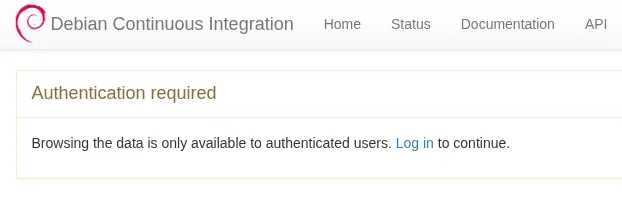
In what can only be described as a painful but necessary decision, the Debian CI team has implemented their first major defensive measure: authentication requirements for all public browsing.
Effective immediately, the ci.debian.net portal is no longer freely accessible to anonymous visitors. Users must now authenticate themselves to access the wealth of build information, test results, and package status data that was previously available to anyone with a web browser.
“This was not a decision we made lightly,” Gevers emphasized. “Debian has always prided itself on openness and accessibility. But the alternative was watching our infrastructure collapse under the weight of abusive traffic patterns.”
The authentication requirement represents more than just a technical change — it’s a philosophical shift for one of the world’s most respected open-source projects. Debian, long known for its commitment to free software principles and unrestricted access to information, has been forced to build walls around its most valuable digital assets.
Strategic Concessions: Keeping the Lights On for Real Users
Despite the lockdown, the Debian team has shown remarkable pragmatism in their approach. Understanding that their CI data serves critical functions beyond casual browsing, they’ve maintained direct access to test log files.
This means that developers who need specific build logs or test results can still retrieve them directly through known URLs, ensuring that the CI system continues to serve its primary purpose of supporting Debian development and package maintenance.
“It’s a delicate balance,” Gevers noted. “We need to protect our infrastructure while ensuring that the developers who depend on this data can still get their work done. The direct log access is our compromise.”
The Fail2Ban Firewall: Fighting Fire with Fire
The second major defensive measure involves sophisticated traffic filtering using fail2ban, a tool traditionally used to combat brute-force attacks on servers. The Debian team has configured fail2ban to identify and block abusive traffic patterns characteristic of AI scrapers.
The implementation hasn’t been without challenges. Initial configurations proved too aggressive, accidentally blocking legitimate Debian contributors who happened to trigger false positives in the system’s pattern recognition.
“We had some false starts,” Gevers admitted. “Some of our most active contributors found themselves locked out while we were fine-tuning the system. It was frustrating for everyone involved, but it was a necessary part of finding the right balance.”
After several iterations and adjustments, the team believes they’ve achieved a workable equilibrium — aggressive enough to deter scrapers while intelligent enough to recognize genuine human users and legitimate automated processes.
The Bigger Picture: AI’s Hunger for Data
The Debian CI situation is just one front in what’s becoming an all-out war between AI companies and the open web. As large language models and other AI systems become increasingly sophisticated, their appetite for training data has grown exponentially.
Every website, every API endpoint, every publicly accessible database has become potential fuel for the AI training pipeline. Companies are deploying armies of scrapers, often operating from distributed networks and using techniques designed to evade traditional blocking mechanisms.
The economics are stark: training cutting-edge AI models requires enormous datasets, and the open web represents the largest, most accessible source of information available. For AI companies racing to stay competitive, the cost-benefit analysis often favors aggressive scraping, even when it means potentially violating terms of service or overwhelming target servers.
Debian’s Unique Vulnerability
What makes Debian’s situation particularly acute is the nature of their CI data. Unlike typical web content, CI build information represents a concentrated source of technical knowledge, software quality metrics, and dependency relationships that would be invaluable for AI systems focused on software development, package management, or systems administration.
Each build log contains not just pass/fail results, but detailed error messages, configuration information, and the intricate relationships between different software packages. For an AI trying to understand how complex software systems work, this data is pure gold.
Moreover, the structured nature of CI data makes it particularly attractive to automated processing. Unlike messy human-written web pages, CI outputs follow predictable formats that are easy for machines to parse and extract meaningful information from.
The Community Response: A Divided Reaction
The Debian team’s decision has sparked intense debate within the open-source community. Some applaud the pragmatic approach, arguing that protecting critical infrastructure must take precedence over absolute openness when faced with existential threats.
“The scrapers weren’t just being annoying — they were threatening the viability of the entire CI system,” argued one prominent Debian developer who wished to remain anonymous. “If we hadn’t acted, we could have lost the ability to provide these services entirely.”
Others, however, see the move as a dangerous precedent. “Debian has always been about freedom and openness,” countered another community member. “Once you start putting up walls, even for good reasons, it becomes easier to justify more restrictions later.”
The tension reflects a broader philosophical question facing the open-source world: how do communities balance their founding principles with the practical realities of operating in an environment where their resources are being exploited by well-funded commercial entities?
Technical Implications and Future Challenges
The measures implemented by Debian represent just the first wave of what’s likely to be an ongoing arms race. AI companies are already developing more sophisticated scraping techniques designed to evade detection, including:
- Distributed scraping operations that spread requests across thousands of IP addresses
- Machine learning models that mimic human browsing patterns
- Adaptive algorithms that learn to avoid triggering traditional security measures
- CAPTCHA-solving automation using computer vision and natural language processing
For Debian and other open-source projects, the challenge extends beyond just blocking bad actors. They must ensure that legitimate automated processes — from package building to security scanning to dependency analysis — continue to function smoothly.
The authentication requirement also raises questions about accessibility and inclusivity. Will smaller developers or those from regions with limited internet infrastructure find themselves increasingly locked out of important open-source resources?
Looking Ahead: The Future of Open Data
The Debian CI situation serves as a canary in the coal mine for the broader open web. As AI continues its exponential growth, more and more organizations will face similar choices: maintain absolute openness at the risk of infrastructure collapse, or implement restrictions that may compromise their core values.
Some potential future developments could include:
Blockchain-based access control: Using decentralized identity systems to manage access while preserving some aspects of openness.
Tiered access models: Providing different levels of access based on verified identity or contribution history.
Collaborative defense networks: Open-source projects working together to identify and block abusive scrapers collectively.
AI-powered traffic analysis: Using machine learning to distinguish between legitimate users and scrapers more accurately.
Economic models: Implementing microtransactions or subscription services for high-volume data access.
The Human Cost
Behind the technical details and policy debates are real people whose work is being affected. Debian developers report spending increasing amounts of time managing infrastructure protection rather than writing code or improving packages.
“The amount of energy we’re having to divert to deal with this problem is staggering,” one core developer shared. “Every hour we spend fighting scrapers is an hour we’re not spending making Debian better.”
For smaller open-source projects without Debian’s resources and expertise, the situation could be even more dire. Many may simply find their services degraded or rendered unusable by aggressive scraping, potentially driving valuable contributors away from open-source development entirely.
Conclusion: A Watershed Moment for Open Source
Debian’s decision to restrict access to its CI data marks a watershed moment in the evolution of open-source culture. It represents the first major concession by a cornerstone open-source project to the realities of an internet increasingly dominated by AI companies with virtually unlimited resources for data acquisition.
The measures implemented — authentication requirements and sophisticated traffic filtering — may prove to be just the beginning of a long and complex negotiation between the principles of openness and the practical needs of infrastructure protection.
As AI continues to reshape the digital landscape, the Debian CI experience offers valuable lessons for other open-source projects, content creators, and anyone who values the open web. The question isn’t whether more restrictions will be needed, but rather how to implement them in ways that preserve as much openness as possible while ensuring the survival of the very resources that make the open web valuable.
The coming months and years will likely see an escalation of this conflict, with AI companies developing ever more sophisticated scraping techniques while open-source projects and content creators implement increasingly complex defense mechanisms. The outcome of this struggle will profoundly shape the future of the internet, determining whether it remains a space for collaborative creation and open access or becomes increasingly fragmented and controlled.
For now, Debian’s bold action serves as both a warning and a model — a warning of the challenges ahead, and a model for how even the most principled open-source projects may need to adapt to survive in the age of AI.
Tags & Viral Phrases:
- Debian CI under siege
- AI scrapers gone wild
- Open source meets AI apocalypse
- The great web data grab
- When bots attack Debian
- Digital gold rush breaks the internet
- Debian builds walls against AI
- The end of open access?
- Scrapers vs. Servers: The battle begins
- AI’s insatiable hunger for data
- Debian’s painful choice
- Open source’s existential crisis
- The walls are going up
- Data warfare in the age of AI
- Debian fights back
- Authentication apocalypse
- Fail2Ban to the rescue
- The scraper invasion
- When openness becomes unsustainable
- Debian’s digital fortress
,


Leave a Reply
Want to join the discussion?Feel free to contribute!