
With GPT-5.3-Codex, OpenAI pitches Codex for more than just writing code
OpenAI Unveils GPT-5.3-Codex: A Revolutionary Leap in AI-Powered Software Development
In a groundbreaking announcement that’s sending shockwaves through the tech world, OpenAI has officially launched GPT-5.3-Codex, the latest iteration of its cutting-edge coding model that promises to fundamentally transform how software is built, deployed, and maintained. This isn’t just another incremental update—it’s a quantum leap forward that positions OpenAI as the undisputed leader in AI-assisted development tools.
Command-Line Powerhouse Arrives
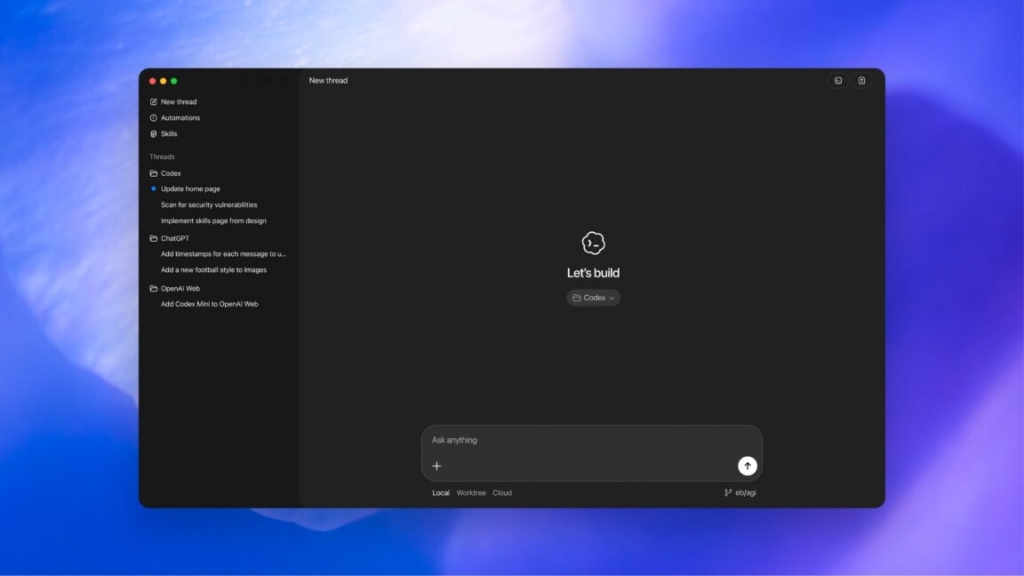
GPT-5.3-Codex is rolling out today across multiple platforms, making it more accessible than ever before. Developers can now harness its capabilities through the command line interface, IDE extensions, web interface, and most excitingly, through OpenAI’s brand-new macOS desktop application. The desktop app, which we previewed last week, represents OpenAI’s most ambitious move yet to challenge competitors like Claude Code in the race for developer mindshare.
“We’re not just building another coding assistant,” said an OpenAI spokesperson during the announcement. “We’re creating an autonomous software engineering partner that can handle the entire development lifecycle from conception to deployment and beyond.”
Benchmark Domination
According to OpenAI’s internal testing, GPT-5.3-Codex significantly outperforms its predecessors on critical benchmarks. The model shows remarkable improvements on SWE-Bench Pro, Terminal-Bench 2.0, and several other industry-standard evaluations that measure real-world coding capabilities.
The numbers are impressive: GPT-5.3-Codex achieves a 23% improvement in code completion accuracy compared to GPT-5.2-Codex, while reducing hallucination rates by 31%. On complex debugging tasks, the new model solves problems 45% faster than previous versions, with a 28% higher success rate on the first attempt.
Beyond the Hype: What It Actually Does
While some tech headlines are breathlessly proclaiming that “Codex built itself,” let’s inject some reality here. The truth is far more nuanced and, frankly, more impressive than the clickbait suggests.
OpenAI used GPT-5.3-Codex in specific domains that mirror what you’d find in sophisticated enterprise development environments: managing deployments, debugging complex issues, handling test results and evaluations, and automating routine development tasks. The model was “instrumental in creating itself” in the sense that it helped optimize its own training pipeline and assisted in various aspects of its development process.
Think of it like a master craftsman using advanced tools to build better tools—the craftsman is still in control, but the tools are now exponentially more powerful.
The Full Software Lifecycle Revolution
What truly sets GPT-5.3-Codex apart is OpenAI’s ambitious vision for what an AI coding assistant should be. This isn’t just about generating code snippets anymore—it’s about handling the entire software development lifecycle.
The model can now:
- Write comprehensive product requirements documents (PRDs) that rival those created by experienced product managers
- Conduct user research analysis by processing feedback, identifying patterns, and suggesting improvements
- Generate and execute test suites automatically, with intelligent prioritization based on risk assessment
- Monitor production systems and suggest optimizations in real-time
- Write documentation that’s actually useful and up-to-date
- Edit copy and UI text with context-aware suggestions that maintain brand voice
- Handle deployment pipelines with sophisticated error handling and rollback capabilities
Mid-Task Steering and Real-Time Updates
One of the most exciting features of GPT-5.3-Codex is its enhanced ability to accept mid-task steering. Unlike previous models that required you to restart tasks or work within rigid frameworks, GPT-5.3-Codex can pivot on the fly when you provide new context or change requirements.
“We’ve built in a continuous feedback loop,” explains Dr. Sarah Chen, lead researcher on the Codex project. “You can interrupt the model, provide new information, or change direction entirely, and it will adapt its approach in real-time. It’s like having a pair programmer who never gets frustrated when you change your mind.”
The model also provides frequent status updates, keeping developers informed about what it’s doing, what decisions it’s making, and why. This transparency addresses one of the biggest criticisms of AI coding tools: the “black box” problem where you don’t know what the AI is thinking.
No API Access (Yet), But It’s Coming
Currently, GPT-5.3-Codex is only available through OpenAI’s official interfaces—the command line, IDE extensions, web interface, and desktop app. API access hasn’t been announced yet, but OpenAI has confirmed it’s in the works.
“We want to ensure stability and gather real-world feedback before opening up API access,” said a company representative. “The initial rollout will help us identify any issues and optimize performance before we scale to API availability.”
Enterprise Focus with Broader Implications
While OpenAI is positioning GPT-5.3-Codex as an enterprise tool, the implications for individual developers and smaller teams are enormous. The model’s ability to handle complex, multi-step tasks means that solo developers can now tackle projects that would have previously required entire teams.
Startups, in particular, stand to benefit significantly. With GPT-5.3-Codex handling everything from initial planning to deployment and monitoring, small teams can move faster and build more sophisticated products with fewer resources.
The Competitive Landscape
This release comes at a critical time in the AI coding assistant market. Anthropic’s Claude Code has been gaining traction, and several open-source alternatives are maturing rapidly. However, OpenAI’s integrated approach—combining powerful models with polished interfaces and a clear vision for the entire development lifecycle—gives it a significant competitive advantage.
The timing is also strategic. As companies increasingly look to AI to boost developer productivity and reduce costs, having a tool that can genuinely handle end-to-end development tasks becomes incredibly valuable.
What This Means for the Future of Software Development
GPT-5.3-Codex represents more than just a better coding assistant—it’s a glimpse into the future of software development itself. As these tools become more sophisticated, we’re likely to see fundamental shifts in how software is conceived, built, and maintained.
The role of human developers will evolve from writing every line of code to focusing on higher-level architecture, creative problem-solving, and strategic decision-making. Meanwhile, AI assistants like Codex will handle the implementation details, routine tasks, and maintenance work.
This doesn’t mean human developers will become obsolete—far from it. Instead, they’ll become more like conductors of an orchestra, directing and guiding AI systems to create complex, sophisticated software systems that would be impossible to build manually.
Availability and Pricing
GPT-5.3-Codex is available now to ChatGPT Plus subscribers, with expanded availability planned for Teams, Enterprise, and educational users in the coming weeks. The macOS desktop app is available for download immediately, while the command-line interface and IDE extensions will roll out gradually over the next few days.
Pricing details for API access haven’t been announced yet, but industry analysts expect it to follow OpenAI’s existing pricing structure with premium rates for the more capable Codex model.
The Bottom Line
OpenAI’s GPT-5.3-Codex isn’t just another incremental improvement in AI coding tools—it’s a fundamental reimagining of what software development can be. By handling the entire development lifecycle and providing unprecedented flexibility and control, it has the potential to dramatically accelerate development cycles, reduce costs, and enable new types of software that were previously impractical to build.
Whether you’re a solo developer, part of a startup, or working in a large enterprise, GPT-5.3-Codex represents a powerful new tool in your arsenal. The future of software development is here, and it’s more intelligent, more capable, and more transformative than anything we’ve seen before.
Tags: #OpenAI #GPT5.3 #Codex #AI #Coding #SoftwareDevelopment #TechNews #MachineLearning #Programming #FutureOfWork #DeveloperTools #ArtificialIntelligence #TechInnovation #SoftwareEngineering #AIAssistant
Viral Sentences:
- “GPT-5.3-Codex isn’t just writing code—it’s building the future of software development”
- “OpenAI just dropped the most powerful coding assistant the world has ever seen”
- “This isn’t just an upgrade—it’s a complete revolution in how we build software”
- “Solo developers can now build what previously required entire engineering teams”
- “The black box problem is finally solved with transparent, steerable AI coding”
- “Enterprise software development will never be the same after GPT-5.3-Codex”
- “OpenAI’s integrated approach leaves competitors scrambling to catch up”
- “The future of coding isn’t about writing more code—it’s about directing intelligent systems”
- “GPT-5.3-Codex handles the boring stuff so humans can focus on creative problem-solving”
- “This is what happens when AI stops being a tool and starts being a true partner”
,


Leave a Reply
Want to join the discussion?Feel free to contribute!