
Public Health Workers Are Quitting Over Assignments to Guantánamo
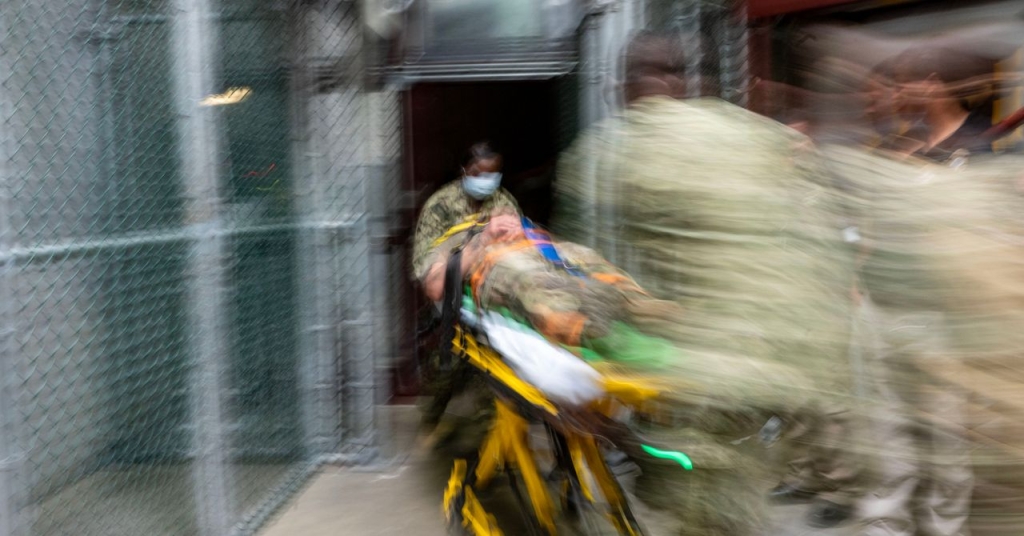
In a move that has sparked both controversy and concern, the Trump administration has revived its long-standing ambition to use Guantánamo Bay as a detention facility for noncitizens, marking a significant shift in U.S. immigration policy. This decision has not only reignited debates about human rights but has also placed an unexpected burden on the U.S. Public Health Service (PHS), whose officers are now being deployed to provide medical care to detainees in conditions that many describe as inhumane.
Rebekah Stewart, a dedicated nurse with the U.S. Public Health Service, found herself at the center of this unfolding crisis when she received a call in April informing her of her deployment to Guantánamo Bay. The news brought her to tears, as she grappled with the ethical implications of providing medical care to individuals detained in a facility notorious for its history of torture and human rights violations. Stewart, like many of her colleagues, was deeply troubled by the prospect of being part of an operation that seemed to contradict the core values of public health and humanitarian care.
Guantánamo Bay, a naval base located on the southeastern coast of Cuba, has long been associated with the U.S. government’s controversial detention and interrogation practices in the wake of the September 11 attacks. The base has been the site of numerous human rights abuses, including the use of torture and inhumane treatment of detainees suspected of terrorism. The decision to use Guantánamo Bay to house noncitizens, many of whom have no criminal convictions, has drawn sharp criticism from human rights organizations and legal experts.
The Trump administration’s mass arrests and deportation efforts have created a new type of health emergency, with the number of immigrants detained reaching record highs. As of now, approximately 71,000 immigrants are imprisoned, with the majority having no criminal record. Homeland Security Secretary Kristi Noem has defended the use of Guantánamo Bay, stating that it will house “the worst of the worst.” However, reports from various news organizations suggest that many of the detainees sent to the base are low-risk individuals with no criminal convictions.
The deployment of Public Health Service officers to Guantánamo Bay marks a significant departure from their traditional roles in responding to natural disasters, disease outbreaks, and other public health emergencies. These officers, who are not part of the U.S. military but act as “stethoscope-wearing soldiers” in times of crisis, have found themselves in an unprecedented situation. They are now tasked with providing medical care to detainees in a facility that is widely regarded as a symbol of human rights abuses.
Stewart’s experience is not unique. Many of her colleagues have faced similar moral dilemmas, with some choosing to resign rather than participate in what they see as a man-made humanitarian crisis. The decision to deploy Public Health Service officers to Guantánamo Bay has raised serious ethical questions about the role of healthcare professionals in immigration enforcement and the potential for their work to be used to legitimize the detention of vulnerable individuals.
The use of Guantánamo Bay as a detention facility for noncitizens is a stark reminder of the complex and often contentious relationship between immigration policy, national security, and human rights. As the Trump administration continues to push forward with its deportation efforts, the role of the Public Health Service and other government agencies in facilitating these operations will likely remain a subject of intense debate and scrutiny.
In conclusion, the deployment of Public Health Service officers to Guantánamo Bay highlights the far-reaching implications of the Trump administration’s immigration policies. It underscores the need for a careful examination of the ethical and humanitarian considerations involved in the detention and care of noncitizens, as well as the potential consequences for the healthcare professionals tasked with providing that care. As this story continues to unfold, it is clear that the use of Guantánamo Bay as a detention facility will remain a contentious and deeply polarizing issue in American politics and society.
Tags: Guantánamo Bay, immigration detention, Trump administration, Public Health Service, human rights, mass deportations, ICE, Kristi Noem, healthcare professionals, ethical dilemmas, humanitarian crisis, national security, controversial policies, detention facilities, noncitizens, record highs, low-risk detainees, resignation, moral dilemmas, stethoscope-wearing soldiers, natural disasters, disease outbreaks, immigration enforcement, national security, humanitarian care, ethical implications, human rights abuses, detention and interrogation practices, September 11 attacks, healthcare professionals, immigration policy, national security, human rights, ethical considerations, detention and care, American politics, society.
Viral Sentences:
– “Public health officers are being asked to facilitate a man-made humanitarian crisis.”
– “It was one of the hardest decisions I ever had to make. It was my dream job.”
– “Guantánamo Bay will hold the worst of the worst.”
– “The Trump administration’s mass arrests to curb immigration have created a new type of health emergency.”
– “Seeing no option to refuse deployments that she found objectionable, Stewart resigned after a decade of service.”
– “The naval base is known for the torture and inhumane treatment of men suspected of terrorism in the wake of 9/11.”
– “As many as 90 percent of them were described as ‘low-risk’ in a May progress report from a chaplain observing the detainees.”
– “This is the first time in American history that Guantánamo has been used to house immigrants who had been living in the US.”
– “The decision to deploy Public Health Service officers to Guantánamo Bay has raised serious ethical questions about the role of healthcare professionals in immigration enforcement.”
– “The use of Guantánamo Bay as a detention facility for noncitizens is a stark reminder of the complex and often contentious relationship between immigration policy, national security, and human rights.”,


Leave a Reply
Want to join the discussion?Feel free to contribute!