
Are 'tech dense' farms the future of farming?
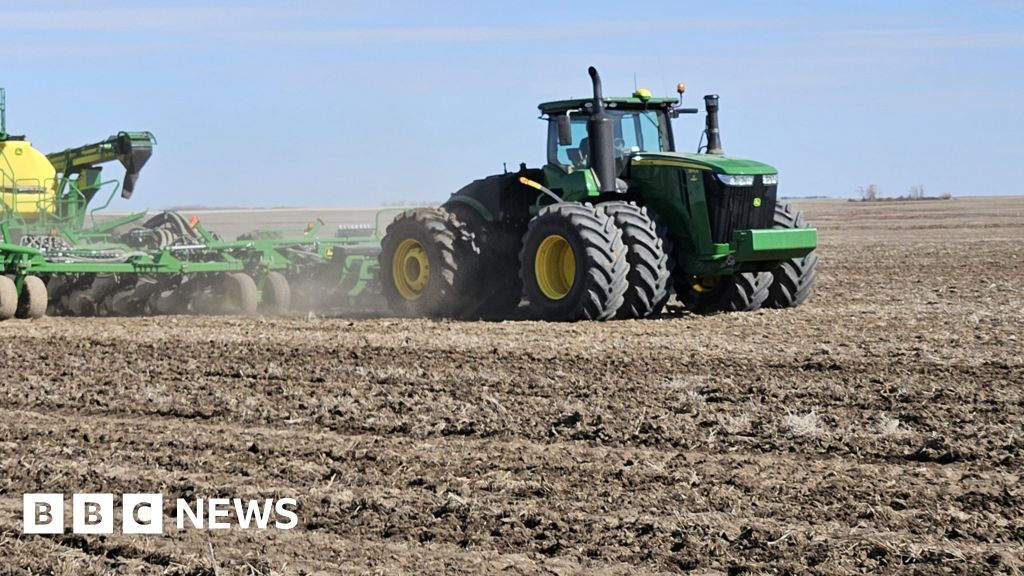
A host of technology is on offer to farmers, promising to raise farming yields and lower food prices.
In an era where global food security is under increasing strain, technology is stepping in to transform the agricultural landscape. From precision agriculture to AI-driven crop monitoring, a suite of cutting-edge innovations is empowering farmers to produce more with less, ultimately driving down food prices for consumers worldwide.
At the forefront of this revolution is precision agriculture, a data-driven approach that leverages GPS, sensors, and IoT devices to optimize every aspect of farming. By analyzing soil conditions, weather patterns, and crop health in real time, farmers can apply water, fertilizers, and pesticides with pinpoint accuracy. This not only boosts yields but also reduces waste, making farming more sustainable and cost-effective.
Drones and satellite imagery are also playing a pivotal role. These tools provide farmers with high-resolution aerial views of their fields, enabling them to detect issues like pest infestations, nutrient deficiencies, or irrigation problems before they escalate. Companies like John Deere and Trimble are integrating these technologies into their machinery, offering farmers a seamless way to monitor and manage their crops.
Artificial intelligence (AI) is another game-changer. AI-powered platforms can predict crop yields, optimize planting schedules, and even suggest the best crop varieties for specific conditions. For instance, IBM’s Watson Decision Platform for Agriculture uses AI to analyze data from multiple sources, providing actionable insights that help farmers make informed decisions. This level of precision not only increases productivity but also reduces the risk of crop failure, ensuring a more stable food supply.
Robotics is also making its mark on the farm. Autonomous tractors, robotic harvesters, and weed-pulling robots are reducing the need for manual labor, which is particularly valuable in regions facing labor shortages. These machines are designed to work around the clock, increasing efficiency and lowering operational costs. Companies like Agrobot and Harvest CROO Robotics are leading the charge in this space, offering solutions that are both scalable and cost-effective.
Biotechnology is another area where innovation is driving change. Genetically modified (GM) crops, for example, are engineered to resist pests, tolerate drought, and produce higher yields. While controversial in some circles, these crops have the potential to address food insecurity in regions with challenging growing conditions. Additionally, advancements in CRISPR gene-editing technology are opening up new possibilities for creating crops that are more nutritious and resilient.
Vertical farming and hydroponics are also gaining traction, particularly in urban areas where space is limited. These methods allow for year-round crop production in controlled environments, reducing the need for pesticides and minimizing water usage. Companies like Plenty and AeroFarms are pioneering these techniques, demonstrating that it’s possible to grow fresh produce sustainably and efficiently, even in the heart of a city.
Blockchain technology is also finding its way into agriculture, offering a transparent and secure way to track the journey of food from farm to table. This not only helps in ensuring food safety but also allows consumers to make more informed choices about the products they buy. By reducing inefficiencies in the supply chain, blockchain can also help lower food prices.
The integration of these technologies is not without challenges. High upfront costs, lack of technical expertise, and concerns about data privacy are some of the barriers that need to be addressed. However, governments, NGOs, and private companies are increasingly investing in training programs and subsidies to make these technologies more accessible to farmers, particularly in developing countries.
As the global population continues to grow, the demand for food is expected to increase by 60% by 2050. Technology offers a promising solution to this challenge, enabling farmers to produce more with fewer resources. By embracing these innovations, the agricultural sector can not only meet the rising demand for food but also contribute to a more sustainable and equitable food system.
In conclusion, the fusion of technology and agriculture is reshaping the way we grow, distribute, and consume food. From precision agriculture to AI-driven insights, these advancements are empowering farmers to achieve higher yields and lower costs, ultimately benefiting consumers worldwide. As we look to the future, it’s clear that technology will play a crucial role in ensuring food security and sustainability for generations to come.
#PrecisionAgriculture #AIInFarming #DronesInAgriculture #RoboticsInFarming #Biotechnology #VerticalFarming #Hydroponics #BlockchainInAgriculture #SustainableFarming #FoodSecurity #AgriculturalInnovation #SmartFarming #FutureOfAgriculture #TechForFarmers #CropMonitoring #AutonomousTractors #GeneEditing #UrbanFarming #FoodSupplyChain #AgriculturalTech #FarmToTable #SustainableFood #AgTechRevolution #FarmingOfTheFuture #DataDrivenFarming #AgriculturalRobotics #CRISPR #FoodPrices #GlobalFoodSecurity #InnovativeFarming #AgriculturalSustainability,


Leave a Reply
Want to join the discussion?Feel free to contribute!