
Why Darren Aronofsky thought an AI-generated historical docudrama was a good idea
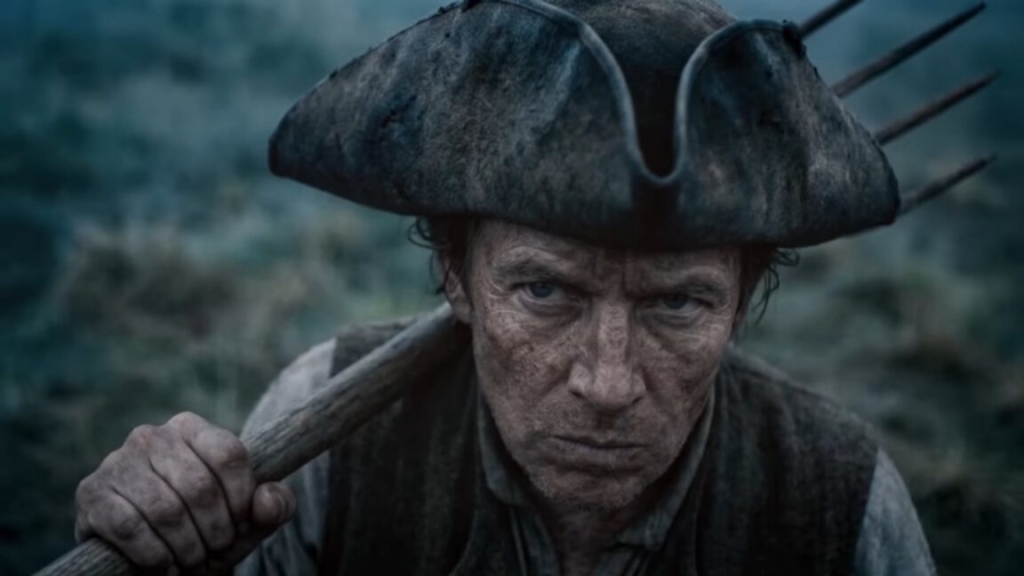
Not All AI: Inside the Making of Darren Aronofsky’s Revolutionary War Series
When filmmaker Darren Aronofsky announced his new historical series “On This Day… 1776,” the internet erupted with speculation about just how deeply artificial intelligence had penetrated Hollywood’s creative process. The provocative claim that AI tools were used to bring the American Revolution to life sparked immediate controversy, with critics quick to dismiss the project as another example of technology replacing human artistry.
But behind the headlines lies a far more nuanced story about the evolving relationship between human creativity and artificial intelligence in modern filmmaking.
The Human Foundation
Despite widespread assumptions, the series is not the product of AI-generated scripts or automated storytelling. The writing team, led by Aronofsky’s longtime collaborators Ari Handel and Lucas Sussman, spent months researching and crafting the narrative by hand. According to sources close to the production, the creative process remained fundamentally human from conception to completion.
“I don’t think they even needed that kind of help or wanted that kind of [AI-powered writing] help,” said a production insider who spoke with Ars Technica. “We’ve all experimented with [AI-powered] writing and the chatbots out there, and you know what kind of quality you get out of that.”
This distinction matters enormously. Critics like those at The Guardian who dismissed early episodes as featuring “ChatGPT-sounding sloganeering” may have been both somewhat misguided and perhaps overly harsh. The dialogue you hear in “On This Day… 1776” comes from actual human writers who approached the material with the same dedication and craft they would bring to any traditional production.
Voice Acting: Still Human After All
In an era where AI voice cloning technology has become increasingly sophisticated, the production team made a conscious decision to use real human voice actors for all dialogue. Every line you hear in the series was recorded by Screen Actors Guild members, not synthesized by artificial intelligence.
This commitment to human performance extends beyond mere artistic preference. Recent negotiations between Hollywood unions and studios have established new protections for voice actors, potentially influencing the decision. But according to our source, practical considerations also played a role.
“The AI-generated voices we used for temp tracks were noticeably artificial and not ready for a professional production,” the insider revealed. “You could tell immediately that something was off. The emotional range, the subtle inflections, the way real actors breathe and pause—that’s still incredibly difficult for AI to replicate convincingly.”
The AI Component: Visual Effects and Animation
Where artificial intelligence does make its mark is in the visual realm. The series employs what the production describes as “a combination of traditional filmmaking tools and emerging AI capabilities” to create its historical imagery.
The process works like this: human artists create detailed storyboards, gather visual references for period-accurate locations and costumes, and establish the visual language for each scene. They then feed this information, along with the script, into AI video generation systems that produce individual shots one at a time.
These AI-generated elements then enter traditional post-production, where human editors, visual effects artists, and colorists refine and composite the footage into the final product. It’s a hybrid approach that leverages AI’s ability to generate complex visual elements while maintaining human oversight and creative control throughout the process.
The Full Human Touch
Beyond the AI-assisted visuals, every other aspect of the production remains firmly in human hands. The music composition, sound mixing, editing, visual effects refinement, and color correction—all performed by experienced professionals using traditional techniques.
This approach represents a thoughtful integration of new technology rather than a wholesale replacement of human creativity. The AI tools serve as another instrument in the filmmaker’s toolkit, similar to how digital cameras, computer-generated imagery, and other technological advances have been incorporated into filmmaking over the decades.
Industry Implications
The controversy surrounding “On This Day… 1776” highlights the ongoing tension in Hollywood as the industry grapples with artificial intelligence’s role in creative production. While some view any AI involvement as a threat to artistic integrity, others see it as an opportunity to expand creative possibilities.
The reality, as demonstrated by this production, likely falls somewhere in between. AI tools can handle certain technical aspects of production efficiently, but they still require significant human direction, oversight, and creative input to produce work that meets professional standards.
As one industry veteran put it: “AI is a tool, not a replacement. It can help us visualize ideas faster, generate options we might not have considered, and handle repetitive tasks. But the creative vision, the storytelling, the emotional resonance—that still comes from humans.”
The debate over AI in entertainment is far from settled, but productions like “On This Day… 1776” suggest that the future may lie not in choosing between human and artificial creativity, but in finding ways to combine both effectively.
Tags: Darren Aronofsky, AI in filmmaking, On This Day 1776, artificial intelligence, Hollywood technology, Screen Actors Guild, AI video generation, historical drama, Revolutionary War series, human creativity, AI controversy, entertainment industry, filmmaking technology, AI tools, creative process, voice acting, visual effects, post-production, hybrid production, technological integration, AI limitations, human oversight, storytelling innovation, production techniques, industry evolution, AI and unions, creative collaboration, technological advancement, entertainment future, filmmaking revolution, AI assistance, human artistry, production insights, industry trends, creative technology, AI implementation, filmmaking future, entertainment innovation, production methods, creative tools, AI capabilities, human direction, industry adaptation, technological tools, creative vision, production evolution, AI integration, filmmaking techniques, industry transformation, creative possibilities
Viral Sentences: Darren Aronofsky’s Revolutionary War series isn’t fully AI-made; human writers still rule Hollywood; AI voices sound fake in professional productions; Hollywood unions protect voice actors from AI replacement; AI helps visualize but humans direct; traditional filmmaking meets emerging AI capabilities; controversy erupts over AI in historical drama; production reveals nuanced truth about AI involvement; human creativity remains irreplaceable in entertainment; AI tools as instruments, not replacements; industry veteran says AI is a tool, not a replacement; debate over AI’s role in creative industries; production combines human artistry with AI efficiency; Screen Actors Guild members voice all dialogue; AI-generated visuals refined by human editors; historical accuracy maintained through human research; production source reveals behind-the-scenes truth; critics may have misunderstood AI’s actual role; technology enhances rather than replaces human creativity; future of filmmaking lies in human-AI collaboration; production demonstrates thoughtful technology integration; entertainment industry grapples with AI implications; human oversight essential for professional quality; AI handles technical aspects, humans provide vision; controversy highlights ongoing industry tensions; production sets precedent for hybrid approaches; creative process remains fundamentally human; AI tools serve as another instrument in toolkit; emotional resonance still comes from human creators; industry adapting to technological advancement; production reveals reality behind AI headlines; human writers craft compelling historical narrative; AI assists but doesn’t replace human artistry; entertainment future combines best of both worlds; production showcases practical AI applications; human creativity and AI technology unite; industry veteran shares insights on AI integration; controversy sparks important conversation about technology; production demonstrates balanced approach to innovation; human direction essential for meaningful storytelling; AI tools expand creative possibilities; entertainment industry evolves with technology; production reveals nuanced approach to AI; human oversight maintains artistic integrity; AI handles repetitive tasks, humans focus on vision; controversy highlights need for industry adaptation; production sets example for future collaborations; human creativity remains at heart of entertainment.
,


Leave a Reply
Want to join the discussion?Feel free to contribute!