
Investors worried after Big Tech plans $650bn spend in 2026
Big Tech’s $650 Billion AI Spending Spree: The Race That’s Shaking Markets to Their Core
In a jaw-dropping display of technological ambition, the world’s most valuable tech companies are preparing to unleash a staggering $650 billion tsunami of capital expenditure in 2026, marking a mind-blowing 60% increase from last year’s already massive $410 billion investment. This unprecedented spending spree is sending shockwaves through financial markets, with investors watching nervously as their portfolios take a beating worth nearly $900 billion in combined market cap losses.
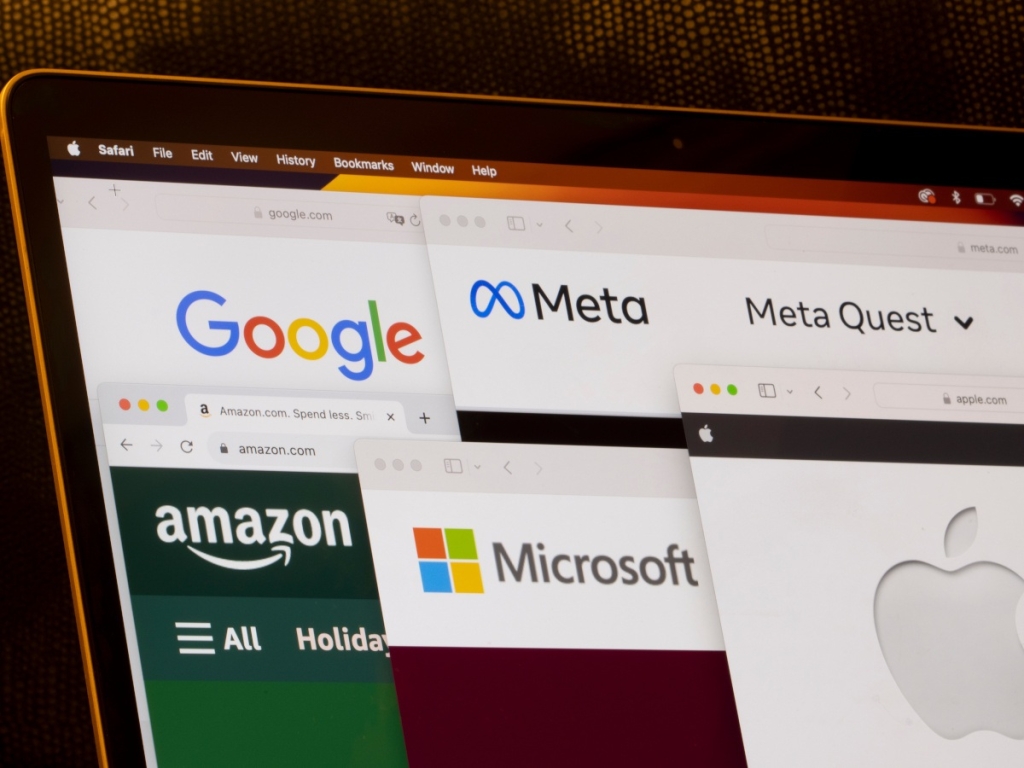
The four horsemen of the AI apocalypse—Meta, Google, Amazon, and Microsoft—are locked in what Gil Luria, an analyst at DA Davidson, describes as “the next winner-take-all or winner-takes-most market.” None of these tech titans are willing to blink first in this high-stakes poker game where the pot is nothing less than the future of artificial intelligence and cloud computing supremacy.
Amazon, the e-commerce giant turned cloud computing powerhouse, dropped the bombshell announcement during its earnings call on February 5th, revealing a jaw-dropping $200 billion capital expenditure plan for the year. This represents a mind-bending 50% growth from last year’s spending, focused laser-like on AI, custom chips, robotics, and even low-Earth orbit satellites through its Kuiper project. The market’s reaction was swift and brutal—shares plummeted 11% as investors grappled with the sheer scale of Amazon’s ambitions.
Microsoft, meanwhile, has been bleeding value at an even more alarming rate, shedding a staggering 18% of its market value since announcing its $37.5 billion quarterly capital expenditure bill on January 28th. The company’s close economic relationship with OpenAI has come under intense scrutiny, with roughly 45% of its expected $625 billion in future cloud contracts tied to the AI startup. This revelation has sparked fears of over-reliance on a single customer, leaving investors wondering if Microsoft has put too many eggs in one AI basket.
Google’s parent company, Alphabet, initially saw its shares drop 4% after reporting earnings on February 4th, but managed to claw back most of those losses, ending just 0.5% down. The company’s Q4 performance was nothing short of spectacular, with sales and earnings per share growing by 18% and 31% respectively, crushing analyst expectations. Alphabet’s cloud backlog exploded to $240 billion, growing an incredible 55% quarter-over-quarter. The company has committed to capital expenditure between $175 billion and $185 billion for 2026, doubling down on its AI investments to meet surging customer demand. Despite the heavy spending, Alphabet’s Gemini Enterprise is selling 8 million seats, and the Gemini App now boasts over 750 million monthly active users—numbers that have kept investors relatively content despite the massive outlay.
Meta, formerly Facebook, has thrown its hat into the ring with total expenses for 2026 projected to be in the range of $115 billion to $135 billion. The social media giant attributes this growth to increased investment in its Meta Superintelligence Labs efforts, as well as its core business. While Meta’s stocks initially rose 10% after the earnings announcement, those gains were quickly erased as overall investor fear pushed the tech-heavy Nasdaq down 4% over the week.
This spending frenzy represents a seismic shift in the tech landscape, with capital expenditure growing an eye-watering 165% from the $245 billion spent just two years ago. The scale of investment is so massive that it’s reshaping not just the companies involved, but the entire global economy. Data centers are being built at breakneck speed, custom AI chips are being designed and manufactured, and entire cities are being transformed into tech hubs to support this infrastructure boom.
But the question on everyone’s mind is: can this spending spree be sustained? Investors are increasingly nervous about the return on investment for these massive outlays. The fear is that in the rush to dominate the AI space, these companies might be overextending themselves, building capacity that may not be needed or creating technologies that fail to generate the expected returns.
The market’s reaction has been telling. Despite strong revenue growth in cloud services and advertising—Amazon reported 24% growth in its cloud offerings and 22% in advertising—investors are clearly worried about the sustainability of this spending model. The combined $900 billion in market cap losses among Amazon, Google, and Microsoft is a stark reminder of the high stakes involved in this technological arms race.
What makes this situation even more fascinating is the geopolitical dimension. As the United States’ tech giants pour hundreds of billions into AI and cloud infrastructure, they’re not just competing with each other—they’re also racing against Chinese tech companies and other international players. This spending spree is as much about maintaining technological superiority on the global stage as it is about commercial success.
The implications of this massive investment are far-reaching. We’re likely to see a continued boom in construction, energy consumption, and semiconductor manufacturing. The demand for AI talent is skyrocketing, leading to a global competition for the best and brightest minds in artificial intelligence and machine learning. Meanwhile, smaller companies and startups are finding it increasingly difficult to compete, potentially leading to further consolidation in the tech industry.
As we move deeper into 2026, all eyes will be on these tech giants to see if their massive investments pay off. Will they emerge as the undisputed leaders in AI and cloud computing, or will this spending spree prove to be an unsustainable bubble? One thing is certain: the tech landscape is being reshaped before our eyes, and the companies that emerge victorious from this spending war will likely dominate the digital economy for years to come.
The next few quarters will be crucial in determining whether this $650 billion bet on the future of AI and cloud computing was a stroke of genius or a colossal miscalculation. Investors, competitors, and industry watchers alike are bracing for what promises to be one of the most transformative periods in the history of technology.
Big Tech spending spree
AI arms race
$650 billion investment
Tech market cap losses
Capital expenditure 2026
Amazon $200 billion capex
Microsoft OpenAI relationship
Google Gemini growth
Meta Superintelligence Labs
Data center boom
AI chip manufacturing
Cloud computing supremacy
Tech industry consolidation
Geopolitical tech competition
Semiconductor manufacturing surge
AI talent war
Digital economy transformation
Tech bubble concerns
Infrastructure investment impact
Market volatility tech stocks
Silicon Valley spending frenzy
Future of artificial intelligence
Cloud services revenue growth
Tech giant earnings reports
Investment sustainability questions
Global tech dominance race
,


Leave a Reply
Want to join the discussion?Feel free to contribute!