
When Termites Became Monogamous, A Surprising Thing Happened to Their Sperm : ScienceAlert
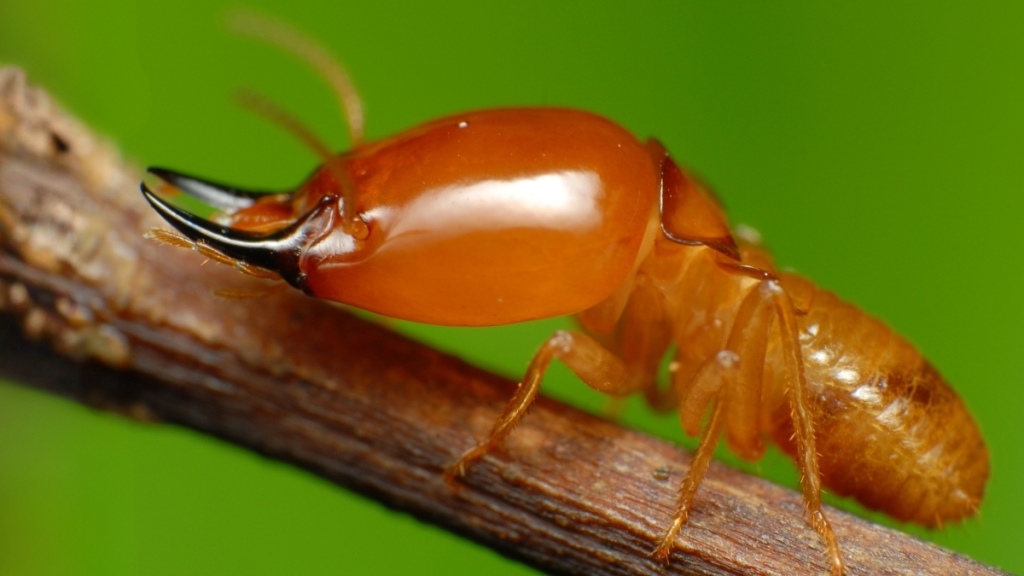
Termites’ Shocking Evolutionary Trade-Off: Lost Sperm Tails for the Sake of Monogamy
In a surprising twist of evolutionary biology, termites have revealed that the price of long-term monogamy might be more than just a lack of variety—it could mean losing your sperm’s ability to swim. A groundbreaking new study has uncovered that termites, those tiny architects of the insect world, sacrificed the mobility of their sperm in exchange for the stability of monogamous relationships. This fascinating discovery sheds light on how social evolution sometimes works by subtraction rather than addition.
The research, led by evolutionary biologist Nathan Lo from the University of Sydney, found that termites’ ancestors were strictly monogamous. Once monogamy was locked in, there was no longer any evolutionary pressure to maintain genes involved in sperm motility. Over time, this led to the loss of sperm tails—a feature that once allowed sperm to compete for fertilization in more promiscuous species.
“This work shows that understanding social evolution isn’t just about adding new traits,” Lo explained. “Sometimes, it’s about what evolution chooses to let go.”
The study also revealed that termites evolved from cockroach ancestors that began living inside and eating wood. As they specialized in this poor-quality diet, their DNA underwent significant changes. Comparing cockroaches and termites, researchers found that termites have much smaller genetic libraries, with fewer genes linked to metabolism, digestion, and reproduction.
“The surprising result is that termites increased their social complexity by losing genetic complexity,” Lo noted. “That goes against a common assumption that more complex animal societies require more complex genomes.”
What makes termites’ social structure even more intriguing is how their caste system is determined. The developmental timing of energy metabolism genes, influenced by the amount of food provided by older siblings, decides whether a termite larva becomes a worker or a future king or queen. If larvae receive plenty of food, they develop faster and become workers; less food creates slower-developing reproductive nymphs. These nymphs, if crowned, breed with their relatives, reinforcing the colony’s genetic cohesion.
“These food-sharing feedback loops allow colonies to fine-tune their workforce,” Lo explained. “They help explain how termites maintain stable, highly efficient societies over long periods.”
The findings suggest that, at least in termites, monogamy and high relatedness were crucial for the development of their complex social system. While this model might not be advisable for mammals, it highlights the diverse strategies evolution can take to create highly organized societies.
This groundbreaking research was published in the prestigious journal Science, offering a new perspective on the intricate dance between genetics, behavior, and social evolution.
Tags: #Termites #Evolution #Monogamy #Sperm #Genetics #SocialInsects #Biology #Science #Nature #InsectSociety
Viral Phrases: “Termites traded sperm tails for monogamy!” “The price of love? Lost sperm mobility!” “Monogamy made termites lose their sperm’s swagger!” “Evolution’s subtraction: How termites simplified to thrive!” “Termites prove love can cost you your tail!” “The ultimate sacrifice for social stability!” “Monogamy’s hidden cost: No more sperm competition!” “Termites’ love story: A tale of lost tails and gained colonies!” “Evolution’s quirky trade-off: Monogamy over mobility!” “Termites’ secret to success: Less is more!”
,


Leave a Reply
Want to join the discussion?Feel free to contribute!