
COVID-19 cleared the skies but also supercharged methane emissions
Methane Mystery Solved: Scientists Uncover Surprising Cause Behind 2020’s Record-Breaking Emissions Spike
In a groundbreaking revelation that’s sending shockwaves through the scientific community, researchers have finally cracked the case of 2020’s unprecedented methane surge—and the culprit isn’t what anyone expected.
When atmospheric methane levels jumped dramatically in 2020, the world was already grappling with a global pandemic. Initial theories pointed fingers at the oil and gas industry, suggesting that reduced maintenance during lockdowns might have led to increased leaks, or that super-emitter events in fossil fuel operations could be responsible for the spike.
But the truth, as revealed in new research published in Nature, is far more complex—and far more fascinating.
The Great Atmospheric Slowdown
The primary driver behind the 2020 methane surge wasn’t actually more methane being produced at all. Instead, it was the atmosphere’s ability to break down methane that dramatically weakened.
Methane molecules typically have a lifespan of about nine years in the atmosphere. They’re primarily removed through chemical reactions with hydroxyl radicals (OH)—often called the atmosphere’s “detergent.” These highly reactive molecules continuously scrub methane from the air, maintaining a delicate balance.
However, 2020 saw an unprecedented disruption in this natural cleansing process. The reduction in human activity during pandemic lockdowns led to a significant decrease in nitrogen oxide (NOx) emissions. While this sounds beneficial (and it was for air quality in many ways), NOx plays a crucial role in producing hydroxyl radicals.
With fewer NOx emissions, there were fewer hydroxyl radicals available to break down methane. The result? Methane lingered in the atmosphere longer, creating the appearance of a massive emissions spike when it was actually a processing slowdown.
The Microbial Plot Twist
While the atmospheric slowdown explained approximately 80% of the 2020 surge, researchers still needed to account for the remaining 20%—and this is where things get truly interesting.
To trace the source of these emissions, Peng’s team conducted an exhaustive analysis of satellite data and ground monitoring stations worldwide. What they discovered challenged conventional wisdom about methane sources.
Methane carries different isotopic signatures depending on its origin. Fossil fuel-derived methane contains a higher proportion of the stable isotope carbon-13, making it “heavier.” In contrast, methane produced by microbial activity—from livestock digestion, landfills, and wetlands—is “lighter,” enriched in carbon-12.
When researchers analyzed data from NOAA’s global flask network, a sophisticated worldwide monitoring system tracking atmospheric chemical composition, they found something remarkable: the methane during the surge was becoming significantly lighter in its isotopic signature.
This was the scientific equivalent of finding fingerprints at a crime scene. The surge wasn’t coming from industrial infrastructure or energy production—it was coming from microbes.
When La Niña Met the Pandemic
The timing of the pandemic coincided with an extraordinary meteorological event that amplified the microbial methane production. La Niña, the cool phase of the El Niño-Southern Oscillation, typically brings increased rainfall to tropical regions. But the La Niña event that began in 2020 was exceptional—it lasted for three consecutive Northern Hemisphere winters, from 2020 through 2023, making it one of the longest on record.
This prolonged La Niña created exceptionally wet conditions across vast tropical regions. Satellite data from the Greenhouse Gases Observing Satellite, combined with sophisticated atmospheric modeling, allowed researchers to trace the light methane to specific locations.
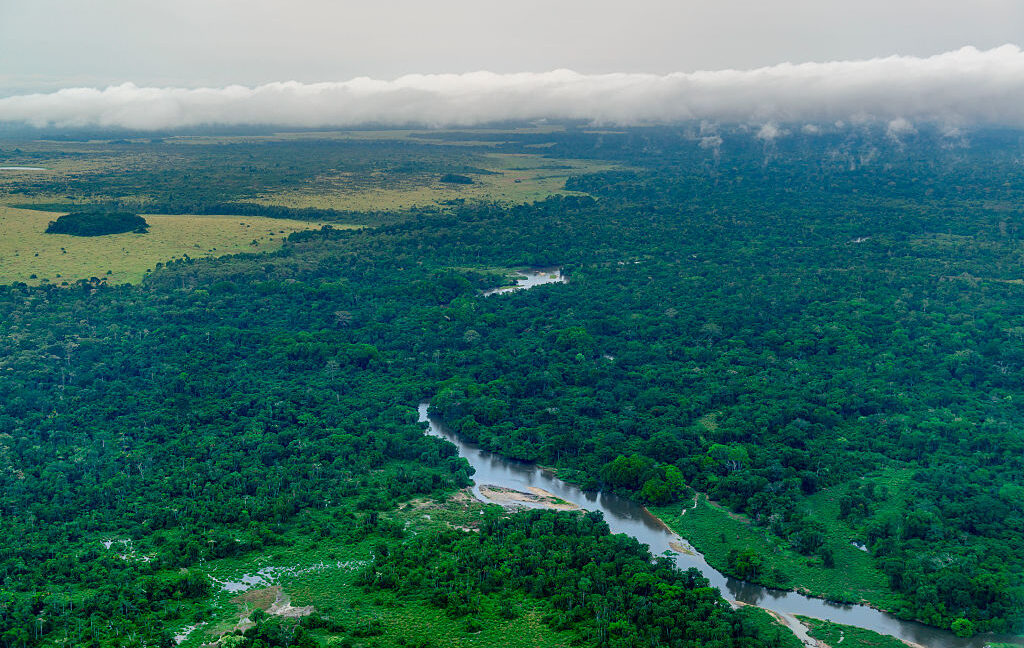
The evidence pointed overwhelmingly to massive wetland areas in tropical Africa and Southeast Asia. In regions like the Sudd wetlands of South Sudan and the Congo Basin, record-breaking rainfall transformed landscapes. These waterlogged, oxygen-poor environments became perfect incubators for methanogenic microbes—ancient microorganisms that produce methane as a metabolic byproduct.
The Sudd, one of the world’s largest wetlands, experienced flooding on an unprecedented scale. Similar conditions prevailed across the Congo Basin, the Amazon, and extensive areas of Southeast Asia. In these aquatic environments, methanogens thrived, producing methane at rates that surprised even seasoned researchers.
The Global Impact
The implications of this discovery extend far beyond academic curiosity. Understanding that the 2020 methane surge was primarily driven by natural processes rather than human industrial activity changes how we approach climate mitigation strategies.
While reducing fossil fuel emissions remains crucial, this research highlights the complex interplay between natural systems and atmospheric chemistry. The findings suggest that climate change itself may be creating feedback loops—warmer temperatures and altered precipitation patterns could be making wetlands even more productive methane sources.
The research also underscores the importance of comprehensive monitoring systems. Without the global flask network and satellite observations, this mystery might have remained unsolved, potentially leading policymakers down ineffective paths in addressing methane emissions.
Looking Forward
As we move beyond the exceptional conditions of 2020-2023, scientists are closely monitoring whether methane levels will return to pre-surge patterns or if this represents a new normal. The extended La Niña has ended, but the atmospheric processing capacity for methane may take time to fully recover.
This research serves as a powerful reminder that Earth’s climate system is incredibly complex, with natural processes that can amplify or mask human impacts in unexpected ways. It also highlights the critical importance of continued investment in atmospheric monitoring and climate science—because understanding these complex interactions is essential for developing effective strategies to address climate change.
The methane mystery of 2020 may be solved, but it has opened up new questions about how natural systems will respond to ongoing climate change and what surprises might await us in the coming years.
methane surge 2020, atmospheric chemistry, hydroxyl radicals, La Niña, wetland methane, microbial emissions, carbon isotopes, climate science breakthrough, NOAA monitoring, Greenhouse Gases Observing Satellite, Sudd wetlands, Congo Basin, climate feedback loops, pandemic environmental impact, atmospheric methane processing, natural vs industrial emissions, climate mystery solved, tropical rainfall patterns, methanogenic microbes, environmental monitoring systems
Scientists finally solve the methane mystery, Natural processes behind 2020’s emissions spike, Game-changing climate research reveals unexpected methane source, The great atmospheric slowdown explained, When microbes took over the atmosphere, La Niña’s role in climate surprises, Wetland emissions bigger than we thought, Atmospheric detergent shortage caused methane surge, Carbon isotope evidence cracks the case, Nature’s revenge: How wetlands produced record methane, Climate science’s biggest whodunit solved, The pandemic’s unexpected environmental impact, Three years of La Niña changed everything, Microbial methane production goes into overdrive, Why your gas stove isn’t the problem (this time), The hydroxyl radical shortage that shocked scientists, Tropical wetlands become methane factories, NOAA’s global network saves the day, Satellite data reveals methane’s true source, Climate feedback loops nobody saw coming, When natural systems trump human emissions, The 80/20 rule in atmospheric chemistry, Waterlogged landscapes produce climate surprises, Ancient microbes respond to modern climate change, Understanding Earth’s complex climate machinery, Policy implications of natural methane sources, Will methane levels ever return to normal?, The atmospheric processing capacity crisis, Climate science’s plot twist of the decade, How rainfall patterns control greenhouse gases, The unexpected environmental silver lining of lockdowns, When less pollution creates more problems, The isotopic fingerprint that solved the mystery, From fossil fuels to wetlands: The methane source shift, Climate detectives track down the real culprit, Nature’s methane factories revealed, The atmospheric chemistry lesson we didn’t see coming, Three consecutive La Niña years changed the game, Wetland methane: The sleeping giant wakes up, How oxygen-poor environments produce greenhouse gases, The microbial world’s response to climate change, When natural emissions outpace industrial ones, The climate system’s hidden complexity exposed, Why monitoring matters more than ever, The feedback loop that could accelerate warming, Understanding the methane lifecycle, How precipitation patterns affect global warming, The atmospheric cleansing system breakdown, Climate science’s most surprising discovery of 2024, What the methane surge means for future climate policy
,


Leave a Reply
Want to join the discussion?Feel free to contribute!