
A Flat Optical Surface Just Broke a Major Rule of Light
A Flat Optical Surface Just Broke a Major Rule of Light
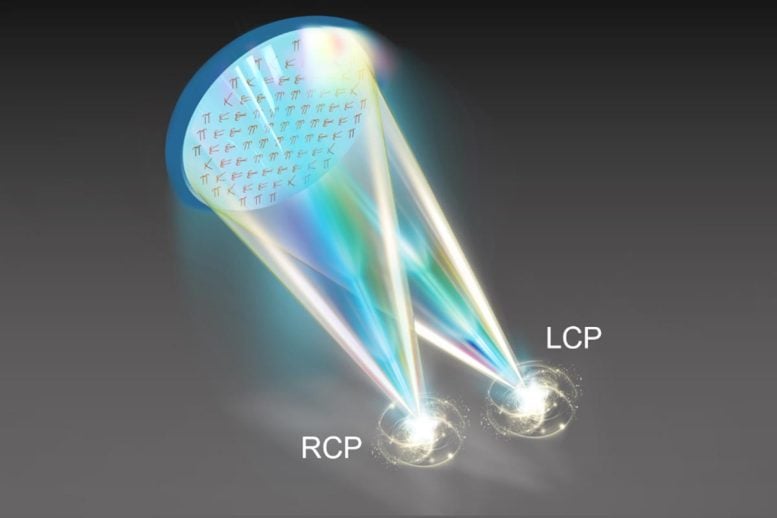
In a breakthrough that could reshape the future of imaging, sensing, and optical computing, researchers have unveiled a paper-thin device capable of controlling light in ways once thought impossible. A team led by Professors Yijun Feng and Ke Chen at Nanjing University has developed a flat optical surface that defies a long-standing rule of light manipulation—allowing two independent pathways of light to coexist without sacrificing color accuracy.
This isn’t just another incremental step in lens technology. It’s a fundamental leap that could unlock a new era of ultra-compact, full-color imaging systems, advanced augmented reality displays, and next-generation multi-spectral sensors.
The Science Behind the Magic
At the heart of this innovation is a phenomenon known as broadband achromatic wavefront control. In traditional optics, lenses bend light to focus it, but they often struggle with chromatic aberration—where different colors of light focus at different points, blurring the image. This is especially problematic in devices that need to handle multiple wavelengths of light simultaneously, like cameras, microscopes, and sensors.
The Nanjing team’s solution? A flat, ultra-thin surface embedded with precisely engineered nanostructures. These structures manipulate the phase and amplitude of light at the nanoscale, guiding it along two distinct paths while maintaining perfect color fidelity across the entire visible spectrum. In other words, the device can split or steer light in complex ways without the rainbow-colored fringes that plague conventional optics.
Why This Matters
The implications are vast. Imagine smartphones with cameras that rival professional DSLRs, AR glasses that don’t distort colors, or medical imaging devices small enough to fit in a pocket but powerful enough to detect diseases at the cellular level. This technology could also revolutionize fields like autonomous vehicles, where precise, color-accurate sensing is critical for safety.
What sets this discovery apart is its scalability and versatility. Unlike bulky, curved lenses, this flat surface can be manufactured using existing semiconductor fabrication techniques, making it easier to integrate into a wide range of devices. It’s a perfect example of how nanotechnology is blurring the lines between science fiction and reality.
A Viral Moment for Science
The research, published in a leading optics journal, has already sparked excitement across the scientific community. Social media is abuzz with terms like “flat lens revolution,” “light manipulation breakthrough,” and “the end of bulky optics.” Tech enthusiasts are calling it a “game-changer,” while industry insiders are speculating about its potential to disrupt markets from consumer electronics to healthcare.
The team’s achievement is more than just a technical marvel—it’s a reminder of how curiosity-driven research can lead to transformative innovations. As Professor Feng put it, “We’re not just bending light; we’re rewriting the rules.”
This is the kind of story that captures the imagination: a tiny surface, a big idea, and a future where the boundaries of what’s possible keep expanding.
Tags & Viral Phrases:
flat lens revolution, light manipulation breakthrough, broadband achromatic wavefront control, nanotechnology optics, color-accurate imaging, ultra-compact lenses, next-gen photonic tech, spin-unlocked achromatic meta-lens, Nanjing University optics, chromatic aberration solved, AR display revolution, multi-spectral sensing, semiconductor fabrication optics, science viral moment, game-changing optics, light bending at nanoscale, future of imaging, portable medical sensors, autonomous vehicle optics, consumer electronics disruption.
,


Leave a Reply
Want to join the discussion?Feel free to contribute!