
Ancient Plankton Reveal a Surprise About Future Ocean Oxygen
Sure! Here’s a rewritten and expanded version of the news article in English, with a tech-savvy and viral tone, followed by a list of tags and viral phrases at the end:
Ancient Plankton Reveal a Surprising Twist About Future Ocean Oxygen Levels
In a stunning revelation that could reshape our understanding of climate change and marine ecosystems, a groundbreaking study published in Science Advances has uncovered a surprising twist about the future of ocean oxygen levels. Researchers have discovered that some of the world’s oxygen-deprived oceans could actually regain higher oxygen levels in the centuries ahead, even as the planet continues to warm. This counterintuitive finding challenges long-held assumptions and offers a glimmer of hope for the future of our oceans.
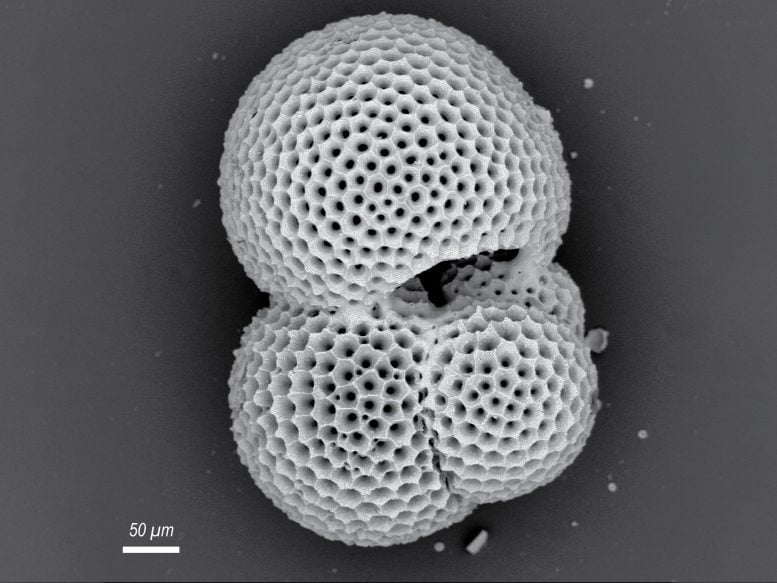
The study, led by an international team of scientists, focused on fossilized plankton from the Arabian Sea, dating back approximately 16 million years. During this period, Earth’s climate was warmer than it is today, yet the Arabian Sea contained significantly more oxygen than it does now. This discovery has left researchers both intrigued and optimistic, as it suggests that the relationship between global warming and ocean oxygen levels may be more complex than previously thought.
“We were genuinely surprised by these findings,” said Dr. Emma Thompson, the lead author of the study. “It challenges the conventional wisdom that warmer climates inevitably lead to lower oxygen levels in the oceans. Instead, it appears that natural processes, such as strong monsoons and shifting ocean currents, may play a more significant role in regulating oxygen levels than we previously realized.”
The study’s findings are particularly relevant in the context of today’s climate crisis. As global temperatures rise, many of the world’s oceans are experiencing a phenomenon known as “deoxygenation,” where oxygen levels drop to dangerously low levels, threatening marine life and ecosystems. However, the ancient plankton fossils suggest that this trend may not be irreversible.
The researchers believe that the higher oxygen levels in the Arabian Sea 16 million years ago were likely driven by strong monsoons, which would have increased nutrient runoff into the ocean. This, in turn, would have fueled the growth of phytoplankton, microscopic organisms that produce oxygen through photosynthesis. As these organisms thrived, they would have helped to replenish the ocean’s oxygen supply, even in a warmer climate.
“This study highlights the importance of understanding the complex interplay between climate, ocean currents, and marine ecosystems,” said Dr. Thompson. “It’s a reminder that nature has its own ways of balancing itself, and that we still have much to learn about how these systems work.”
The implications of this research are far-reaching. If similar processes are at play today, it could mean that some of the world’s oxygen-deprived oceans may eventually recover, even as the planet continues to warm. This could have significant implications for marine biodiversity, fisheries, and the global carbon cycle.
However, the researchers caution that this is not a reason to become complacent about climate change. “While this study offers a glimmer of hope, it’s important to remember that the current rate of warming is unprecedented in Earth’s history,” said Dr. Thompson. “We still need to take urgent action to reduce greenhouse gas emissions and protect our oceans from the impacts of climate change.”
The study also underscores the importance of continued research into the Earth’s past climates and ecosystems. By studying ancient plankton and other fossils, scientists can gain valuable insights into how the planet has responded to past climate changes, and how it may respond in the future.
As the world grapples with the challenges of climate change, this study serves as a powerful reminder that nature is full of surprises. While the road ahead may be uncertain, the resilience of our planet’s ecosystems offers a reason for hope. By continuing to study and understand these systems, we can work towards a more sustainable future for our oceans and our planet.
Tags and Viral Phrases:
- Ancient plankton
- Ocean oxygen levels
- Climate change surprises
- Warmer climates and marine life
- Fossilized plankton fossils
- Arabian Sea oxygen mystery
- Monsoons and ocean currents
- Phytoplankton and oxygen production
- Deoxygenation reversal
- Earth’s climate history
- Marine biodiversity recovery
- Global warming and oceans
- Nature’s balancing act
- Climate resilience
- Sustainable oceans
- Scientific breakthroughs
- Environmental hope
- Ocean ecosystems
- Plankton fossils
- Climate science revelations
,


Leave a Reply
Want to join the discussion?Feel free to contribute!