
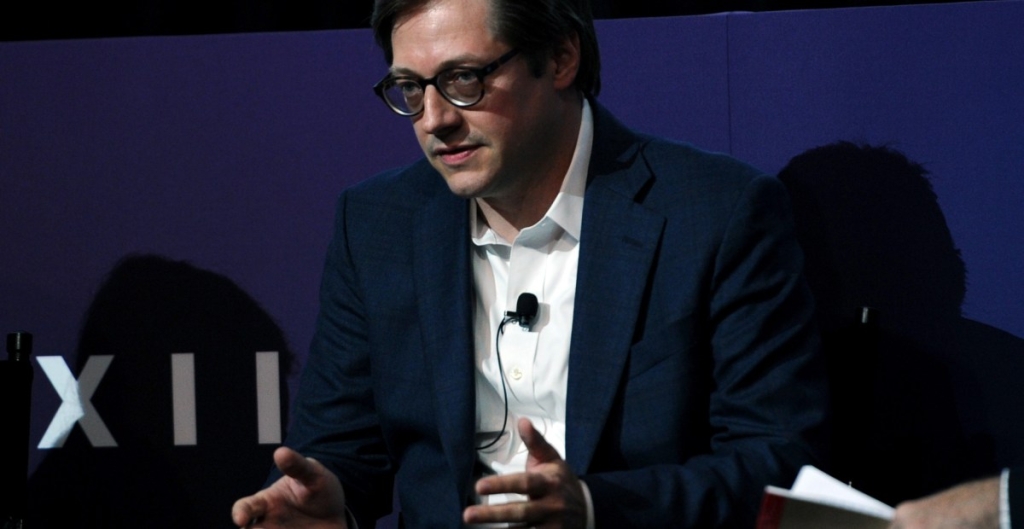
Former Tumblr head Jeff D’Onofrio steps in as acting CEO at the Washington Post
The Washington Post’s Leadership Crisis Deepens as Jeff Bezos’ Media Empire Faces Another Major Shakeup
In a stunning turn of events that has sent shockwaves through the journalism world, The Washington Post has announced the abrupt departure of CEO Will Lewis following a tenure marked by controversy, internal strife, and strategic missteps. The timing couldn’t be more dramatic, coming on the heels of a brutal round of layoffs that eliminated 240 positions and left the newsroom reeling from what many are calling the beginning of the end for one of America’s most prestigious newspapers.
Jeff D’Onofrio, the Post’s chief financial officer since June 2024 and former CEO of Tumblr from 2017 to 2022, will serve as acting CEO and publisher. The appointment raises serious questions about the direction of the 148-year-old institution, particularly given D’Onofrio’s checkered history in digital media and his lack of traditional journalism experience.
A Tumultuous Reign Comes to an End
Will Lewis’s time at the helm of The Washington Post will be remembered as one of the most turbulent periods in the paper’s storied history. Taking over in January 2023 after the retirement of longtime leader Marty Baron, Lewis immediately set about implementing sweeping changes that would ultimately alienate both the newsroom and the paper’s readership.
The British-born executive, who previously served as chief executive of Dow Jones and publisher of The Wall Street Journal, brought with him a reputation for cost-cutting and digital transformation. However, his aggressive approach to restructuring and his perceived alignment with Amazon founder Jeff Bezos’s business interests created an atmosphere of distrust that permeated the organization.
Sources within the Post describe a newsroom in constant turmoil, with frequent clashes between Lewis and the paper’s journalists over editorial direction, resource allocation, and the fundamental mission of the institution. The situation reached a boiling point in recent months as Bezos increasingly exerted his influence over the paper’s operations, leading to what many saw as a systematic dismantling of the Post’s journalistic independence.
The Layoffs That Broke the Camel’s Back
The final straw came this week when The Washington Post announced the elimination of 240 jobs, representing approximately 10 percent of its workforce. The layoffs affected journalists, editors, and support staff across all departments, with particular impact on the paper’s investigative and international reporting teams.
The timing of the layoffs was particularly brutal, coming just days after the paper had published a series of investigative pieces on corporate malfeasance and government corruption. Many saw the timing as a clear message from Bezos that the Post’s watchdog role was no longer a priority.
Employees described the layoff process as chaotic and insensitive, with many learning of their termination through automated emails and being given mere hours to clear out their desks. The human toll was evident as colleagues embraced in tearful goodbyes, many vowing never to work in journalism again.
Jeff D’Onofrio: The Man Taking the Helm
The appointment of Jeff D’Onofrio as acting CEO has left many industry observers scratching their heads. D’Onofrio’s most notable previous role was as CEO of Tumblr from 2017 to 2022, a period that saw the once-vibrant social media platform struggle with declining user engagement, controversial content moderation policies, and ultimately, a dramatic fall from grace.
Under D’Onofrio’s leadership, Tumblr attempted to rebrand itself as a more family-friendly platform by banning adult content in December 2018. The move, while intended to attract advertisers and improve the platform’s image, had catastrophic consequences. According to data from SimilarWeb, Tumblr’s traffic plummeted by approximately 30 percent in the months following the ban, with many of the platform’s most active users migrating to alternative platforms.
The adult content ban was particularly controversial because Tumblr’s algorithm struggled to distinguish between pornographic material and legitimate artistic or educational content. As a result, many users found their non-explicit posts being flagged and removed, leading to widespread frustration and a mass exodus of the platform’s creative community.
Tumblr’s Spectacular Decline
D’Onofrio’s tenure at Tumblr represents one of the most spectacular falls from grace in recent tech history. When Yahoo acquired Tumblr in 2013 for $1.1 billion, the platform was seen as the future of social media—a space where creativity, self-expression, and community could flourish without the constraints of mainstream platforms like Facebook and Twitter.
However, under D’Onofrio’s leadership, Tumblr’s fortunes took a dramatic turn for the worse. The adult content ban, combined with poor product decisions and an inability to compete with emerging platforms like TikTok, led to a rapid decline in user engagement and advertising revenue.
By 2019, just six years after Yahoo’s acquisition, Tumblr was sold to Automattic, the owner of WordPress, for a reported price of less than $3 million. The sale represented a loss of over 99.7 percent of the platform’s value, making it one of the worst acquisitions in tech history.
Bezos’s Vision for The Washington Post
The appointment of D’Onofrio appears to be part of Jeff Bezos’s broader vision for The Washington Post—one that prioritizes financial efficiency over journalistic excellence. Since acquiring the paper in 2013 for $250 million, Bezos has invested heavily in digital transformation and technology infrastructure. However, in recent years, his focus seems to have shifted toward making the Post profitable rather than influential.
Industry analysts point to several concerning trends under Bezos’s ownership. The paper has increasingly focused on clickbait headlines and viral content at the expense of in-depth reporting. The opinion section has been transformed into a platform for pro-business and libertarian viewpoints, often at odds with the paper’s traditional liberal editorial stance.
Most troublingly, there are signs that Bezos is using the Post as a vehicle for his personal and business interests. The paper’s coverage of Amazon and Bezos himself has become noticeably softer in recent years, with critical stories often buried or killed altogether.
The Broader Crisis in Journalism
The turmoil at The Washington Post reflects a broader crisis facing the journalism industry as a whole. Traditional news organizations are struggling to adapt to the digital age, facing declining print revenues, the dominance of tech platforms, and a fragmented media landscape that makes it increasingly difficult to maintain a sustainable business model.
The Washington Post, despite its prestigious reputation and wealthy ownership, is not immune to these challenges. The paper has invested heavily in digital subscriptions and technology, but has struggled to convert its large readership into a sustainable revenue stream. The decision to implement aggressive cost-cutting measures, including the recent layoffs, suggests that even a paper with the resources of the Post is feeling the pressure.
What’s Next for The Washington Post?
The appointment of Jeff D’Onofrio as acting CEO raises serious questions about the future direction of The Washington Post. Will the paper continue its transformation into a more commercially-focused publication under Bezos’s ownership? Or will D’Onofrio recognize the unique value of the Post’s journalistic mission and work to restore its reputation as one of America’s premier news organizations?
Industry observers are deeply skeptical. D’Onofrio’s track record at Tumblr suggests a focus on short-term financial metrics at the expense of long-term brand value. His lack of experience in traditional journalism raises concerns about his ability to understand and respect the unique culture and mission of a newspaper like the Post.
Moreover, the fact that D’Onofrio is being appointed as “acting” CEO rather than being given the permanent position suggests that Bezos may still be searching for a long-term leader who can execute his vision for the paper. This uncertainty is likely to create further instability within the organization as employees wonder about their future and the future of the institution they serve.
The Human Cost
Behind the corporate maneuvering and strategic decisions are the real human costs of the Post’s transformation. The 240 employees who lost their jobs this week are just the most visible casualties of a broader shift in how news is produced and consumed in the digital age.
Many of those laid off were veteran journalists with decades of experience covering everything from local politics to international conflicts. Their departure represents not just a loss of institutional knowledge but a fundamental change in the kind of journalism the Post will be able to produce going forward.
Younger journalists, meanwhile, are left wondering whether a career in traditional media is still viable. The uncertainty at the Post, combined with similar turmoil at other legacy news organizations, is driving many talented young reporters to seek opportunities in corporate communications, content marketing, or entirely different fields.
A Turning Point for American Journalism
The events at The Washington Post represent a critical moment for American journalism. As one of the country’s most influential newspapers, the Post’s direction will have ripple effects throughout the industry. If the paper continues down its current path, prioritizing commercial interests over journalistic integrity, it could signal a broader shift away from the kind of watchdog journalism that has long been a cornerstone of American democracy.
Conversely, if the Post can find a way to balance financial sustainability with its journalistic mission, it could provide a model for other struggling news organizations. The challenge is enormous, requiring not just good business decisions but a fundamental reimagining of what a newspaper can and should be in the digital age.
As Jeff D’Onofrio takes the helm of this troubled institution, all eyes will be on The Washington Post to see whether it can navigate these treacherous waters and emerge as a stronger, more resilient organization. The stakes could not be higher—not just for the paper itself, but for the future of quality journalism in America.
Tags and Viral Phrases:
- Washington Post CEO Will Lewis steps down
- Jeff Bezos dismantles Washington Post
- 240 layoffs at Washington Post
- Jeff D’Onofrio Tumblr CEO appointed
- Tumblr’s 30% traffic loss after adult content ban
- Yahoo sold Tumblr for less than $3 million
- Washington Post journalism crisis deepens
- Traditional media struggling in digital age
- Jeff Bezos media empire shakeup
- Washington Post editorial independence threatened
- Legacy newspapers facing extinction
- Digital transformation failure at Washington Post
- Newsroom turmoil and mass resignations
- Clickbait replacing investigative journalism
- Washington Post billionaire owner controversy
- Media consolidation threatens press freedom
- Washington Post financial struggles continue
- Journalism industry in freefall
- Washington Post staff morale at all-time low
- Bezos prioritizes profit over journalism
- Washington Post reputation in jeopardy
- Traditional media vs digital platforms battle
- Washington Post future uncertain
- Journalism jobs disappearing rapidly
- Washington Post editorial direction questioned
- Media industry transformation crisis
- Washington Post leadership vacuum
- Digital media strategy failure
- Washington Post brand damage
- Journalism careers in decline
- Washington Post subscription model failing
- Media ownership concentration concerns
- Washington Post corporate influence
- Journalism independence under threat
- Washington Post digital pivot disaster
- Media company layoffs trend
- Washington Post institutional knowledge loss
- Journalism’s existential crisis
- Washington Post reader trust declining
- Media company valuation collapse
- Washington Post strategic missteps
- Journalism sustainability questions
- Washington Post competitive disadvantage
- Media industry restructuring
- Washington Post cultural shift
- Journalism business model broken
- Washington Post market position weakening
- Media company leadership crisis
- Washington Post transformation failure
,


Leave a Reply
Want to join the discussion?Feel free to contribute!