
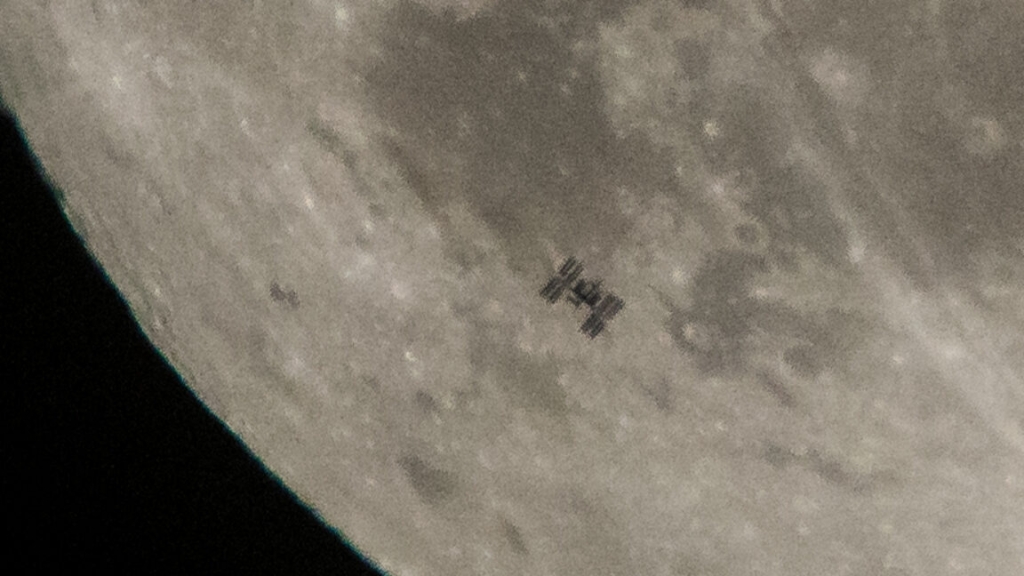
Lawmakers ask what it would take to “store” the International Space Station
NASA’s Commercial Space Station Race Heats Up Amid ISS Deorbit Debate
As NASA pushes forward with plans to transition from the International Space Station to privately-operated orbital outposts, the future of America’s presence in low Earth orbit hangs in a delicate balance. With the ISS approaching its operational end-of-life and Congress debating its fate, the commercial space station industry finds itself at a critical crossroads.
The Commercial LEO Destinations Program: Stuck in Neutral
NASA’s Commercial LEO Destinations (CLD) program, designed to foster private space stations that would replace the aging ISS, has encountered significant headwinds since its inception. Despite the agency’s ambitious vision of transitioning orbital operations to commercial partners, the program has been hamstrung by chronic underfunding and shifting regulatory requirements.
The CLD initiative represents NASA’s strategy to maintain continuous human presence in low Earth orbit while freeing up agency resources for deep space exploration missions to the Moon and Mars. However, supporters argue that the program has been underfunded from the start, creating uncertainty for companies investing billions in developing next-generation space stations.
The situation became more complicated last year when Sean Duffy, then NASA’s acting administrator, implemented changes to the agency’s requirements for private space stations. These modifications have left companies scrambling to adapt their designs and business models. Current NASA Administrator Jared Isaacman is now reviewing these changes, with the possibility of yet another shift in requirements looming over the industry.
The Financial Stakes: Billions on the Line
The numbers tell a compelling story about NASA’s current space station commitments. The agency spends more than $3 billion annually on ISS operations, covering everything from crew transportation and cargo resupply to ongoing maintenance and research support. This represents a significant portion of NASA’s budget that could potentially be redirected toward deep space exploration.
For fiscal year 2026, NASA has allocated nearly $7.8 billion for deep space exploration initiatives—a clear indication of the agency’s priorities as it looks beyond low Earth orbit. Meanwhile, the Commercial LEO Destinations program receives a comparatively modest $273 million for the current year, with these funds to be distributed among multiple competing companies.
This funding disparity highlights the fundamental challenge facing commercial space station developers: they must build sustainable businesses that can operate profitably while competing against a government-funded facility that has already absorbed decades of development and operational costs.
The Commercial Viability Challenge
Any private space station will need to generate sufficient revenue from commercial customers to achieve profitability. Industry analysts identify several potential revenue streams, including pharmaceutical research leveraging the unique microgravity environment, technology demonstrations for both government and private sector clients, and space tourism experiences for wealthy individuals and organizations.
However, companies developing commercial space stations face a significant chicken-and-egg problem. They worry they cannot attract enough commercial business—particularly in high-value sectors like pharmaceutical research—as long as the government-funded ISS remains operational. The ISS, with its established infrastructure and proven track record, continues to be the preferred destination for many research organizations and commercial partners.
This creates a challenging dynamic where commercial stations need the ISS to retire to capture market share, but the ISS needs viable commercial alternatives before it can safely deorbit. Breaking this cycle requires careful coordination between NASA, Congress, and the commercial space industry.
Vast: Racing Toward Orbit with Haven-1
Among the companies vying for NASA funding and positioning themselves as ISS successors, Vast has emerged as a particularly aggressive player. The company plans to launch its first single-module private outpost, named Haven-1, to orbit in early 2027. This initial station will accommodate crews for short-duration temporary stays, serving as a proof of concept for the company’s larger ambitions.
Following Haven-1, Vast plans to deploy a much larger multi-module station capable of supporting a permanent crew. This modular approach allows the company to generate revenue and demonstrate capabilities with its initial launch while developing more ambitious infrastructure for long-term operations.
Max Haot, Vast’s CEO, appears unfazed by recent congressional efforts to revisit the question of deorbiting the International Space Station. In a statement to Ars Technica, Haot clarified the company’s position on the ongoing debate.
“The amendment directs NASA to study the feasibility of something other than deorbit and disposal after ISS end of life, which is separate from the issue of retiring the space station and transitioning to commercial partners,” Haot explained. “We support President Trump’s directive in national space policy to replace the ISS by 2030, with commercial partners who can ensure there is no gap in America’s continuous human presence in space.”
Haot’s statement underscores a crucial point often lost in the debate: the goal is not to maintain the ISS indefinitely but to ensure a smooth transition to commercial alternatives that can sustain America’s leadership in low Earth orbit.
The Competition: Starlab, Orbital Reef, and Axiom Space
Vast faces stiff competition from several well-funded and technologically sophisticated rivals, each bringing unique capabilities and partnerships to the commercial space station race.
Starlab represents a collaboration between Voyager Space and Airbus, combining American innovation with European aerospace expertise. This joint venture aims to create a continuously crewed commercial space station that will begin operations as the ISS is decommissioned. Starlab’s international partnership could prove advantageous in attracting global customers and research partners.
The Blue Origin-led Orbital Reef project brings together multiple industry leaders, including Boeing, Sierra Space, and several other partners. This “mixed-use business park” in space concept envisions a modular station supporting a diverse range of activities, from scientific research to manufacturing and tourism. Blue Origin’s expertise in reusable rocket technology and Boeing’s extensive human spaceflight experience create a formidable team.
Axiom Space, perhaps the most established of the commercial station developers, has already made significant progress toward its goals. The company has contracts with NASA to attach its own modules to the ISS, creating a pathway to eventually separating these modules into an independent station. This incremental approach allows Axiom to generate revenue and demonstrate capabilities while the ISS remains operational.
The Political Landscape: Congress Weighs In
The recent congressional amendment directing NASA to study alternatives to ISS deorbiting reflects broader political debates about America’s space strategy. Some lawmakers argue that abandoning the ISS prematurely could cede low Earth orbit capabilities to international competitors, particularly China, which is developing its own space station.
Others contend that continued investment in the 25-year-old ISS diverts resources from more ambitious exploration goals and commercial development. This tension between maintaining existing capabilities and pursuing new opportunities characterizes much of the current space policy debate.
The amendment’s focus on studying alternatives rather than mandating continued ISS operations suggests a compromise position. Congress appears interested in ensuring that viable commercial alternatives exist before committing to deorbit, while still supporting the broader transition to private stations.
Technical and Operational Considerations
Transitioning from the ISS to commercial stations involves complex technical challenges beyond simple orbital operations. The ISS has served as a testbed for countless technologies and procedures that will be essential for future space exploration, from life support systems to space construction techniques.
Commercial stations must demonstrate equivalent or superior capabilities while operating under different business models and regulatory frameworks. They need to support diverse research activities, maintain safety standards, and integrate with existing space infrastructure including launch vehicles, cargo resupply systems, and astronaut transportation.
The timeline for this transition remains uncertain. While NASA’s current plan calls for ISS operations through 2030, with commercial stations ready to assume its role, the reality of development timelines, regulatory approvals, and market development suggests this schedule may be optimistic.
The Global Context
America’s commercial space station initiative occurs against the backdrop of increasing international competition in low Earth orbit. China’s Tiangong space station, while smaller than the ISS, represents a significant capability that could attract international partners and research projects away from American-led initiatives.
European and Russian space agencies continue to explore their own options for maintaining orbital presence, whether through partnerships with commercial entities or independent programs. The success of America’s commercial station initiative could determine whether the United States maintains its leadership position in low Earth orbit research and development.
Looking Ahead: Uncertain but Promising
The commercial space station industry stands at an inflection point. The combination of technological readiness, market demand, and policy support suggests that private orbital facilities are feasible and potentially profitable. However, the timing, scale, and ultimate success of these ventures remain uncertain.
The ongoing debate over ISS deorbiting reflects legitimate concerns about maintaining continuous American presence in low Earth orbit while transitioning to new operational models. The challenge for NASA, Congress, and commercial partners is to manage this transition in a way that preserves capabilities, manages risks, and enables new opportunities.
As companies like Vast, Starlab, Orbital Reef, and Axiom Space continue their development efforts, the coming years will reveal whether commercial space stations can indeed replace government-operated facilities and usher in a new era of orbital operations driven by market forces rather than government budgets.
The stakes extend beyond low Earth orbit, as success in this transition could demonstrate the viability of commercial models for other space activities, from lunar operations to deep space exploration. The commercial space station race represents not just a change in who operates orbital facilities, but potentially a fundamental shift in how humanity expands its presence beyond Earth.
Tags
commercial space stations, ISS replacement, NASA CLD program, Vast Haven-1, Starlab space station, Orbital Reef, Axiom Space, low Earth orbit commercialization, space station deorbit debate, commercial LEO destinations, private space stations 2027, NASA space policy, space station funding, orbital infrastructure, microgravity research facilities
Viral Sentences
The future of space is commercial, and the race is on to replace the International Space Station with private orbital outposts. NASA’s $3 billion annual ISS bill could soon be paid by space tourists and pharmaceutical companies instead of taxpayers. Vast plans to launch Haven-1 in early 2027, beating competitors to become the first commercial space station in orbit. The ISS has cost taxpayers over $100 billion, but its successor might be funded entirely by private investment and commercial revenue. Congress is debating whether to keep the aging ISS flying or bet billions on unproven commercial alternatives. Space manufacturing, drug discovery, and even space tourism could all happen on the next generation of commercial space stations. Blue Origin’s Orbital Reef promises to be a “mixed-use business park” in space, while Axiom Space plans to detach from the ISS and go independent. The commercial space station race isn’t just about profit—it’s about maintaining American leadership in orbit as China builds its own space station. NASA’s $273 million Commercial LEO Destinations budget seems tiny compared to the $7.8 billion going to deep space exploration. The question isn’t whether commercial space stations will happen, but whether they’ll be ready before the ISS retires in 2030.
,

Leave a Reply
Want to join the discussion?Feel free to contribute!