
Humans Reached Australia 60,000 Years Ago, New DNA Study Confirms
New DNA Study Confirms Humans Arrived in Australia 60,000 Years Ago, Rewriting the Timeline of Human Migration
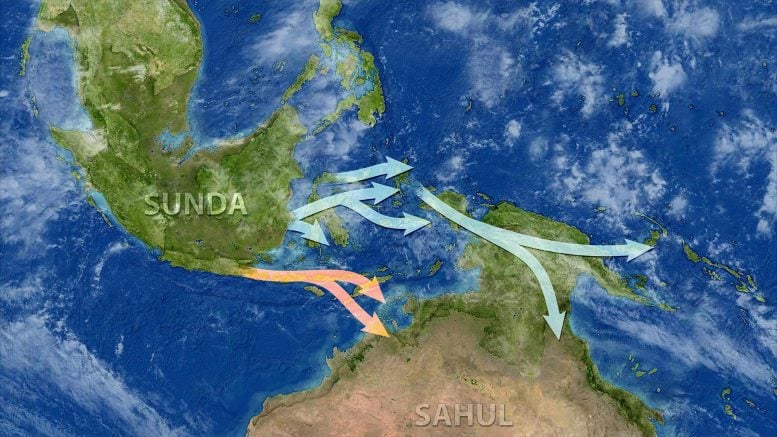
In a groundbreaking revelation that is reshaping our understanding of early human history, a new genetic study has confirmed that modern humans, Homo sapiens, reached Australia approximately 60,000 years ago. This discovery, published in a collaborative effort between the University of Huddersfield’s Archaeogenetics Research Group and the University of Southampton’s Centre for Maritime Archaeology, provides compelling evidence that challenges previous assumptions about the timeline and routes of human migration to Sahul—the ancient landmass that once connected Australia, New Guinea, and Tasmania.
The study, which analyzed ancient DNA samples from archaeological sites across the region, offers a detailed look into the seafaring capabilities and navigational prowess of our ancestors. Researchers found that early humans likely used multiple routes to reach Sahul, navigating vast stretches of open ocean with remarkable precision. This suggests that these ancient mariners were not only skilled but also possessed a deep understanding of ocean currents, wind patterns, and celestial navigation.
Dr. Martin Richards, a leading geneticist at the University of Huddersfield, emphasized the significance of the findings. “This study provides the most robust genetic evidence yet for the timing and routes of human migration to Sahul. It underscores the ingenuity and adaptability of early humans, who were able to traverse immense distances and thrive in diverse environments.”
The research also sheds light on the genetic diversity of the first Australians. By comparing ancient DNA with that of modern Indigenous populations, scientists have been able to trace the lineage of these early settlers and confirm their direct connection to the ancestors of today’s Aboriginal and Torres Strait Islander peoples. This genetic continuity highlights the resilience and cultural richness of these communities, whose histories stretch back tens of thousands of years.
One of the most intriguing aspects of the study is the evidence of multiple migration waves. Rather than a single, linear journey, the data suggests that different groups of humans arrived in Sahul at different times, each contributing to the genetic and cultural tapestry of the region. This challenges the long-held notion of a singular “first arrival” and paints a more complex picture of human dispersal.
The implications of this research extend far beyond Australia. It provides valuable insights into the broader story of human migration out of Africa and into Asia, Oceania, and beyond. The ability of early humans to undertake such ambitious voyages speaks to their cognitive and technological advancements, which laid the foundation for the global spread of our species.
As the scientific community continues to unravel the mysteries of human prehistory, this study serves as a reminder of the incredible journey that has shaped our species. From the savannas of Africa to the shores of Sahul, the story of human migration is one of resilience, innovation, and an unyielding drive to explore the unknown.
Tags and Viral Phrases:
- Humans reached Australia 60,000 years ago
- New DNA study confirms ancient migration
- Early humans navigated open oceans
- Multiple seafaring routes to Sahul
- Genetic diversity of first Australians
- Indigenous ancestry traced through DNA
- Rewriting human migration timeline
- Ancient mariners’ navigational skills
- Resilience of early human settlers
- Groundbreaking archaeogenetics research
- Cultural richness of Aboriginal peoples
- Complex story of human dispersal
- Cognitive advancements of Homo sapiens
- Global spread of humanity
- Resilience, innovation, and exploration
- Unraveling the mysteries of prehistory
,

Leave a Reply
Want to join the discussion?Feel free to contribute!