
iPhone Air review: Apple’s pursuit of absolute thinness | iPhone
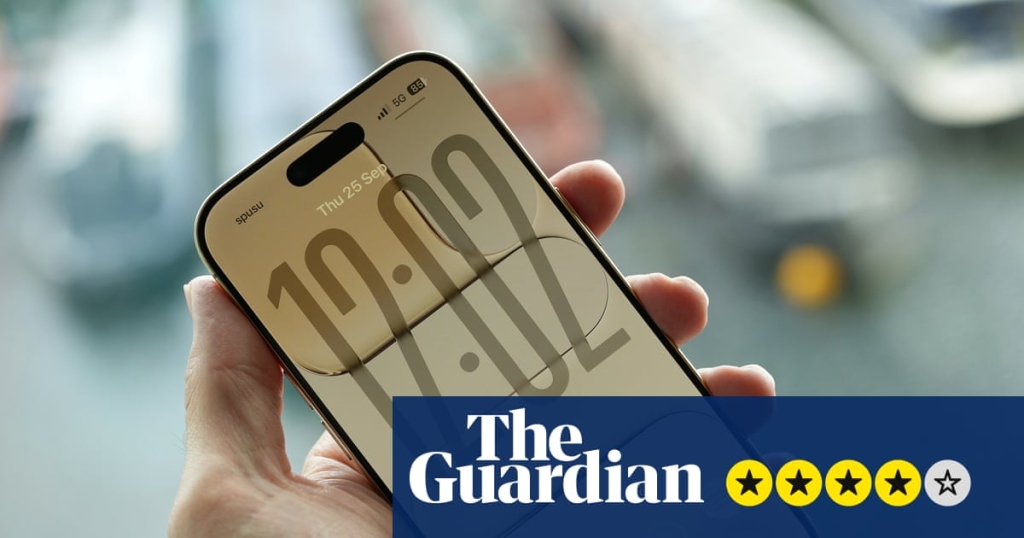
Apple iPhone Air Review: A Triumph of Design or a Step Too Far?
Apple’s latest creation, the iPhone Air, is a feat of engineering that pushes the boundaries of smartphone design. With its ultra-slim profile, premium materials, and cutting-edge technology, the Air is a bold statement from the tech giant. But does this pursuit of thinness come at too high a cost? Let’s dive into the details.
Design and Build: A Marvel of Minimalism
The iPhone Air is a technical and design marvel that asks: how much are you willing to give up for a lightweight and ultra-slender profile? Beyond the obvious engineering effort that has gone into creating one of the slimmest phones ever made, the Air is a reductive exercise that boils down the iPhone into the absolute essentials in a premium body.
Cut away the rear cameras, slim down the battery, remove the stereo speakers, and maximize the screen, and what is left is an impressive sliver of titanium and glass. Doing so isn’t cheap. The iPhone Air starts at £999 (€1,199/$999/A$1,799), sitting between the standard £799 iPhone 17 and the £1,099 iPhone 17 Pro models.
Photos don’t do the Air justice. You know it is something special as soon as you pick it up. Its 5.64mm-thick frame feels thinner thanks to soft edges and light weight that’s 12g less than the already quite light iPhone 17. The glass lump on the back contains most of the guts of the phone, with the rest dedicated to the battery. The usual iPhone buttons line the sides, including the camera control and action buttons. The earpiece speaker in the top is the only one: it is pretty good, but you can tell there’s no stereo sound when watching videos, which is a bit of a shame as the 6.5in screen is smooth, bright, and fantastic.
The Air behaves just like any other modern iPhone. It runs iOS 26 with its glass-like design, has all the same apps, Face ID, and is super responsive. There is only one hiccup, and that’s the lack of a nano SIM card tray, as the iPhone Air relies entirely on eSIM. In the US, Apple has only supported eSIMs since the iPhone 14, but models sold everywhere else had nano SIM slots, until the Air.
Specifications: Power Meets Portability
- Screen: 6.5in Super Retina XDR (120Hz OLED) (460ppi)
- Processor: Apple A19 Pro (5-core GPU)
- RAM: 12GB
- Storage: 256, 512GB, or 1TB
- Operating System: iOS 26
- Camera: 48MP rear; 18MP front-facing
- Connectivity: 5G eSIM-only, Wi-Fi 7, NFC, Bluetooth 6, Thread, USB-C, satellite, UWB, and GNSS
- Water Resistance: IP68 (6 meters for 30 mins)
- Dimensions: 156.2 x 74.7 x 5.64mm
- Weight: 165g
A19 Pro Chip: Performance with a Twist
The Air has the A19 Pro chip, similar to the iPhone 17 Pro, but with one fewer GPU core, reducing its performance a little for games and other graphics-intensive tasks. It feels rapid in daily tasks but gets noticeably warmer by the camera lump when doing intensive jobs.
Despite most of the body being dedicated to the battery, a smaller capacity cell is the Air’s first big concession to slenderness. The battery life is shorter than other iPhones, but isn’t as bad as you might imagine. For relatively light days with the screen actively used for five hours for browsing, messaging, and watching video mostly on Wi-Fi, the Air lasted a decent 40 hours between charges. On heavier days, shooting photos, using mapping on 5G out and about, listening to music, messaging, and watching video on the commute, the Air lasted about 30 hours, ending the day with roughly 25% left. It should see out most days with a nightly charge, but if you do lots of gaming or other more intensive tasks, you may need low power mode.
Sustainability: A Greener Choice
The battery will last in excess of 1,000 full-charge cycles with at least 80% of its original capacity and can be replaced for £109. Out-of-warranty screen repairs cost £349. Specialists iFixit awarded the iPhone Air a seven out of 10 for repairability.
It contains more than 35% recycled material, including aluminum, cobalt, gold, lithium, rare earth elements, steel, tin, titanium, and tungsten. Apple breaks down the phone’s environmental impact in its report. Apple offers trade-in and free recycling schemes, including for non-Apple products.
Camera: A Single Lens Story
The camera is the second big concession. The Air only has a single 48-megapixel camera on the back with the new and improved 18MP selfie camera with Centre Stage tech from the iPhone 17 line on the front. The main camera matches that from the regular iPhone 17, not the larger sensor from the iPhone 17 Pro, but performs admirably. It can shoot great photos and video in good lighting and manages dim indoor light fairly well. It can look a bit soft and grainy at times and won’t win any camera awards, but generally shoots decent photos. It can perform a 2x crop zoom, which is pretty good in brighter scenes, but zoom further, and your photos have all the hallmarks of digital zoom: surfaces and people look a bit soft, and detail is lost in more distant subjects.
The lack of an ultrawide and telephoto camera certainly hampers the shots you can get. The only other iPhone with a single rear camera is the lower-cost iPhone 16e.
Price: Premium for Thinness
The iPhone Air costs from £999 (€1,199/$999/A$1,799) with 256GB of storage. For comparison, the iPhone 16e costs £599, iPhone 17 is £799, iPhone 17 Pro is £1,099, the iPhone 17 Pro Max costs £1,199, the Google Pixel 10 costs £799, the Samsung Galaxy S25 Edge is £899, and the Fairphone 6 sells for £499.
Verdict: A Bold Experiment
The iPhone Air is a remarkable design seeking a problem to solve. I’m not sure many people have looked at their current smartphone and wished it would be thinner rather than having longer battery life and a better camera. The super-slender frame feels transformative when you first pick it up, but the novelty quickly wears off. As with Samsung’s equally thin Galaxy S25 Edge, the lighter weight is the most meaningful change, making it easier to hold and pocket. The Air has a big screen but won’t weigh you down.
The battery life is better than expected and should see out most days with some left in the tank when new, which may not be the case after a couple of years of use. Apple sells a smart MagSafe battery to add another 65% capacity to the Air, but slapping it on the back removes the benefit of the thin and light design. So does adding a case.
The biggest concession is the single camera on the back. The lack of ultrawide and telephoto options is a cut too far for me using a phone as my primary method for capturing memories. But if you are an Apple buyer who wants a slender novelty that is great to hold and use, the iPhone Air is a special piece of hardware. For everyone else, there are better options elsewhere.
Pros: Super thin and lightweight, great screen, good single rear camera, upgraded Centre Stage selfie camera, top performance, long software support, Face ID.
Cons: No ultrawide or telephoto cameras, expensive, relatively short battery life, deserves to be used without a case, lack of cutting-edge AI.
Tags and Viral Phrases:
- iPhone Air
- Ultra-slim smartphone
- Apple’s thinnest phone
- Titanium and glass design
- 5.64mm thickness
- 165g weight
- A19 Pro chip
- iOS 26
- 6.5in Super Retina XDR display
- 48MP rear camera
- 18MP front-facing camera
- eSIM-only
- 1,000 charge cycles battery
- Recycled materials
- Sustainable smartphone
- Premium design
- Lightweight innovation
- Single-lens camera
- Battery life trade-off
- MagSafe battery
- Repairability score
- iPhone Air vs iPhone 17 Pro
- iPhone Air vs Samsung Galaxy S25 Edge
- iPhone Air vs Google Pixel 10
- Apple’s bold experiment
- Thinness over features
- Is the iPhone Air worth it?
,
Leave a Reply
Want to join the discussion?Feel free to contribute!