
Intel Recently Shelved Numerous Open-Source Projects
Intel’s Open-Source Retreat: A Cautionary Tale of Tech Titans and Troubled Times
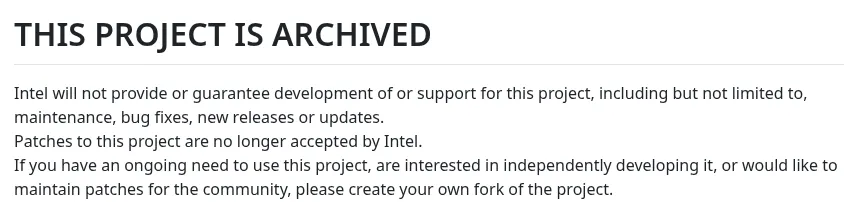
In a move that has sent shockwaves through the developer community, Intel has officially pulled the plug on a staggering array of open-source projects, marking yet another chapter in the semiconductor giant’s apparent retreat from its once-celebrated open-source commitments. The tech behemoth, which once stood as a paragon of open-source collaboration, is now quietly shuttering projects faster than you can say “GitHub archive.”
The Latest Casualties in Intel’s Open-Source Purge
The most recent wave of closures includes a diverse collection of projects that, while not always central to Intel’s core business, represented the company’s broader commitment to innovation and community engagement. Let’s dive into the details of what’s being lost:
GPGMM: The GPU Memory Management Library
Intel’s GPGMM (General Purpose GPU Memory Management) library, a sophisticated C++ solution designed for modern graphics and compute APIs, has been sunset just this past week. This project represented Intel’s attempt to provide developers with robust tools for managing GPU memory across applications and runtimes—a critical component in today’s heterogeneous computing landscape.
Polite Guard: AI for Social Harmony
In a somewhat bizarre twist, Intel’s NLP-based “Polite Guard” language model—designed to classify text as polite or not—has also met its demise. Announced nearly a year ago to the day, this project aimed to help businesses ensure courteous communication with customers. While it may have seemed like an odd fit for a chip manufacturer, it exemplified Intel’s willingness to experiment with AI applications beyond their traditional domain.
Intel UI Icons: The Branding Repository
Even Intel’s brand iconography hasn’t been spared. The company’s UI Icons repository, which provided convenient access to Intel’s brand icons for web embedding, is closing up shop at the end of January. This closure represents one of the more mundane yet symbolic retreats from Intel’s open-source presence.
OpenVINO Extension for Stable Diffusion
Intel’s showcase of their OpenVINO AI toolkit through a Stable Diffusion extension has also been archived. While Intel maintains the core OpenVINO toolkit, this specific application demonstrated practical AI implementations using their hardware.
HiBench: The Big Data Benchmarking Suite
Perhaps one of the more significant losses is HiBench, Intel’s big data benchmarking suite for Hadoop and similar technologies. Maintained for an impressive 14 years, this project provided crucial performance metrics for the big data ecosystem. Its discontinuation just before Christmas marks the end of an era for a tool that many in the data science community relied upon.
Node-DC-EIS: Data Center Employee Information Services
A decade-old project, Node-DC-EIS provided Data Center Employee Information Services in Node.js, showcasing workloads for Node.js use in data centers with Xeon processors. Its archival represents another piece of Intel’s historical open-source contributions fading into obscurity.
open-omics-scanpy: Single-Cell Analysis Code
This Python-based, highly scalable single-cell analysis code represented Intel’s foray into bioinformatics and computational biology—fields increasingly reliant on high-performance computing.
OP-TEE Release Binaries and Related Projects
Several OP-TEE (Open Portable Trusted Execution Environment) projects have been archived, including release binaries and the out-of-tree OP-TEE Linux driver. These projects were crucial for Intel’s TDX (Trust Domain Extensions) ecosystem.
FineIBT Userspace and VCDP linux-kmd
FineIBT Userspace prototyping code and VCDP linux-kmd (out-of-tree media driver code) round out the list of recently archived projects, though some of this work has reportedly been upstreamed to the mainline kernel.
The Broader Context: Intel’s Open-Source Strategy Under Scrutiny
These closures didn’t happen in isolation. They follow Intel’s controversial decision to archive its On Demand “SDSi” GitHub project—a feature that sparked considerable debate within the community. The timing is particularly telling, coming on the heels of Intel’s discontinuation of the Gaudi user-space code, the ending of Clear Linux, and other open-source setbacks.
The pattern became impossible to ignore after our comprehensive analysis in “Intel’s Open-Source Strategy Is Changing At Odds With The Ethos Of Open-Source,” which documented the company’s shifting priorities and their potential consequences for the broader open-source ecosystem.
Why This Matters: The Ripple Effects
Intel’s retreat from open-source isn’t just about losing a few GitHub repositories. It represents a fundamental shift in how one of the world’s largest technology companies views its relationship with the open-source community. For years, Intel was celebrated as one of the most significant contributors to open-source, investing heavily in projects that benefited the entire ecosystem, not just their bottom line.
The consequences of this shift are multifaceted:
-
Innovation Slowdown: Many of these projects represented experimental approaches to problems that could have led to breakthrough innovations.
-
Community Trust Erosion: The open-source community thrives on trust and reciprocity. Intel’s actions may make developers more hesitant to invest time in Intel-sponsored projects.
-
Competitive Disadvantage: As competitors like AMD and ARM continue to embrace open-source, Intel’s retreat could put them at a strategic disadvantage in attracting top engineering talent.
-
Ecosystem Fragmentation: The loss of maintained projects can lead to fragmentation, with community members struggling to fill the gaps left by corporate backing.
The Human Cost: Engineering Talent Exodus
Behind these technical decisions lies a more troubling reality: Intel’s significant reduction in engineering talent over the past year. Many of these projects became unmaintainable not because they lacked value, but because the human resources to sustain them simply weren’t available. This talent exodus represents one of the most significant challenges facing Intel as it navigates increasingly difficult headwinds in the semiconductor industry.
What’s Next for Intel and Open-Source?
While Intel maintains that their core open-source commitments remain intact—particularly around Linux kernel development and key frameworks like OpenVINO—the trend is concerning. The company seems to be retreating to a more conservative, core-business-focused approach to open-source, abandoning the experimental and community-focused projects that once defined their open-source strategy.
This shift raises important questions about the future of corporate open-source engagement. If a company of Intel’s resources and historical commitment can retreat so dramatically, what does this mean for smaller companies and the broader open-source ecosystem?
The Silver Lining: Upstream Contributions
It’s worth noting that some of the work from these archived projects hasn’t been entirely lost. In several cases, particularly with FineIBT, the innovations have been upstreamed to mainline projects. This suggests that while Intel may be reducing its direct maintenance burden, the knowledge and code are finding their way into the broader ecosystem through other channels.
Conclusion: A Cautionary Tale
Intel’s open-source retreat serves as a cautionary tale for the technology industry. It demonstrates how quickly corporate priorities can shift and how vulnerable even well-maintained open-source projects can be to changes in company strategy. For developers and organizations relying on corporate-sponsored open-source projects, it’s a reminder to diversify dependencies and perhaps reconsider the sustainability of business models built entirely on corporate goodwill.
As Intel continues to navigate its challenges, the technology community will be watching closely to see whether this represents a temporary adjustment or a permanent shift in how one of the industry’s giants engages with the collaborative spirit that has driven so much of modern computing innovation.
Tags & Viral Phrases
Intel open-source purge, GitHub archive drama, tech giant retreat, semiconductor industry crisis, open-source betrayal, Intel engineering exodus, Clear Linux shutdown, Gaudi AI discontinuation, corporate open-source strategy failure, developer community outrage, Intel vs AMD open-source battle, semiconductor talent shortage, tech industry headwinds, Intel brand damage control, open-source ecosystem fragmentation, corporate responsibility in tech, Intel innovation slowdown, developer trust erosion, technology company pivots, semiconductor market challenges, Intel strategic missteps, open-source project sunset, tech industry transformation, Intel competitive disadvantage, community-driven development crisis, corporate tech priorities shift, Intel historical open-source legacy, technology industry cautionary tale, developer ecosystem sustainability, Intel future uncertainty, open-source dependency risks, tech company reputation management, semiconductor industry evolution, Intel market position challenges, developer community resilience, technology company strategy analysis, Intel organizational challenges, open-source project maintenance crisis, tech industry talent retention, Intel brand perception shift, developer ecosystem adaptation, technology company transformation journey, Intel industry leadership question, open-source project sustainability debate, tech industry future outlook, Intel strategic realignment, developer community response, technology company evolution patterns, Intel market challenges analysis, open-source project lifecycle management.
,

Leave a Reply
Want to join the discussion?Feel free to contribute!