
Gore Verbinski Shares Details on His Failed ‘BioShock’ Movie
Gore Verbinski’s Lost BioShock Vision: A Deep Dive into the Underwater Nightmare That Could Have Been
In the wake of his triumphant return to theaters with Good Luck, Have Fun, Don’t Die, acclaimed director Gore Verbinski has opened up about a project that has haunted both him and gaming fans for over a decade: his unrealized vision for a BioShock film adaptation.
For those unfamiliar with the tortured history of this project, Verbinski—the visionary behind Pirates of the Caribbean and A Cure for Wellness—was originally attached to direct a big-screen adaptation of Irrational Games’ critically acclaimed 2007 first-person shooter. The project, which had Universal Pictures’ backing, entered development in the late 2000s but ultimately collapsed under the weight of its own ambition and budget concerns.
During a recent Reddit AMA, Verbinski pulled back the curtain on what could have been one of the most daring video game adaptations ever attempted. His revelations paint a picture of a film that would have pushed boundaries in ways that would make even today’s boldest horror directors blush.
Canonizing Player Choice: The Bold Narrative Gamble
Perhaps the most fascinating aspect of Verbinski’s proposed approach was his intention to canonize both endings of the original BioShock game. For the uninitiated, the 2007 classic presented players with a binary choice at its climax that led to dramatically different outcomes. Verbinski and screenwriter John Logan planned to somehow weave both narrative threads into a cohesive whole—a narrative tightrope walk that would have required exceptional craftsmanship.
“I was looking forward to bringing that to the big screen and really fucking with people’s heads,” Verbinski admitted during the AMA, his characteristic candor shining through. This approach would have honored the game’s central theme of player agency while simultaneously subverting it—a meta-textual exploration of choice and consequence that could have elevated the material beyond typical video game fare.
The director’s willingness to embrace the game’s philosophical underpinnings suggests a deep understanding of what made BioShock resonate with players beyond its surface-level thrills. It wasn’t just about shooting splicers in a beautiful underwater city—it was about the illusion of choice, the nature of free will, and the seductive power of ideology.
The Oedipal Undercurrent: A Psychological Deep Dive
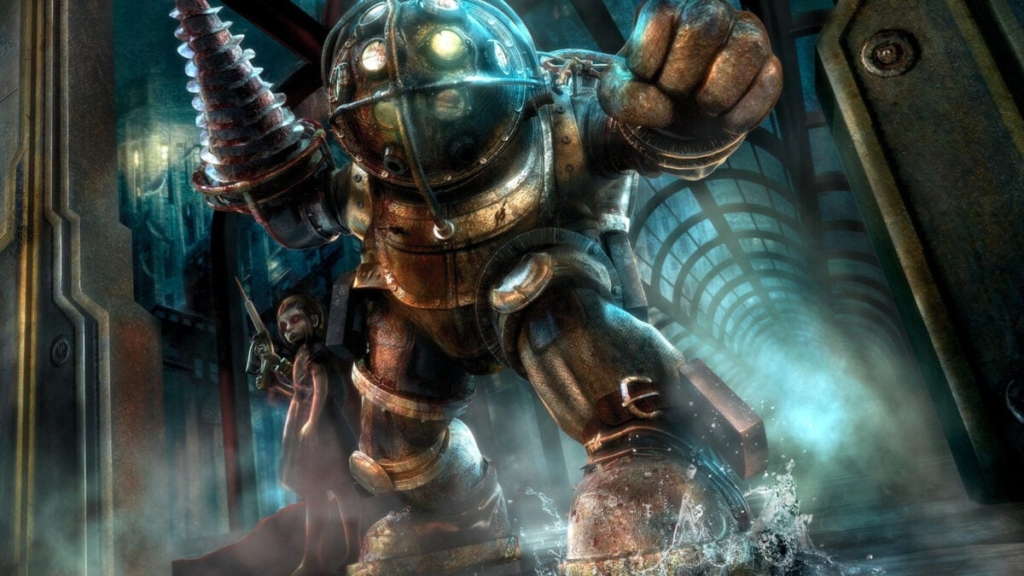
Even more provocative was Verbinski’s stated intention to “dive deeply into the Oedipal aspect” of the Little Sisters storyline. Throughout the game, players encounter these genetically modified young girls who harvest ADAM, the genetic material that grants plasmid powers. The moral choice to either rescue or harvest these children forms the backbone of the game’s ethical framework.
By explicitly framing this relationship through an Oedipal lens, Verbinski was signaling his intention to explore the psychological underpinnings of the game’s familial dynamics—particularly the relationship between the player character, the Little Sisters, and their protectors, the Big Daddies. This Freudian interpretation would have added layers of uncomfortable complexity to what was already a morally ambiguous scenario.
The fact that Verbinski was willing to go there speaks volumes about his commitment to preserving the game’s unsettling atmosphere. Where other directors might have softened these elements for broader appeal, Verbinski was prepared to lean into the discomfort, creating a film that would have lingered in viewers’ minds long after the credits rolled.
Hard R Territory: No Compromises on the Vision
Verbinski made it abundantly clear that his BioShock would have been “definitely kept it hard R.” This commitment to maintaining the game’s mature themes and graphic content would have been crucial to capturing the oppressive, nightmarish quality of Rapture—the underwater city that serves as the game’s setting.
The decision to pursue an R-rating aligns perfectly with Verbinski’s filmography, which includes the disturbing A Cure for Wellness and the unnervingly violent The Ring. His comfort with unsettling imagery and psychological horror would have been ideally suited to translating BioShock‘s atmosphere of creeping dread and body horror to the big screen.
The Art Deco Nightmare: Bringing Rapture to Life
One of the most tantalizing details from Verbinski’s AMA was his mention of the “great designs [and] entire underwater demented art-deco aesthetic” that had been developed for the film. Concept artists had clearly been hard at work creating a visual language that would capture Rapture’s unique blend of 1940s elegance and decaying grandeur.
The art deco style of Rapture—with its geometric patterns, luxurious materials, and optimistic modernist aesthetic—serves as the perfect visual metaphor for the city’s utopian ideals and their subsequent corruption. Verbinski’s team had apparently cracked the code on how to translate this to film, promising a visual feast that would have been worth the price of admission alone.
For fans of A Cure for Wellness, this commitment to striking, unsettling visuals would have been familiar territory. That film’s baroque production design and oppressive atmosphere demonstrated Verbinski’s ability to create immersive, nightmarish worlds—precisely the skill set needed to bring Rapture to life.
The Budgetary Abyss: What Sank the Project
Despite all these promising elements, the BioShock film ultimately foundered on the rocks of budgetary concerns. Universal reportedly got cold feet about financing a large-scale, R-rated project based on a video game property—a combination that studios have historically been reluctant to greenlight.
The irony is palpable. In the years since BioShock‘s development hell, the landscape has shifted dramatically. Audiences have proven more than willing to embrace challenging, R-rated content, as evidenced by the success of films like Sinners, The Substance, and A Different Man at the 2026 Oscars. Even in the horror space specifically, directors are being given unprecedented creative freedom to take risks and push boundaries.
Netflix’s Parallel Development: A Different Vision
Meanwhile, Netflix is currently developing its own BioShock movie, albeit without Verbinski’s involvement. The streaming giant’s approach appears to be markedly different from what Verbinski had planned, though specific details remain scarce.
When asked about Netflix’s project, Verbinski expressed skepticism about whether other studios “are quite willing to go where I was headed.” This suggests that the current iteration may be taking a more conventional, perhaps more commercially palatable approach to the material—potentially at the cost of the psychological depth and narrative boldness that characterized Verbinski’s vision.
The What-If Scenario: A Missed Opportunity
The tragedy of Verbinski’s unmade BioShock is that it arrived perhaps a decade too early. In today’s climate, where streaming platforms are hungry for prestige content and audiences are increasingly receptive to challenging material, his uncompromising vision might have found its moment.
The director’s track record suggests he could have delivered something truly special—a video game adaptation that transcended its source material while remaining faithful to its thematic core. His willingness to embrace the game’s darker elements, his understanding of its philosophical underpinnings, and his commitment to striking visual storytelling all point to a film that could have redefined what video game adaptations are capable of achieving.
The Legacy of What Could Have Been
As Verbinski returns to theaters with Good Luck, Have Fun, Don’t Die, one can’t help but wonder about the alternate timeline where his BioShock saw the light of day. Would it have been the breakthrough video game adaptation that finally earned the respect of critics and audiences alike? Would it have paved the way for more ambitious, artistically daring game adaptations?
We’ll likely never know. But Verbinski’s revelations serve as a fascinating glimpse into what might have been—a reminder that sometimes the most exciting creative projects are the ones that never make it to the screen, existing instead as tantalizing what-ifs in the minds of fans and filmmakers alike.
For now, we can only imagine the demented art deco nightmare that might have been, and hope that someday another filmmaker will be brave enough to dive into Rapture’s depths with the same uncompromising vision that Gore Verbinski was prepared to bring to the project.
Tags & Viral Phrases:
- Gore Verbinski’s lost BioShock vision
- The underwater nightmare that never was
- Canonizing both BioShock endings
- Diving deep into the Oedipal aspect
- Hard R BioShock movie
- Demented art deco aesthetic
- Really fucking with people’s heads
- Development hell survivor
- Netflix’s parallel BioShock project
- The what-if scenario of gaming adaptations
- Uncompromising video game vision
- Psychological horror in Rapture
- Little Sisters and Big Daddies reimagined
- The budget that sank the ship
- 2026’s boldest unmade film
- Video game adaptation revolution that never happened
- Gore Verbinski’s Reddit AMA revelations
- The BioShock that could have redefined cinema
- Underwater dystopia brought to life
- ADAM harvesting on the big screen
- Splicers in live action
- Andrew Ryan’s objectivist nightmare visualized
- The BioShock we deserved but never got
,

Leave a Reply
Want to join the discussion?Feel free to contribute!