
Seafarers were visiting remote Arctic islands over 4000 years ago
Title: Arctic Pioneers: How Ancient Humans Conquered the Ice with Ingenuity and Courage
In a groundbreaking archaeological discovery, researchers have uncovered evidence that humans were voyaging to remote islands off the northwest coast of Greenland over 4,500 years ago. This remarkable feat required crossing more than 50 kilometers of open water—one of the longest sea journeys ever undertaken by Indigenous peoples in the Arctic. The findings, published in a recent study, shed light on the extraordinary maritime capabilities of the Palaeo-Inuit, the first humans to reach these icy shores.
The Discovery: Unearthing a Lost Arctic Civilization
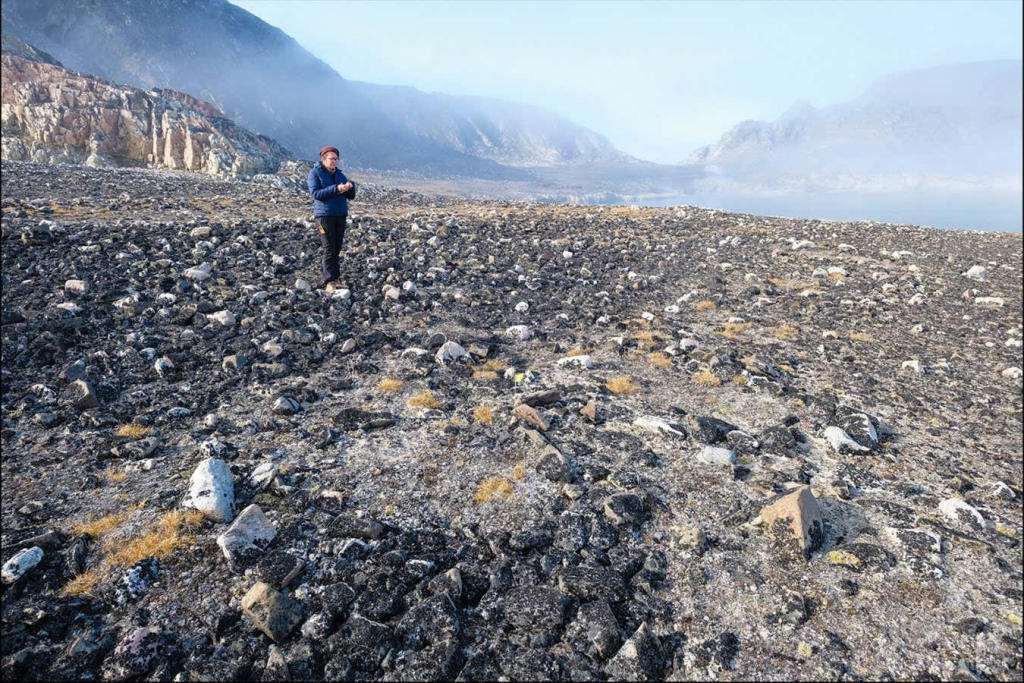
In 2019, a team of archaeologists led by Matthew Walls from the University of Calgary, Canada, conducted a survey of the Kitsissut Islands, also known as the Carey Islands, located northwest of Greenland. These islands lie within the Pikialasorsuaq polynya, an area of open water surrounded by sea ice. Marine sediment studies indicate that the polynya only formed around 4,500 years ago, making the presence of humans on these islands a relatively recent phenomenon in geological terms.
The researchers focused on three central islands: Isbjørne, Mellem, and Nordvest. They discovered five archaeological sites containing a total of 297 features, with the largest clusters found on Isbjørne along beach terraces. Among these features were traces of 15 circular tents, each divided into two halves by stones and featuring a central hearth. These “bilobate” tents are characteristic of the Palaeo-Inuit, the first peoples to reach northern Canada and Greenland.
Radiocarbon Dating: Pinpointing the Timeline
To determine the age of these settlements, the team radiocarbon-dated a single wing bone from a thick-billed murre, a seabird found in one of the tent rings. The results indicate that the bone is between 4,400 and 3,938 years old, suggesting that humans were present on the Kitsissut Islands very soon after the polynya formed. This timeline aligns with the arrival of the Palaeo-Inuit in Greenland, who likely voyaged westward from there to reach the islands.
“The shortest distance is about 52.7 kilometers,” explains Walls. “However, given prevailing currents and winds, they probably set off from a more northerly point, resulting in a longer but safer journey.” To the west of Kitsissut lies Ellesmere Island, part of modern-day Canada, but the currents between the two landmasses are challenging, making the journey even more impressive.
The Maritime Mastery of the Palaeo-Inuit
The Palaeo-Inuit’s ability to navigate such vast stretches of open water speaks to their advanced maritime skills. “They did have to have some sophisticated watercraft in order to cross that stretch of water,” says John Darwent, an archaeologist at the University of California, Davis, who was not involved in the study. Given the size of the community on Kitsissut, single-person kayaks would not have been sufficient. “It is whole families, and you’re not going to be able to take kids and maybe elderly across into that sort of area with kayaks,” Darwent adds. Instead, the Palaeo-Inuit must have used larger craft capable of carrying nine or ten people.
No boat remains were found on Kitsissut, but such artifacts are rare in the Arctic. “They would have been skin-on-frame watercraft,” says Walls, similar to those used by later Inuit communities. This suggests a continuity of maritime technology and knowledge that spans millennia.
Ecological Impact: Shaping the Arctic Landscape
The arrival of the Palaeo-Inuit on the Kitsissut Islands likely had a profound impact on the local ecosystem. By bringing nutrients from the sea and leaving their waste on land, they fertilized the barren soils, enabling vegetation to grow on the islands. “You have rich vegetation there, at least at the start, that’s dependent in some ways on humans who are part of the cycling of nutrients between those systems,” Walls explains. This highlights the interconnectedness of human activity and environmental change, even in the most remote and inhospitable regions of the planet.
Conclusion: A Testament to Human Resilience
The discovery of these ancient settlements on the Kitsissut Islands is a testament to the resilience, ingenuity, and courage of the Palaeo-Inuit. Their ability to navigate treacherous waters, establish communities in harsh environments, and shape the ecosystems around them is a remarkable chapter in human history. As researchers continue to uncover the secrets of the Arctic’s past, we gain a deeper appreciation for the adaptability and resourcefulness of our ancestors.
Tags: Arctic exploration, Palaeo-Inuit, maritime archaeology, Greenland, human migration, ancient seafaring, ecological impact, radiocarbon dating, Indigenous peoples, Arctic history.
Viral Phrases:
- “Arctic pioneers conquered the ice with ingenuity and courage!”
- “Humans voyaged 50km across open water 4,500 years ago—unbelievable!”
- “The Palaeo-Inuit: Masters of the Arctic seas!”
- “How ancient seafarers shaped the Arctic ecosystem!”
- “From Greenland to the Kitsissut Islands: A journey of survival!”
- “The untold story of Arctic maritime mastery!”
- “4,500 years ago, humans were already Arctic adventurers!”
- “The Palaeo-Inuit: The first to conquer the Arctic!”
- “Ancient Arctic settlements reveal human resilience!”
- “How the Palaeo-Inuit transformed barren islands into thriving ecosystems!”
,

Leave a Reply
Want to join the discussion?Feel free to contribute!