
The giant heat pumps designed to warm whole districts
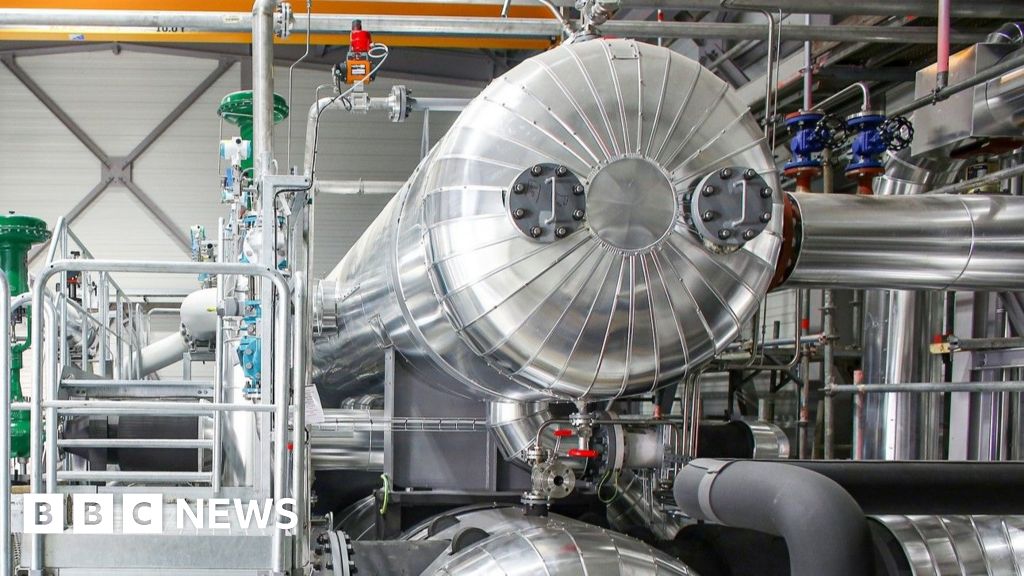
Revolutionary Heat Pumps to Replace Coal Power at Mannheim Plant
In a landmark move that signals the accelerating energy transition across Europe, the iconic coal-fired power plant in Mannheim, Germany is undergoing a dramatic transformation that will see cutting-edge heat pumps replace aging coal units. The decision represents not just an infrastructure upgrade but a fundamental reimagining of how industrial-scale heating can be delivered in the 21st century.
“There was a lot of pressure on us to change the heat generation to new sources, especially renewable sources,” explains Mr. Hack, speaking candidly about the complex decision-making process that led to this pivotal moment. The pressure wasn’t merely regulatory or environmental—it was a confluence of economic realities, public expectation, and the urgent need to decarbonize one of Germany’s most significant industrial heating operations.
The Mannheim plant, situated strategically along the Rhine River, possesses several inherent advantages that make it an ideal candidate for this technological leap. The site already boasts substantial electricity grid connections, having served as a major power generation hub for decades. Additionally, the plant is already integrated into the district heating network, providing warmth to thousands of homes and businesses throughout the region.
What makes this transition particularly compelling is the inherent efficiency of heat pump technology when deployed at industrial scale. Unlike traditional fossil fuel combustion, which generates heat through burning and inevitably loses significant energy through exhaust and radiation, heat pumps can deliver multiple units of heat energy for every unit of electrical energy consumed. This coefficient of performance—often reaching 3:1 or even 4:1—means that the same heating output can be achieved with a fraction of the primary energy input.
The technical specifications of the planned installation are impressive by any measure. The heat pumps will extract thermal energy from the Rhine River, which maintains a relatively stable temperature year-round due to its massive thermal mass and continuous flow. Even in winter, when surface temperatures might hover near freezing, the water at greater depths remains substantially warmer, providing a reliable heat source that’s largely insulated from atmospheric temperature fluctuations.
Engineers have designed a sophisticated heat exchange system that will draw water from the river, pass it through a series of heat exchangers where thermal energy is transferred to a working fluid, and then return the water to the river at a slightly lower temperature. The working fluid, compressed by electrically-driven pumps, increases in temperature before transferring its heat to the district heating network. This closed-loop system ensures minimal environmental impact while maximizing energy extraction efficiency.
The timing of this transition aligns perfectly with Germany’s broader Energiewende (energy transition) strategy, which aims to phase out coal entirely by 2038, with accelerated targets under active consideration. The Mannheim plant’s evolution from coal to heat pumps serves as a microcosm of the national energy transformation, demonstrating how existing infrastructure can be repurposed rather than abandoned, preserving valuable assets while dramatically reducing environmental impact.
Economic analysts note that the project’s viability extends beyond environmental considerations. The declining cost of renewable electricity, combined with the operational efficiency of modern heat pumps, means that the long-term economics strongly favor this transition. While the upfront capital expenditure is substantial, the reduced fuel costs—effectively replacing coal purchases with electricity purchases that deliver three to four times the heating value—create a compelling business case.
The social implications are equally significant. The transition is being managed with careful attention to workforce implications, with retraining programs already underway to ensure that skilled workers from the coal operations can transition to maintaining and operating the new heat pump systems. This approach recognizes that successful energy transitions must address not just technical and environmental challenges but also social and economic ones.
Environmental groups have cautiously welcomed the announcement, while emphasizing that the ultimate sustainability of the project depends on the source of the electricity powering the heat pumps. If that electricity comes from renewable sources, the system represents a genuine decarbonization pathway. If it relies on fossil fuel-generated electricity, the benefits are more modest, though still significant due to the inherent efficiency advantages of heat pump technology.
The Mannheim project is already attracting international attention from energy planners and policymakers seeking to understand how industrial-scale heating transitions can be managed effectively. The combination of existing infrastructure, strategic location, and advanced technology creates a template that could be replicated in numerous locations worldwide, particularly in regions with access to consistent thermal sources like rivers, lakes, or even industrial waste heat.
As construction begins and the first heat pumps come online in the coming months, all eyes will be on Mannheim to see how this ambitious vision translates into operational reality. The success of this project could accelerate similar transitions across Europe and beyond, potentially reshaping how we think about industrial heating in an era of climate consciousness and energy security concerns.
Mr. Hack’s acknowledgment of the “pressure” to transition reflects a broader truth: the energy transition is no longer a matter of choice but of necessity. The Mannheim plant’s evolution from coal to heat pumps demonstrates that with the right combination of technology, strategy, and commitment, even the most challenging transitions can be navigated successfully, creating a cleaner, more sustainable energy future while preserving the essential services that modern society depends upon.
Tags and Viral Phrases:
heat pump revolution, coal phase-out, Energiewende success story, industrial decarbonization, Rhine River thermal energy, district heating transformation, renewable heat generation, climate action infrastructure, sustainable energy transition, German engineering excellence, carbon-neutral heating, energy efficiency breakthrough, industrial-scale heat pumps, environmental innovation, power plant modernization, clean energy future, thermal energy extraction, sustainable district heating, climate technology advancement, energy infrastructure evolution
,


Leave a Reply
Want to join the discussion?Feel free to contribute!