
‘They have effectively ghosted us:’ publisher of delisted art game Horses lambasts Epic Games Store after executive claims ‘we love that studio’
Epic Games Store Faces Backlash Over Controversial Game Removal
In a dramatic turn of events that has sent shockwaves through the gaming industry, the Epic Games Store (EGS) finds itself embroiled in controversy following the abrupt removal of the indie horror game “Horses” just one day before its scheduled launch. This incident has sparked heated debates about content moderation, inconsistent policies, and the challenges faced by independent developers in navigating the complex landscape of digital distribution platforms.
The Horses Controversy Unfolds
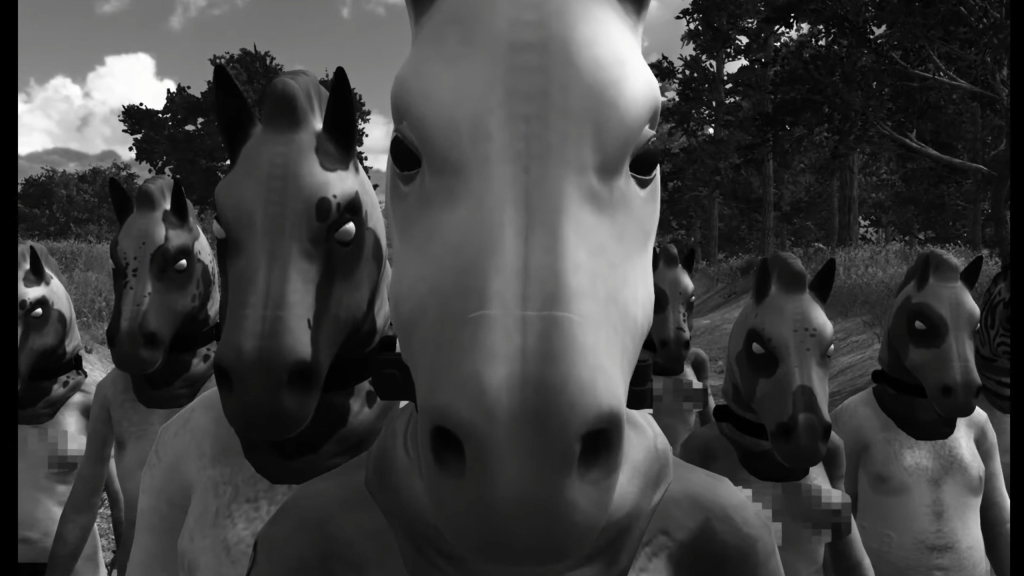
“Horses,” developed by Italian indie studio Santa Ragione, is a surreal and provocative horror game that explores themes of power, control, and human degradation. Set on a rural Italian farm, the game depicts hypnotized, nude human beings wearing horse masks who are treated as livestock and subjected to the sadistic whims of an overseer. The game’s second half contains implied scenes of brutal sexual violence, though all explicit content is visually censored with pixelation effects.
The controversy began when “Horses” was initially delisted from Steam two years ago, only to resurface in the public eye during Summer 2025. This renewed attention came amid a series of high-profile incidents where conservative activist groups, leveraging payment processors like Visa and Mastercard, pressured platforms like Steam and itch.io to remove adult content. The spotlight on “Horses” intensified, particularly given its comparison to Pier Paolo Pasolini’s controversial film “Salò, or the 120 Days of Sodom.”
Epic’s Last-Minute Decision
Just as “Horses” was preparing for its launch on the Epic Games Store, the platform suddenly reversed its decision, citing violations of its content policies. Epic Games claimed that their trust and safety team conducted a fresh review of the game and determined it warranted an Adults Only (AO) rating from the ESRB, leading to its removal from the store.
Steve Allison, VP and General Manager of the Epic Games Store, addressed the situation in a recent interview with Game File. He explained that the trust and safety team believed “Horses” was worth taking a second look at, and they determined it violated the platform’s policies on multiple fronts. Allison stated that Epic performed its own International Age Rating Coalition (IARC) assessment and judged the game to be AO-rated, which is essentially a death sentence for most commercial games.
Developer’s Furious Response
Santa Ragione has vehemently disputed Epic’s characterization of events, accusing the platform of making “provably incorrect statements” about the game’s content. In a scathing post on Bluesky, the studio claimed that Epic refused to provide details supporting their claims and had not shared the alleged AO IARC certificate, which typically includes a link for developers to appeal such decisions.
The developer’s frustration is palpable, with Santa Ragione asserting that Epic’s claim of “loving” their studio is disingenuous, given that they have been effectively ghosted throughout this process. The studio also pointed to the existence of unredacted longplays of “Horses” on YouTube and Twitch as evidence that the AO rating was misapplied, noting that both platforms have faced criticism for their aggressive moderation policies in the past.
Industry-Wide Implications
This incident raises significant questions about the consistency and transparency of content moderation policies across digital distribution platforms. Critics have pointed out the apparent double standards at play, noting that games with similar or even more explicit content, such as “Baldur’s Gate 3,” “Cyberpunk 2077,” and the “Outlast” series, remain available on these platforms without issue.
The case of “Horses” also highlights the precarious position of independent developers who often lack the resources and influence of larger studios to navigate these complex and sometimes arbitrary content policies. The timing of the removal, just one day before launch, has been particularly damaging to Santa Ragione, potentially costing them significant revenue and momentum.
Platform Policies Under Scrutiny
Epic Games’ policy of not carrying AO-rated games, with exceptions only for blockchain or NFT-related products, has come under intense scrutiny. Critics argue that this policy is inconsistently applied and fails to account for the artistic and cultural value of certain controversial works. The platform’s decision-making process appears opaque, leaving developers in the dark about what content is acceptable and why.
Moreover, the influence of external factors, such as pressure from payment processors and activist groups, on these content decisions raises concerns about the autonomy of digital distribution platforms and their ability to support diverse artistic expressions.
The Future of Controversial Content in Gaming
The “Horses” controversy is part of a broader conversation about the role of controversial and challenging content in video games. As the medium continues to evolve and tackle more complex and mature themes, platforms will need to develop more nuanced and transparent approaches to content moderation.
Some industry observers argue that games like “Horses,” despite their flaws, represent genuine attempts to explore themes and spaces that other media take for granted. They contend that the gaming industry should not overlook these efforts simply because they make platforms or audiences uncomfortable.
Community Response and Support
In the wake of Epic’s decision, the gaming community has rallied around Santa Ragione and “Horses.” The game has found a home on other platforms like GOG and the Humble Store, where it has become the best-selling new release on GOG. This grassroots support demonstrates the demand for diverse and challenging content in gaming, as well as the community’s willingness to seek out alternative distribution channels when mainstream platforms fail to meet their needs.
Conclusion: A Call for Change
The “Horses” controversy serves as a wake-up call for the gaming industry, highlighting the need for more consistent, transparent, and nuanced approaches to content moderation. As games continue to push boundaries and explore complex themes, platforms must evolve to support this artistic growth while maintaining appropriate safeguards.
For independent developers, this incident underscores the importance of diversifying distribution strategies and building direct relationships with their audience. The future of gaming may lie in decentralized platforms and community-driven distribution models that can better accommodate the full spectrum of creative expression.
As the dust settles on this controversy, one thing is clear: the conversation about content, censorship, and artistic freedom in gaming is far from over. The “Horses” incident may well be remembered as a pivotal moment in the ongoing struggle to define the boundaries of creative expression in the digital age.
Tags: Epic Games Store controversy, Horses game removal, indie game censorship, content moderation policies, digital distribution platforms, Santa Ragione, adult content in gaming, AO rating controversy, gaming industry standards, artistic freedom in video games, platform inconsistency, developer rights, controversial game content, Steam vs Epic comparison, independent game development challenges, community support for indie games, blockchain exceptions in gaming policies, payment processor influence, gaming censorship debate, future of game distribution
,


Leave a Reply
Want to join the discussion?Feel free to contribute!