
Will boats be a breakthrough for 3D printing tech?
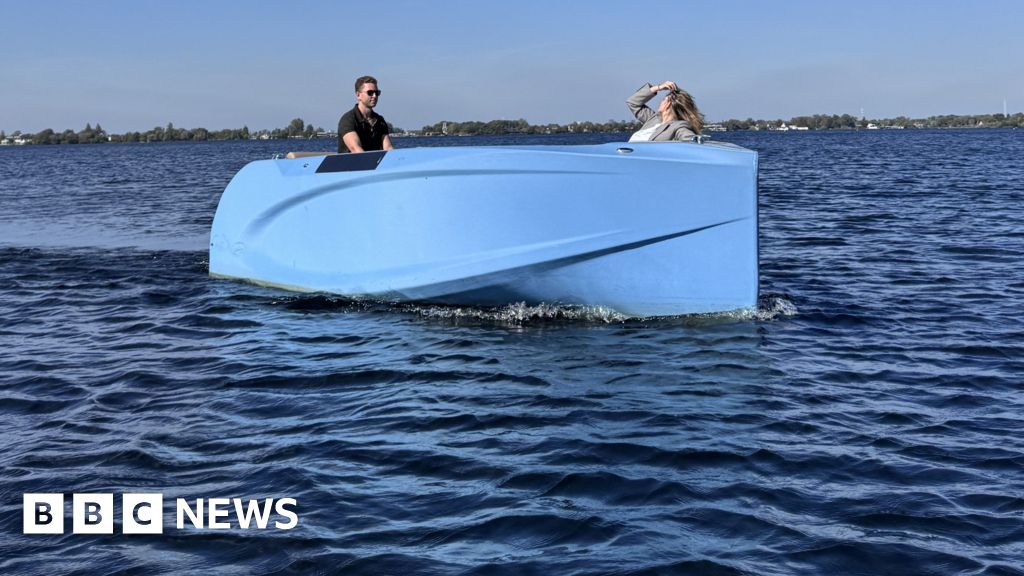
Dutch Firms Are Betting Big on 3D-Printed Boat Hulls to Revolutionize Marine Manufacturing
In a bold move that could reshape the future of the maritime industry, Dutch engineering and technology firms are placing high-stakes bets on 3D-printed boat hulls as the key to unlocking cheaper, faster, and more sustainable boat production. This innovative approach, spearheaded by a coalition of Dutch startups and established marine manufacturers, promises to disrupt traditional boat-building methods that have remained largely unchanged for centuries.
The Netherlands, a country with a rich maritime heritage and a reputation for pioneering technological advancements, is once again at the forefront of a nautical revolution. By leveraging cutting-edge 3D printing technology, these firms aim to produce boat hulls that are not only cost-effective but also lighter, stronger, and more customizable than their conventionally manufactured counterparts.
The Promise of 3D-Printed Hulls
Traditional boat manufacturing is a labor-intensive and time-consuming process. It involves the use of molds, manual labor, and a significant amount of raw materials, all of which contribute to high production costs and extended lead times. In contrast, 3D printing—also known as additive manufacturing—offers a streamlined alternative. By layering materials such as advanced polymers, composites, or even recycled plastics, 3D printers can create complex hull shapes with precision and minimal waste.
Dutch firms are particularly excited about the potential for cost savings. By eliminating the need for expensive molds and reducing labor requirements, 3D printing could slash production costs by up to 30%, according to early estimates. This could make boat ownership more accessible to a broader audience, potentially expanding the market for recreational and commercial vessels alike.
Sustainability at the Forefront
Beyond cost savings, 3D-printed hulls also align with the growing demand for sustainable manufacturing practices. Traditional boat-building often generates significant waste, as excess materials are trimmed away during the molding process. In contrast, 3D printing is an additive process, meaning material is only used where it’s needed. This not only reduces waste but also allows for the use of eco-friendly materials, such as recycled plastics or bio-based composites.
Moreover, the lightweight nature of 3D-printed hulls could lead to improved fuel efficiency for powered vessels, further reducing their environmental impact. For electric boats, lighter hulls mean longer battery life and extended range, making them even more appealing to eco-conscious consumers.
Customization and Innovation
One of the most exciting aspects of 3D-printed boat hulls is the potential for customization. Traditional manufacturing methods are often limited by the constraints of molds, which can be expensive and time-consuming to modify. With 3D printing, however, designers can easily tweak hull shapes, sizes, and features to meet specific needs or preferences. This opens up a world of possibilities for personalized boats, from sleek racing yachts to sturdy fishing vessels.
Dutch firms are also exploring the integration of advanced technologies into their 3D-printed hulls. For example, sensors and smart materials could be embedded directly into the hull during the printing process, enabling real-time monitoring of structural integrity, temperature, and other critical parameters. This could enhance safety and performance, giving boat owners peace of mind on the water.
Challenges and Roadblocks
Despite the promise of 3D-printed boat hulls, the technology is not without its challenges. One of the primary hurdles is scaling up production to meet commercial demand. While 3D printers have proven effective for prototyping and small-scale production, manufacturing full-sized boat hulls requires large, specialized machines that are still relatively rare.
Another challenge is ensuring the durability and reliability of 3D-printed hulls. Traditional materials like fiberglass and aluminum have decades of proven performance in marine environments, whereas the long-term behavior of 3D-printed materials is still being studied. Dutch firms are investing heavily in research and testing to address these concerns and ensure their products meet the rigorous standards of the maritime industry.
The Dutch Advantage
The Netherlands is uniquely positioned to lead this technological shift. The country is home to a thriving maritime industry, world-class engineering expertise, and a culture of innovation. Dutch firms have already made significant strides in 3D printing, with applications ranging from construction to healthcare. By applying this expertise to boat manufacturing, they are poised to set a new standard for the global marine industry.
Collaboration is also a key factor in the Netherlands’ success. Startups, established manufacturers, research institutions, and government agencies are working together to overcome technical challenges, secure funding, and bring 3D-printed boats to market. This collaborative approach is fostering a dynamic ecosystem that is driving rapid progress in the field.
The Future of Boat Building
As Dutch firms continue to refine their 3D printing processes and demonstrate the viability of their products, the rest of the world is taking notice. Industry experts predict that 3D-printed boat hulls could become mainstream within the next decade, transforming the way boats are designed, built, and used.
For consumers, this could mean more affordable, sustainable, and customizable boats. For manufacturers, it could mean reduced costs, faster production times, and new opportunities for innovation. And for the environment, it could mean a significant reduction in the carbon footprint of the marine industry.
The race to perfect 3D-printed boat hulls is on, and Dutch firms are leading the charge. With their combination of technological expertise, maritime heritage, and forward-thinking mindset, they are well-positioned to revolutionize boat building and set a new course for the future of the industry. As this exciting technology continues to evolve, one thing is clear: the boats of tomorrow may very well be built layer by layer, thanks to the ingenuity of Dutch engineers and the power of 3D printing.
Tags and Viral Phrases:
3D-printed boat hulls, Dutch innovation, cheaper boats, sustainable manufacturing, marine industry revolution, additive manufacturing, eco-friendly boats, lightweight hulls, customizable vessels, future of boat building, maritime technology, Netherlands maritime heritage, boat production costs, smart materials in boats, fuel-efficient boats, electric boats, recycled plastics in boats, bio-based composites, boat manufacturing challenges, scaling 3D printing, durability of 3D-printed hulls, Dutch engineering expertise, collaborative innovation, maritime startups, boat customization, sensors in boat hulls, real-time monitoring, marine industry disruption, affordable boat ownership, faster boat production, reduced waste in manufacturing, carbon footprint reduction, Dutch maritime industry, next-gen boat designs, boat building technology, 3D printing in marine sector, sustainable boat manufacturing, Dutch tech firms, boat hull innovation, future of marine manufacturing, eco-conscious boating, advanced polymers in boats, boat industry transformation, Dutch maritime revolution, 3D-printed vessels, cutting-edge boat technology, maritime sustainability, boat manufacturing evolution.
,


Leave a Reply
Want to join the discussion?Feel free to contribute!