
Halley’s Comet Has the Wrong Name, New Research Suggests
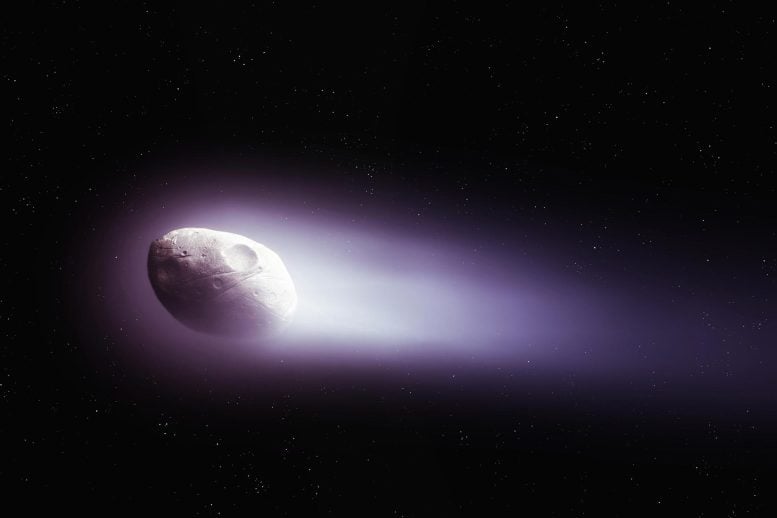
Halley’s Comet: The Cosmic Misattribution That Rewrites Astronomical History
In a stunning revelation that challenges centuries of astronomical orthodoxy, groundbreaking research has uncovered compelling evidence suggesting that Halley’s Comet—one of the most famous celestial objects in human history—may have been misattributed to the wrong scientist for over three hundred years.
The celestial body that graces our skies approximately every 75-76 years, creating one of nature’s most spectacular displays, has long borne the name of English astronomer Edmond Halley, who famously predicted its return in 1705. However, Professor Simon Schaffer of the University of Cambridge has unearthed extraordinary documentation from medieval chronicles that suggests the periodic nature of this cosmic visitor was recognized and recorded centuries before Halley’s calculations.
The research, which has sent shockwaves through the astronomical community, reveals that medieval chroniclers across Europe meticulously documented the comet’s appearances, creating a continuous observational record that spans from the 11th century through the 13th century. These weren’t mere casual observations—the chroniclers demonstrated sophisticated understanding of celestial mechanics, noting patterns in the comet’s appearances and disappearances with remarkable accuracy.
What makes this discovery particularly revolutionary is the level of astronomical sophistication displayed by these medieval observers. The chronicles contain detailed descriptions of the comet’s trajectory, brightness variations, and apparent size changes—observations that would require considerable astronomical knowledge and mathematical skill. These medieval astronomers were essentially conducting long-term celestial monitoring projects, tracking the comet across multiple generations.
Professor Schaffer’s research indicates that these medieval scholars recognized the comet’s periodic nature through careful observation spanning several appearances. They noted that the celestial visitor returned at regular intervals, though the exact period wasn’t precisely calculated. This represents a fundamental understanding of the comet’s behavior that predates Halley’s work by several centuries.
The implications of this discovery extend far beyond mere historical correction. It fundamentally challenges our understanding of the development of astronomical knowledge in medieval Europe. For decades, the prevailing narrative suggested that systematic astronomical observation and understanding of celestial mechanics were largely dormant during the medieval period, only to be revived during the Renaissance. This new evidence paints a dramatically different picture—one of continuous astronomical inquiry and sophisticated celestial observation throughout the medieval era.
The chroniclers’ work demonstrates an impressive grasp of observational astronomy. They recorded not just the comet’s appearances, but also its changing characteristics—how it grew brighter as it approached the sun, how its tail orientation shifted, and how its visibility varied based on its position relative to Earth. This level of detailed observation suggests a sophisticated understanding of basic astronomical principles that rivals that of later astronomers.
What’s particularly fascinating is how these medieval astronomers might have communicated their findings across generations and geographical boundaries. The consistency in observations across different European chronicles suggests some form of systematic knowledge transfer—perhaps through monastic networks, scholarly correspondence, or academic institutions that we’re only beginning to understand.
The research also raises intriguing questions about why this knowledge didn’t lead to the same level of recognition that Halley’s work received. Several factors might have contributed to this historical oversight. First, the medieval astronomers lacked the mathematical tools and computational methods that later astronomers would develop. While they recognized the comet’s periodic nature, they couldn’t calculate its orbit with the precision that Halley achieved.
Additionally, the destruction of many medieval manuscripts during various historical upheavals means that much of this astronomical knowledge may have been lost or fragmented. The surviving chronicles represent just a fraction of what might have once existed, suggesting that our understanding of medieval astronomy might be severely limited by the preservation of historical documents.
The naming of celestial objects follows certain conventions, and once established, these names tend to persist even when historical accuracy suggests otherwise. Halley’s Comet became firmly established in scientific literature and popular culture, making any potential renaming a complex proposition that extends beyond mere historical correction.
This discovery also highlights the importance of revisiting historical sources with modern analytical tools and perspectives. What might have been dismissed as mere medieval superstition or religious interpretation could, in fact, represent sophisticated scientific observation when examined through the lens of modern historical and astronomical analysis.
The research has sparked intense debate within the astronomical community about how we attribute scientific discoveries and how we might need to revise our understanding of the history of astronomy. Some scholars argue that while the medieval chroniclers made crucial observations, Halley’s contribution in calculating the comet’s orbit and predicting its return represents a fundamentally different level of scientific achievement.
Others contend that the medieval astronomers’ recognition of the comet’s periodicity deserves equal recognition in the historical narrative of astronomy. They argue that understanding the periodic nature of a celestial object is a more fundamental discovery than calculating its orbit—it represents the crucial first step in recognizing patterns in celestial mechanics.
As this research continues to unfold, it serves as a powerful reminder that our understanding of scientific history is constantly evolving. What we accept as established fact today might be challenged tomorrow by new discoveries or reinterpretations of existing evidence. The story of Halley’s Comet, it seems, is far from complete—it continues to surprise us, even as it travels its ancient path through our solar system.
The comet itself, indifferent to human naming conventions and historical debates, will make its next appearance in 2061, when perhaps our understanding of its history will have evolved yet again. Until then, this cosmic wanderer continues to remind us of the complex relationship between human observation, scientific discovery, and the passage of time.
Tags and Viral Phrases:
- Medieval astronomers beat Halley by centuries
- Ancient comet observations rewrite history
- The comet that wasn’t Halley’s after all
- Astronomical conspiracy theory confirmed
- Medieval science was more advanced than we thought
- The cosmic cover-up nobody saw coming
- Your history books lied about this famous comet
- Medieval monks were secretly astronomers
- The celestial body with stolen credit
- How medieval chronicles predicted Halley’s Comet
- The astronomical discovery that changes everything
- Centuries-old observations finally get recognition
- The comet conspiracy that lasted 300 years
- Medieval monks: The original astronomers
- The cosmic secret hidden in ancient manuscripts
- How we got the famous comet’s name wrong
- The astronomical time bomb that just exploded
- Medieval science was watching the stars all along
- The comet that proves history got it wrong
- Ancient observations that challenge modern science
- The medieval astronomers who saw what Halley saw
- The cosmic mystery solved after 1000 years
- How medieval chronicles predicted the future
- The astronomical discovery hiding in plain sight
- The comet that stole someone else’s name
- Medieval monks: The unsung heroes of astronomy
- The celestial secret that changes everything
- How ancient observations beat modern science
- The cosmic cover-up nobody expected
- The astronomical truth that changes history
,


Leave a Reply
Want to join the discussion?Feel free to contribute!