
A Giant Star Vanished, And Scientists Think a Black Hole Is to Blame : ScienceAlert
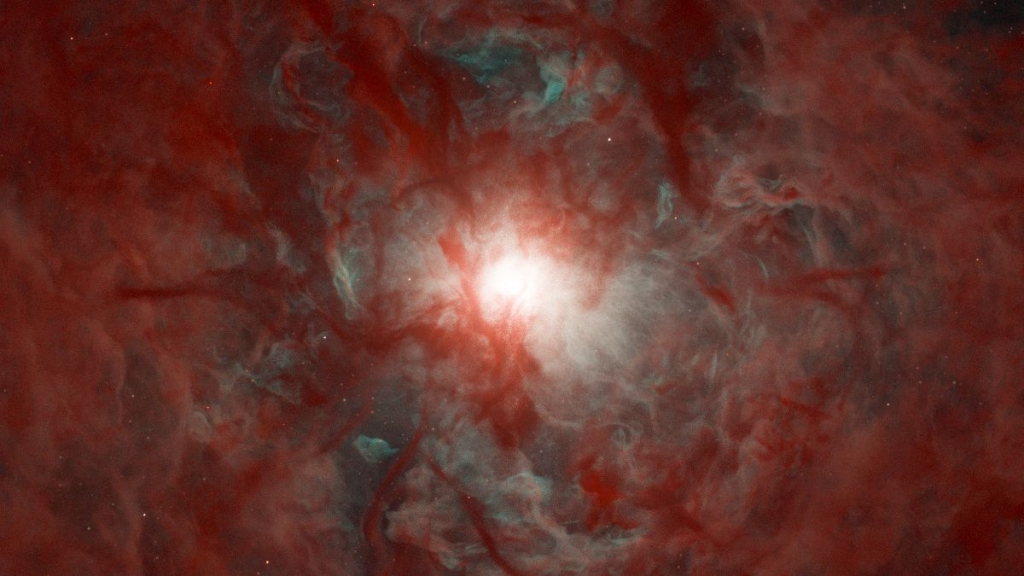
A Star in Andromeda Vanished Without a Trace — Scientists Think It Collapsed into a Black Hole
In a cosmic twist that has stunned astronomers, one of the brightest stars in the Andromeda galaxy has seemingly vanished without the explosive fanfare of a supernova. Instead of a brilliant death, the star quietly collapsed into a black hole, leaving behind no visible trace — a phenomenon so rare that scientists are calling it one of the most surprising discoveries of their careers.
The star, known as M31-2014-DS1, was once a luminous supergiant about 13 times more massive than our Sun. It shone brightly across the 2.5 million light-year distance separating the Milky Way from Andromeda. But in 2014, NASA’s NEOWISE telescope recorded a strange anomaly: the star suddenly began to glow more intensely in infrared light, brightening by roughly 50% over two years. Then, between 2016 and 2022, it faded dramatically — and by 2023, it had completely disappeared from optical view.
This wasn’t just a dimming; the star’s total brightness across the entire electromagnetic spectrum dropped by at least a factor of 10. Today, it’s detectable only in mid-infrared wavelengths, shining at about a tenth of its former infrared brightness.
“This star used to be one of the most luminous stars in the Andromeda Galaxy, and now it was nowhere to be seen,” said Kishalay De, an astronomer at Columbia University and lead researcher on the study. “Imagine if Betelgeuse suddenly disappeared. Everybody would lose their minds! The same kind of thing was happening with this star in the Andromeda Galaxy.”
The mystery deepens when you consider what usually happens to stars of this size. When a massive star dies, it’s expected to go out with a bang — a supernova explosion that sends its outer layers hurtling into space while its core collapses into either a neutron star or a black hole. But in this case, the outward shock wave stalled. Instead of ripping the star apart, the explosion fizzled out, and the material fell back onto the newly formed black hole.
This process, known as a “failed supernova,” is incredibly difficult to detect. Unlike supernovae, which outshine entire galaxies for weeks, failed supernovae leave no bright signature. In fact, only one other such event had been documented before — a star that vanished around 2010 in a galaxy 22 million light-years away.
The evidence for M31-2014-DS1’s transformation lies in the details. The initial infrared brightening is consistent with dust ejected from the dying star settling into a surrounding cocoon instead of being blasted into space. The subsequent dimming across all wavelengths indicates that the star’s energy output dropped dramatically, consistent with the cessation of nuclear fusion. If dust were the culprit, infrared brightness would not have dropped, since infrared light can penetrate dust clouds.
“The dramatic and sustained fading of this star is very unusual, and suggests a supernova failed to occur, leading to the collapse of the star’s core directly into a black hole,” De explained. “Stars with this mass have long been assumed to always explode as supernovae. The fact that it didn’t suggests that stars with the same mass may or may not successfully explode, possibly due to how gravity, gas pressure, and powerful shock waves interact in chaotic ways with each other inside the dying star.”
The resulting object is likely a black hole with about five times the mass of the Sun — an event horizon roughly 30 kilometers (18 miles) across. The fact that astronomers have now found two failed supernovae just a few years apart suggests two exciting possibilities: our ability to detect subtle cosmic events is improving, and these failed supernovae may be a more common pathway than previously thought.
“It comes as a shock to know that a massive star basically disappeared (and died) without an explosion and nobody noticed it for more than five years,” De said. “It really impacts our understanding of the inventory of massive stellar deaths in the Universe. It says that these things may be quietly happening out there and easily going unnoticed.”
This discovery not only challenges our understanding of stellar evolution but also opens up new questions about the life cycles of massive stars. As astronomers continue to sift through archival data and improve their detection methods, who knows what other cosmic secrets are waiting to be uncovered?
Tags:
Andromeda galaxy, black hole formation, failed supernova, stellar collapse, cosmic mystery, NEOWISE telescope, Kishalay De, Columbia University, M31-2014-DS1, infrared astronomy, massive star death, event horizon, neutron star, nuclear fusion, gravitational collapse, space discovery, viral science news
Viral Phrases:
“Star vanished without a trace,” “quietly collapsed into a black hole,” “no supernova, just silence,” “cosmic ghost story,” “the star that disappeared,” “failed supernova shocker,” “Andromeda’s missing star,” “black hole birth caught on camera,” “universe’s best-kept secret,” “astronomy’s biggest surprise”
,


Leave a Reply
Want to join the discussion?Feel free to contribute!