
A Good Valentine’s Day Gift for These Nice People in the New York Times Would Be to Destroy Their Phones
Tech-Savvy Lovebirds Trapped in a Digital Translation Loop: Why This Couple’s Phone Addiction Could Be Their Biggest Relationship Hurdle
In a poignant Valentine’s Day feature that’s sparking heated debates across social networks, the New York Times has unveiled the bittersweet story of a couple whose love transcends language barriers—but not smartphone screens.
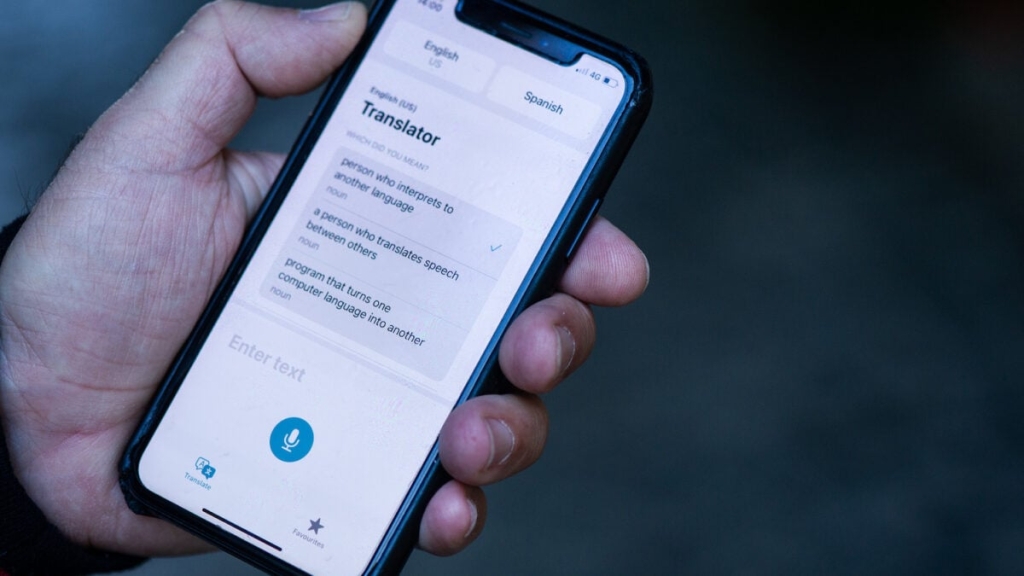
Meet the unnamed bookstore owner and his Mandarin-speaking wife, a pair whose romance has captivated readers worldwide. Despite years of marriage, this tech-dependent duo has fallen into an unexpected trap: they’ve become prisoners of their own digital translation tools, specifically Microsoft Translator’s “Auto” mode.
The irony is almost painful to witness. This couple, who could be experiencing one of life’s most natural and effective language-learning opportunities through daily immersion in each other’s company, instead finds themselves chained to a collection of eight external battery packs—their digital umbilical cords keeping their translation lifeline alive from dawn to dusk.
Microsoft Translator’s Auto mode represents a technological marvel. Since its 2020 debut, this feature has revolutionized two-person conversations by allowing seamless back-and-forth translation without manual switching. One partner speaks English; seconds later, Mandarin text appears. The other responds in Mandarin; English translation follows. It’s elegant, functional, and—as this couple demonstrates—potentially addictive.
But here’s where the story takes a fascinating turn that’s resonating with language educators and relationship experts alike. The husband’s admission that he’ll “never learn to read Chinese” stands in stark contrast to mounting scientific evidence about language acquisition.
Recent studies, including comprehensive research published on ResearchGate, consistently show that immersion environments and tandem language learning partnerships produce superior results compared to traditional classroom settings or app-based learning. The data is clear: when it comes to mastering a new language, nothing beats the messy, imperfect, deeply human experience of trying to communicate directly with another person.
The bookstore owner and his wife are sitting on a goldmine of language-learning potential. They have built-in, 24/7 immersion with a native speaker who also happens to be their life partner. Yet they’re choosing the digital shortcut instead.
This phenomenon extends beyond just language learning. The Economist recently reported that retirement-aged individuals are experiencing unprecedented levels of screen addiction, often surpassing even teenagers in daily screen time. Dr. Ipsit Vahia from Harvard’s McLean Hospital Technology and Aging Laboratory notes that older adults are increasingly “living their lives through their phones, the way teenagers or adolescents sometimes do.”
The most telling moment in the Times’ video coverage comes during a seemingly mundane shopping trip. The husband struggles to get Microsoft Translator to accurately convey “mixed greens”—that corporate culinary euphemism that even native English speakers sometimes find confusing. His wife’s face scrunches in genuine confusion until he abandons the digital crutch and simply says “shālā” (salad in Mandarin). The moment of recognition that lights up her face speaks volumes about the limitations of even the most sophisticated translation technology.
What makes this story particularly viral-worthy is the delicious irony embedded in the couple’s own experience. They’ve discovered that looking directly at each other during conversations—an act that would seem natural and romantic—actually causes Microsoft Translator to malfunction. The app works best when they stare at their screens rather than each other’s faces.
This technological quirk serves as a metaphor for their entire situation. Their intuition is correct: they need to look at each other, not their phones. The technology that was meant to bridge their communication gap has instead become a barrier to the deeper connection they could be experiencing.
Language acquisition experts consistently emphasize that real fluency comes from the struggle of imperfect communication—the misunderstandings, the laughter over mistakes, the gradual building of shared vocabulary that becomes uniquely theirs. Every couple develops their own linguistic shorthand, their private language that strengthens their bond. This couple is missing out on creating that intimate linguistic world together.
The broader implications touch on our society’s growing dependence on technology as a substitute for genuine human interaction. In an age where AI promises to solve every communication challenge, this story serves as a reminder that some of life’s most meaningful experiences require us to put down our devices and engage directly with the people we love.
As this Valentine’s Day story continues to circulate, it’s sparking conversations about technology addiction, language learning, and what we sacrifice when we let our devices mediate our most important relationships. The bookstore owner and his wife may have found a workaround for their language barrier, but they’ve also discovered a new kind of barrier—one made of glass, silicon, and lithium-ion batteries.
Their story resonates because it reflects a universal truth: sometimes the most advanced technology can’t replace the simple, profound act of looking someone in the eyes and learning to speak their language—both literally and metaphorically.
translationapp #techaddiction #languagelearning #microsofttranslator #digitaldependence #retirementtech #couplescommunication #screenaddiction #languagebarrier #techromance #digitaldetox #humanconnection #smartphonestress #translationtechnology #agingandtech #relationshipgoals #techfail #digitaldivide #communicationbreakdown #techirony
“Put down the phone and look at me”
“Eight battery packs can’t charge love”
“Technology: the new language barrier”
“When your soulmate becomes your screenmate”
“The translation that matters most happens without Wi-Fi”
“Auto mode can’t auto-fix your relationship”
“Screen time over couple time”
“Lost in translation, found in distraction”
“The most expensive battery pack is the one powering your phone instead of your marriage”
“Real-time translation, real-time isolation”
“Swipe right on love, swipe left on the screen”
“Data plan vs. date night”
“Charging your phone, draining your relationship”
“The couple that translates together, stays together… on their screens”
“Auto mode: where romance goes to die”
“Eight batteries, zero conversations”
“The translation app that translated love into loneliness”
“When ‘shālā’ means more than any app could translate”
“Screen addiction: the language barrier no app can fix”
“The Costco moment that broke the internet’s heart”
,

Leave a Reply
Want to join the discussion?Feel free to contribute!