
A Jaw-Dropping Space View of Italy Hosting the Winter Olympics
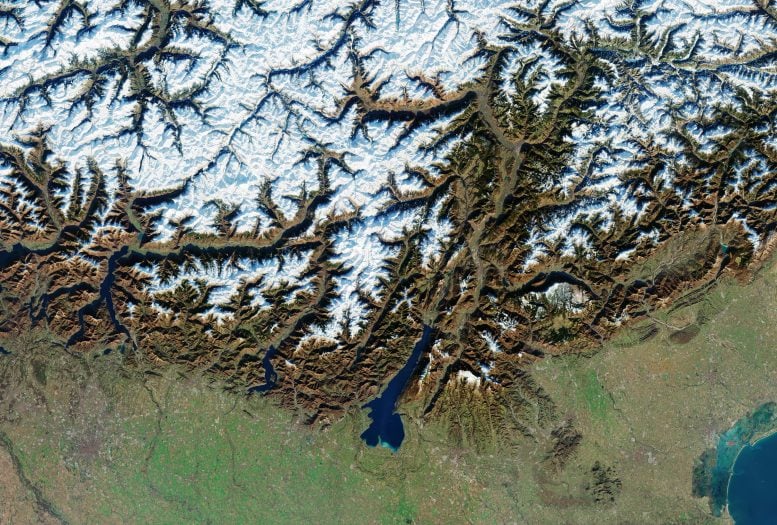
As the 2026 Winter Olympics unfold, the Copernicus Sentinel-2 mission has captured a breathtaking satellite perspective of northern Italy, revealing the sprawling geography that is hosting this year’s global sporting spectacle. Unlike previous editions that centered on a single host city, the Milano Cortina Games are uniquely dispersed across a vast and picturesque region, transforming the Italian Alps and surrounding valleys into a winter sports wonderland visible even from space.
The Copernicus Sentinel-2 satellites, operated by the European Union’s Earth observation program, are renowned for their ability to deliver high-resolution imagery of our planet’s surface. These advanced Earth-observing platforms circle the globe, continuously collecting data that is used for environmental monitoring, urban planning, agriculture, and disaster response. In this instance, their powerful multispectral sensors have turned their gaze toward northern Italy, capturing a jaw-dropping view that highlights not only the natural beauty of the region but also the intricate layout of Olympic venues scattered across the landscape.
From the vantage point of orbit, the image reveals a patchwork of snow-capped peaks, winding valleys, and human settlements nestled among the rugged terrain. The satellite’s wide swath and high spatial resolution allow for the identification of key Olympic sites, from the bobsleigh and skeleton tracks carved into the mountainside to the ski jumping hills perched on dramatic slopes. The contrast between the pristine white snow and the dark green forests below creates a striking visual effect, emphasizing the harmony between the natural environment and the infrastructure built for the Games.
This edition of the Winter Olympics is particularly notable for its decentralized approach. Rather than concentrating all events in one or two cities, organizers have spread competitions across multiple locations, each chosen for its unique sporting traditions and natural advantages. The main hub, Milan, serves as the cultural and organizational center, while the alpine venues in Cortina d’Ampezzo, Bormio, and other mountain towns provide the perfect backdrop for winter sports. This geographic spread not only showcases the diversity of Italy’s landscapes but also distributes the economic and environmental impact of the Games.
The satellite imagery also underscores the logistical complexity of staging such a widespread event. Roads, railways, and newly constructed facilities are clearly visible, snaking through valleys and connecting remote venues to major urban centers. The image captures the scale of human endeavor required to bring the Olympics to life, from the construction of state-of-the-art stadiums to the meticulous grooming of ski slopes and cross-country tracks.
Beyond its immediate relevance to the Games, the Copernicus Sentinel-2 view offers valuable insights into the changing environment of the Alps. Satellite monitoring has become an indispensable tool for tracking the effects of climate change on snow cover, glacier retreat, and seasonal patterns. By comparing images from previous years, scientists can assess how rising temperatures and shifting precipitation patterns are affecting the region’s winter sports industry and natural ecosystems. This data is crucial for both event planners and environmental policymakers as they seek to balance the demands of global sport with the imperatives of sustainability.
The image also serves as a reminder of the power of space technology to bring people together. As millions around the world tune in to watch the Winter Olympics, the satellite view offers a unique perspective that unites the global audience with the athletes on the ground. It is a testament to human ingenuity, both in the realm of sports and in our ability to observe and understand our planet from above.
In the coming weeks, as the Milano Cortina Games continue, the Copernicus Sentinel-2 mission will remain an essential source of information, providing updates on snow conditions, weather patterns, and the environmental footprint of the event. This ongoing monitoring will help ensure that the Games are not only a celebration of athletic excellence but also a model for responsible and sustainable event management.
As the world watches the drama of competition unfold on the slopes and rinks of northern Italy, the satellite image stands as a powerful symbol of the intersection between technology, sport, and the environment. It invites us to look beyond the immediate spectacle and consider the broader context in which these Games are taking place—a context shaped by geography, climate, and the ever-evolving relationship between humanity and the natural world.
Tags, viral words, and phrases:
jaw-dropping space view, Copernicus Sentinel-2, 2026 Winter Olympics, Milano Cortina Games, northern Italy from orbit, satellite imagery of Olympic venues, snow-capped Alps, decentralized Winter Olympics, Olympic bobsleigh tracks from space, ski jumping hills satellite view, environmental monitoring Alps, climate change impact on winter sports, sustainable Olympic Games, global sporting spectacle, high-resolution Earth observation, multispectral satellite sensors, winter sports wonderland, Italian Alps satellite perspective, Olympic logistics from above, glacier retreat monitoring, space technology unites the world, breathtaking satellite perspective, Olympic venues in snow, human ingenuity and sport, responsible event management, global audience and athletes, natural beauty and Olympic infrastructure, winter sports industry sustainability, Earth observation for the Games, striking visual effect satellite, Olympic Games and environment, Milan Cortina 2026 satellite image, winter Olympics climate data, satellite view of Olympic preparations, space view of winter sports, northern Italy Olympic geography, Olympic Games and Earth science, satellite monitoring of snow cover, global sport and sustainability, breathtaking view of Olympic venues, technology and the Winter Olympics, Olympic Games from space perspective.
,

Leave a Reply
Want to join the discussion?Feel free to contribute!