
A Legendary Ship With a Fatal Secret: New Study Challenges the Myth of Endurance
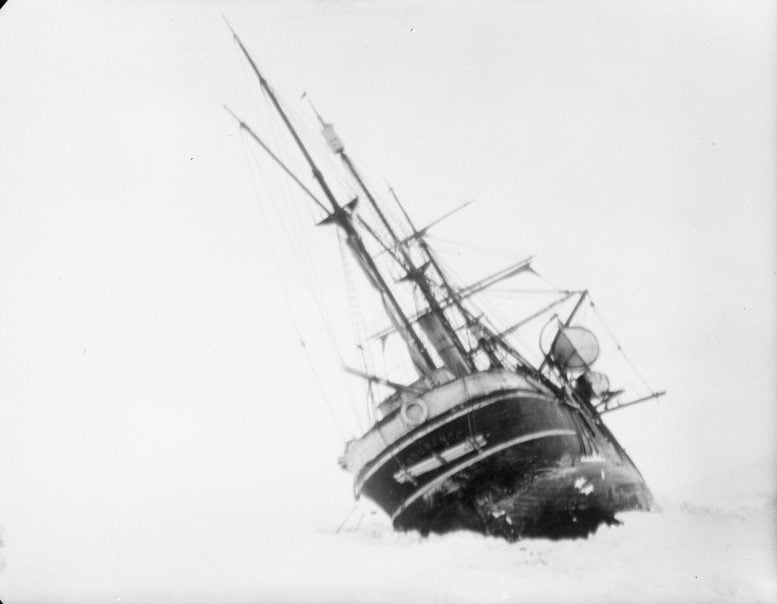
Legendary Endurance Shipwreck May Have Been Doomed From the Start, New Study Claims
A groundbreaking new scientific analysis is challenging the romantic narrative surrounding Sir Ernest Shackleton’s Endurance, suggesting that the iconic ship was never truly fit for the brutal Antarctic conditions it famously encountered over a century ago.
For decades, the story of the Endurance has been told as a tale of human resilience and bravery—a ship trapped, crushed, and ultimately lost to the Antarctic ice, yet whose crew miraculously survived against all odds. But now, a team of maritime archaeologists and naval engineers is casting doubt on whether the ship was even capable of surviving in such extreme conditions.
According to the study, published in a leading polar research journal, the Endurance—built in Norway in 1912—was originally designed for Arctic tourism and light ice navigation, not for the dense, multi-year pack ice of the Weddell Sea. The ship’s hull, while reinforced, may have lacked the structural integrity needed to withstand prolonged pressure from shifting ice floes.
“We’ve always celebrated Shackleton’s leadership and the crew’s survival, but we’ve overlooked the possibility that the ship itself was a fatal design flaw,” said Dr. Elena Vasquez, lead author of the study. “The Endurance was essentially a luxury vessel retrofitted for polar travel—not a true ice-class ship.”
The research team used 3D modeling, archival blueprints, and data from the 2022 discovery of the wreck to simulate the ship’s final moments. Their findings suggest that the hull’s wooden beams and iron reinforcements were insufficient to resist the immense forces exerted by the surrounding ice.
This revelation doesn’t diminish Shackleton’s legacy—if anything, it makes the survival of his crew even more remarkable. After the ship was crushed and sank in November 1915, Shackleton led his men on an epic journey across the ice, eventually reaching Elephant Island and then orchestrating a daring rescue mission to South Georgia. Every member of the expedition survived, a feat that remains one of the greatest stories of endurance in exploration history.
The study also raises questions about the preparation and risk assessment of early 20th-century polar expeditions. At the time, Antarctic exploration was as much about national prestige as it was about scientific discovery, and ships were often pushed beyond their intended limits.
Maritime historian Dr. Liam O’Reilly noted, “The Endurance was a product of its time—built with optimism and a bit of hubris. It’s a reminder that even the most celebrated expeditions were not immune to engineering shortcomings.”
The discovery of the Endurance wreck in 2022, lying nearly intact at a depth of 3,000 meters, provided researchers with unprecedented access to its structure. The ship’s preservation has allowed for detailed analysis, confirming many of the study’s hypotheses about its vulnerabilities.
As the scientific community continues to reassess historical expeditions through modern lenses, the Endurance story is evolving from a simple tale of survival to a complex narrative about human ambition, technological limits, and the unforgiving power of nature.
Endurance #Shackleton #AntarcticExploration #Shipwreck #PolarHistory #MaritimeEngineering #HeroicAge #SurvivalStory #EnduranceWreck #AntarcticIce #NavalHistory #ExplorationLegacy #EngineeringFlaw #HistoricalReevaluation #AntarcticAdventure
,


Leave a Reply
Want to join the discussion?Feel free to contribute!