
A mission NASA might kill is still returning fascinating science from Jupiter
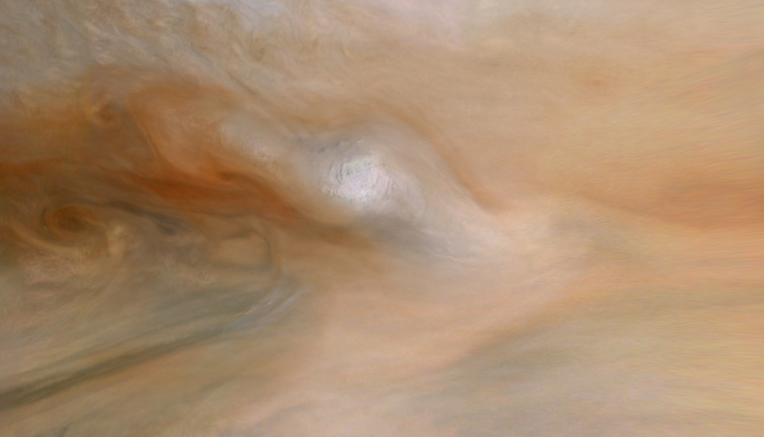
Jupiter’s Lightning Bolts Are 100 Times More Powerful Than Earth’s—And That’s Just the Beginning
In a groundbreaking revelation that’s sending shockwaves through the planetary science community, NASA’s Juno spacecraft has uncovered that Jupiter’s lightning bolts are not just slightly more powerful than Earth’s—they’re at least 100 times stronger, and possibly up to a million times more intense. Over 12 close flybys, Juno detected a staggering 613 microwave pulses from lightning flashes, with energies ranging from comparable to Earth’s lightning to levels that defy our terrestrial understanding of atmospheric electricity.
The findings, published in a new study led by planetary scientist Michael Wong of UC Berkeley, paint a picture of a gas giant where storms rage with a ferocity unmatched anywhere else in our solar system. But what’s truly fascinating is that despite the vast differences between Jupiter and Earth, the fundamental mechanism behind lightning generation appears to be surprisingly similar.
On both planets, lightning is thought to originate from ice crystals within clouds that become electrically charged through collisions. When voltage differentials build up sufficiently, the result is a spectacular discharge of energy—a lightning bolt. However, the similarities largely end there.
Jupiter’s atmosphere presents a unique set of conditions that amplify storm intensity to extraordinary levels. Unlike Earth, Jupiter has no solid surface; it’s a swirling mass of hydrogen and helium that transitions seamlessly from gas to liquid to metallic hydrogen deep within. The ice crystals in Jupiter’s atmosphere aren’t just water—they’re mixed with ammonia, creating a chemical cocktail that behaves quite differently from our planet’s water-based clouds.
The dynamics of atmospheric convection on Jupiter also differ dramatically from Earth’s. On our planet, moist air rises because it’s warmer and less dense than the surrounding atmosphere. On Jupiter, however, the situation is inverted. Moist air, being heavier than the surrounding hydrogen-rich atmosphere, actually wants to sink. This counterintuitive behavior means that generating storms on Jupiter requires vastly more energy—energy that manifests as stronger winds, taller clouds, and more powerful lightning.
“The storms on Jupiter are on another scale entirely,” explains Wong. “Not only are they larger in physical size, but the energy required to drive atmospheric convection is immense. You need a tremendous buildup of heat before these storms can even form, and when they do, the results are spectacular.”
The implications of these findings extend far beyond simple comparisons of lightning power. They challenge our understanding of atmospheric physics and raise intriguing questions about the fundamental processes that drive weather on gas giants. Why does Jupiter’s lightning reach such extreme intensities? Is it simply a matter of scale, or are there other factors at play?
Wong and his team are actively investigating several possibilities. One theory suggests that the difference in atmospheric composition—hydrogen versus nitrogen—plays a crucial role. Another proposes that Jupiter’s storms are simply taller, meaning lightning has to travel greater distances, building up more energy in the process. Yet another hypothesis points to the massive energy buildup required to initiate moist convection in Jupiter’s unique atmospheric conditions.
“These storms aren’t just bigger versions of what we see on Earth,” Wong notes. “They’re fundamentally different phenomena that operate on scales and energy levels we’re only beginning to understand. The fact that lightning can be so much more powerful on Jupiter suggests there are aspects of atmospheric electricity we’ve yet to fully grasp.”
The Juno mission, which has been orbiting Jupiter since 2016, continues to provide unprecedented insights into the gas giant’s complex weather systems. Each close flyby offers new data that helps scientists piece together the puzzle of Jupiter’s atmosphere, from its iconic Great Red Spot to the mysterious lightning storms that flash across its cloud tops.
What makes these discoveries particularly exciting is their potential to inform our understanding of exoplanets—planets orbiting other stars. Many of the exoplanets discovered so far are gas giants similar to Jupiter, and understanding Jupiter’s weather patterns could provide crucial insights into what we might expect to find on these distant worlds.
As Juno continues its mission, scientists are eager to see what other secrets Jupiter might reveal. The gas giant has already proven to be a treasure trove of scientific discovery, challenging our assumptions and expanding our knowledge of planetary science.
The study of Jupiter’s lightning represents more than just an academic curiosity—it’s a window into the fundamental processes that shape planetary atmospheres across the universe. As we continue to explore our solar system and beyond, understanding these processes becomes increasingly important, not just for planetary science, but for our broader understanding of how worlds form, evolve, and behave.
What’s clear is that Jupiter, with its extreme weather and powerful lightning, continues to surprise and amaze us, reminding us that even in our own cosmic backyard, there are still wonders waiting to be discovered.
#Jupiter #Lightning #NASAJuno #PlanetaryScience #SpaceWeather #GasGiant #AtmosphericPhysics #ExtremeWeather #SolarSystem #SpaceExploration #JunoMission #PlanetaryResearch #Astronomy #Astrophysics #SpaceNews #JupiterStorms #CosmicPhenomena #SpaceDiscovery #ScientificBreakthrough #PlanetaryAtmospheres
Mind-blowing Jupiter lightning, Jupiter’s storms are insane, Space weather on another level, Jupiter’s atmosphere secrets revealed, NASA’s Juno spacecraft findings, Gas giant weather patterns, Extreme planetary phenomena, Jupiter vs Earth lightning comparison, Cosmic electrical storms, Jupiter’s mysterious atmosphere, Space science breakthrough, Jupiter’s Great Red Spot, Exoplanetary weather insights, Jupiter’s ammonia storms, Hydrogen atmosphere dynamics, Jupiter’s cloud lightning, Space exploration discoveries 2026, Jupiter’s extreme conditions, Atmospheric convection in space, Jupiter’s powerful storms, Space weather phenomena, Jupiter’s lightning mystery, Juno mission revelations, Gas giant lightning bolts, Jupiter’s electrical storms, Space science news, Jupiter’s atmospheric secrets, Extreme space weather, Jupiter’s weather patterns, Space exploration 2026, Jupiter’s cosmic lightning, Jupiter’s storm systems, Space weather research, Jupiter’s atmospheric electricity, Jupiter’s lightning power, Space science discoveries, Jupiter’s weather extremes, Space exploration updates, Jupiter’s atmospheric dynamics, Jupiter’s lightning storms, Space weather phenomena, Jupiter’s cosmic storms, Space science breakthroughs, Jupiter’s weather systems, Space exploration news, Jupiter’s atmospheric mysteries, Space weather patterns, Jupiter’s lightning research, Space science updates,
![What’s new in Android’s March 2026 Google System Updates [U]](https://techno-news.org/wp-content/uploads/2026/03/google-play-services-1-150x150.jpg "What’s new in Android’s March 2026 Google System Updates [U]")

Leave a Reply
Want to join the discussion?Feel free to contribute!