
A Quantum Leap for the Turing Award
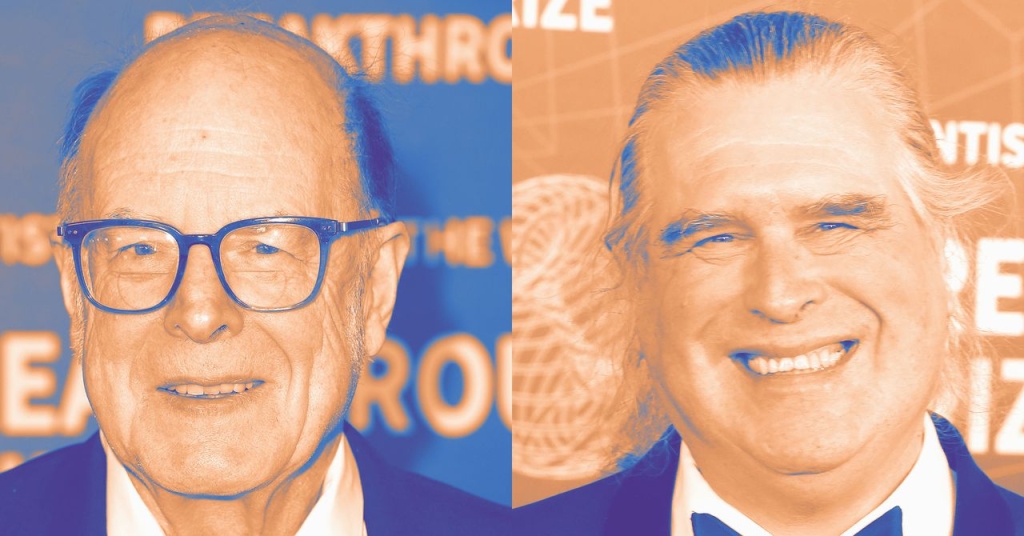
The Quantum Leap: How Two Scientists’ Beachside Chat Changed Computing Forever
The year was 1979, and the computing world was about to experience a revolution that would take decades to fully materialize. In the warm waters off the coast of Puerto Rico, two scientists—Charles Bennett and Gilles Brassard—had a conversation that would fundamentally reshape our understanding of information, cryptography, and the very nature of computation. Their chance meeting would eventually lead to quantum information theory, laying the groundwork for what we now know as quantum computing.
The Disconnect Between Classical Computing and Quantum Reality
Before their fateful encounter, computer science existed in a classical bubble, largely ignoring the quantum realm that physicists had been grappling with since the early 20th century. While quantum mechanics had revolutionized our understanding of the universe—revealing the strange, probabilistic nature of reality at the smallest scales—computer scientists were focused on building practical machines using classical physics principles.
“As late as the 1980s, people thought of quantum effects as something that happens in very small things and as a source of noise,” explains Charles Bennett. “You had to understand quantum theory to build transistors, but people thought of quantum mechanics as a nuisance rather than a resource.”
This perspective began to shift dramatically after Bennett and Brassard’s collaboration. They discovered that quantum mechanics wasn’t just a source of problems to overcome—it was a source of unprecedented computational power and security.
The Fateful Meeting in Puerto Rico
The story of how these two scientists came together reads like something out of a scientific romance novel. Bennett, working at IBM since 1973, had taken a hiatus from academic publishing but remained fascinated by an idea proposed by his college classmate Steven Wiesner: using quantum mechanics for unbreakable cryptography and unforgeable digital currency—essentially conceptualizing cryptocurrency decades before Bitcoin.
At a 1979 conference in Puerto Rico, Bennett spotted Gilles Brassard, a cryptographer who had just completed his dissertation on public-key cryptography. Rather than approaching him on solid ground, Bennett found Brassard in the ocean and began explaining Wiesner’s quantum cryptography concept.
“So there I was swimming in the beach when a complete stranger came up to me and started telling me that a friend of his found that we can use quantum mechanics to make affordable banking notes out of nowhere,” Brassard recalls. “If I had been on firm ground, I would have run for my life, but I was trapped in the ocean, so I listened politely.”
Despite having no previous interest in physics, Brassard was intrigued by the approach. Their collaboration would produce what became known as the BB84 protocol, named after their initials and the year of publication. This protocol established the first practical method for quantum key distribution—a way to create encryption keys that were theoretically impossible to intercept without detection.
From Theoretical Concept to Computing Revolution
The BB84 protocol represented more than just a new cryptographic method; it represented a fundamental shift in how we think about information itself. Instead of viewing quantum effects as noise to be eliminated, Bennett and Brassard showed how these effects could be harnessed as features.
Their work demonstrated that quantum particles could exist in multiple states simultaneously (superposition) and could be entangled across vast distances, allowing for information processing capabilities that classical computers could never achieve. This insight opened up entirely new computational paradigms.
While their original work didn’t directly lead to today’s quantum computing race, it laid essential theoretical groundwork. Bennett notes that in a 1981 conference at MIT, legendary physicist Richard Feynman articulated the core insight that would drive quantum computing forward: since nature operates according to quantum principles, some computational problems would require quantum computers to solve efficiently.
Physicist David Deutsch would later formalize many of these concepts, but Bennett and Brassard’s contributions were foundational. They showed that quantum information wasn’t just different from classical information—it was fundamentally more powerful in certain applications.
The Turing Award Recognition
The significance of their contributions has now been recognized with the highest honor in computer science: the ACM A.M. Turing Award, often called the Nobel Prize of computing. This recognition acknowledges not just their specific discoveries but the paradigm shift they helped initiate.
As Yannis Ioannidis, president of ACM, stated in the award announcement, “Bennett and Brassard fundamentally changed our understanding of information itself.” This is perhaps the most profound aspect of their work—they didn’t just create new technologies; they changed how we conceptualize the very nature of information and computation.
Quantum Computing Today: From Theory to Reality
Today, the quantum computing industry is booming. Companies like Google, Microsoft, IBM, and numerous well-funded startups are racing to build practical quantum computers. These machines promise to solve certain problems—like simulating complex molecules for drug discovery, optimizing financial portfolios, or breaking current encryption methods—that would take classical computers millions of years.
Google claimed “quantum supremacy” in 2019, demonstrating that its quantum computer could perform a specific calculation faster than the world’s most powerful classical supercomputer. IBM has made quantum computers available through the cloud, allowing researchers and companies worldwide to experiment with quantum algorithms. Startups like Rigetti, IonQ, and D-Wave are pursuing different approaches to building quantum hardware.
The field has also expanded beyond computing into quantum sensing, quantum communication, and the emerging concept of the “quantum internet”—a network that would use quantum entanglement to transmit information with unprecedented security and capabilities.
The Road Ahead
Despite tremendous progress, practical quantum computing still faces significant challenges. Quantum states are extremely fragile and can collapse due to the slightest interference from the environment—a problem known as decoherence. Building systems that can maintain quantum coherence long enough to perform useful computations remains one of the field’s biggest hurdles.
Moreover, quantum computers aren’t expected to replace classical computers for most tasks. They’re specialized tools for specific problems where quantum effects provide advantages. Understanding which problems benefit from quantum approaches and developing efficient quantum algorithms for those problems remains an active area of research.
Legacy of a Beachside Conversation
Looking back, that conversation in the waters off Puerto Rico represents one of those rare moments where a simple interaction leads to transformative change. Bennett and Brassard’s willingness to explore an unconventional idea—quantum cryptography—opened up an entirely new field of study that continues to expand our technological horizons.
Their story also illustrates the importance of interdisciplinary thinking. By bringing together cryptography and quantum physics—fields that had previously operated in isolation—they created something genuinely new. This kind of cross-pollination between disciplines often leads to the most significant breakthroughs.
As we stand on the brink of what many believe will be the quantum age of computing, we can trace much of our current excitement and progress back to that summer day in 1979 when two scientists, trapped together in the ocean, decided to explore an idea that most people would have dismissed as too strange or impractical to pursue.
The quantum computing revolution they helped launch is still in its early stages, but its potential to transform fields from medicine to materials science to artificial intelligence makes it one of the most exciting technological frontiers of our time. And it all started with a conversation between two people who were willing to think differently about the nature of information itself.
Tags: Quantum Computing, Charles Bennett, Gilles Brassard, BB84 Protocol, Quantum Cryptography, Turing Award, Quantum Information Theory, Quantum Entanglement, Superposition, Quantum Key Distribution, IBM, Google Quantum, Microsoft Quantum, Quantum Supremacy, Quantum Internet, Richard Feynman, David Deutsch, Steven Wiesner, Breakthrough Technology, Computing Revolution
Viral Phrases: “The Nobel Prize of computing,” “quantum supremacy,” “the quantum internet,” “fundamentally changed our understanding of information,” “beachside conversation that changed computing forever,” “turning quantum noise into quantum power,” “the race to build practical quantum computers,” “harnessing the quantum realm,” “from theoretical concept to computing revolution,” “the future of computing will involve the quantum realm”
,

Leave a Reply
Want to join the discussion?Feel free to contribute!