
A Simple Blood Test Could Eventually Tell You When Alzheimer’s Is Coming
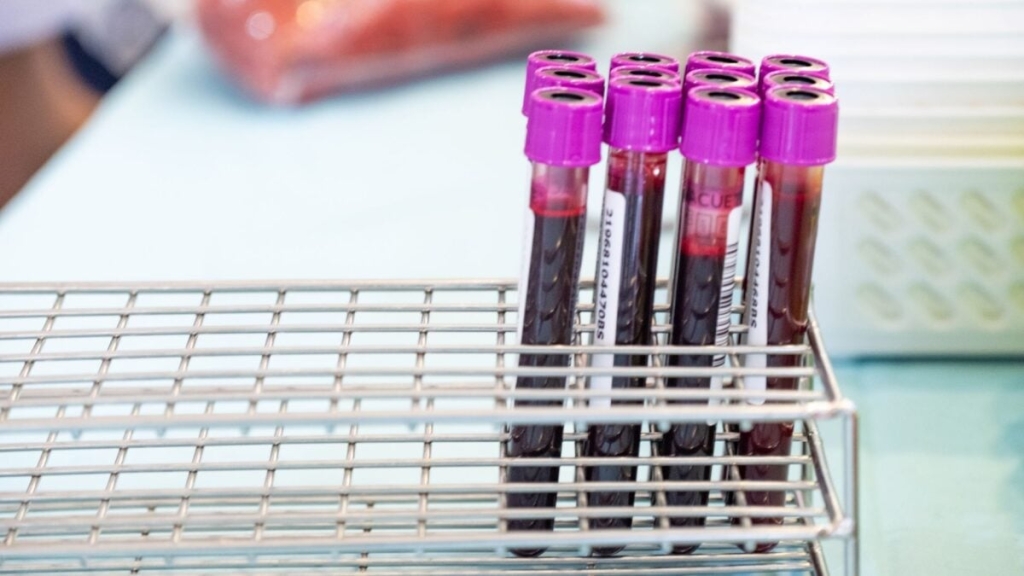
Scientists Unveil Blood Test That Can Predict Alzheimer’s Onset Within 3-4 Years
In a breakthrough that could revolutionize how we approach one of humanity’s most feared diseases, researchers have developed a predictive model that uses a simple blood test to forecast when Alzheimer’s symptoms will appear—potentially giving millions of people crucial advance warning about their cognitive future.
The research, published Thursday in Nature Medicine, comes from scientists at Washington University School of Medicine in St. Louis who have identified a blood biomarker that acts like a biological clock for Alzheimer’s disease.
The Science Behind the “Alzheimer’s Clock”
At the heart of this discovery is a protein called phosphorylated tau 217 (ptau217). This abnormal protein accumulates in the brains of Alzheimer’s patients, and researchers found that its levels in the blood correlate remarkably closely with disease progression.
“We found that blood p-tau217 levels increased relatively consistently across individuals, allowing us to estimate the age that individuals became positive on the p-tau217 test,” explained Kellen Petersen, an instructor in neurology at WashU Medicine and co-author of the study.
The team analyzed data from approximately 600 older adults who were initially cognitively healthy. Using various blood tests measuring ptau217—including PrecivityAD2, a commercially available test developed by WashU researchers that’s currently under FDA review—they created a predictive model that could estimate when someone would develop Alzheimer’s symptoms.
Remarkably Accurate Predictions
The model demonstrated impressive accuracy, predicting symptom onset within an average window of just three to four years. Even more intriguingly, the researchers discovered that younger people appear to have more time between elevated ptau217 levels and actual symptom onset compared to older individuals.
“This suggests that younger people can better fend off brain deterioration,” noted Suzanne Schindler, associate professor of neurology at WashU and lead author of the study.
Perhaps most promisingly, the model worked across different blood tests, not just the PrecivityAD2 test, suggesting its potential for widespread clinical application.
Immediate Impact on Clinical Trials
While the three-to-four-year prediction window might seem broad, the researchers emphasize its immediate value for Alzheimer’s clinical trials. Currently, identifying participants who are on the cusp of developing symptoms is challenging, making trials less efficient and more costly.
“Our models will help trials select individuals who are still cognitively unimpaired but more likely to develop symptoms during the clinical trial,” Petersen said. “This would make trials more efficient.”
This efficiency could accelerate the development of new treatments by ensuring that trials focus on participants most likely to show measurable changes during the study period.
Future Applications: Empowering Patient Decision-Making
Looking ahead, the researchers envision their model becoming accurate enough for direct clinical use, empowering patients and doctors to make informed decisions about prevention and care.
“For example, individuals who are far from symptom onset might choose to focus on lifestyle modification, while those close to symptom onset might be more proactive and consider participating in clinical trials,” Petersen explained.
The team has already taken steps to facilitate broader adoption of their work. They’ve released their predictive model’s code online and created a web-based application, allowing other research teams to build upon and refine their approach.
A New Era in Alzheimer’s Management
Currently, Alzheimer’s and other forms of dementia remain incurable. However, this research represents a significant step toward transforming Alzheimer’s from an unpredictable thief of memory into a condition that can be anticipated and potentially mitigated.
The implications extend beyond individual patients. Healthcare systems could better allocate resources, families could make more informed care decisions, and society could prepare for the growing Alzheimer’s epidemic with greater precision.
As Schindler noted, “Given the speed of progress in Alzheimer’s research, blood biomarkers, and modeling, we are hopeful that these kinds of models will be available for clinical care within the next couple of years.”
This research arrives at a critical moment. With Alzheimer’s cases projected to triple by 2050 as populations age globally, tools that can predict and potentially prevent the disease become increasingly vital. The blood test that reads like a clock for Alzheimer’s may prove to be one of the most important diagnostic tools of the 21st century.
Tags & Viral Elements
- Game-changing Alzheimer’s blood test
- Predict dementia years before symptoms
- Revolutionary biomarker ptau217
- Alzheimer’s clock predicts cognitive decline
- Simple blood test forecasts brain disease
- Breakthrough in Alzheimer’s prediction technology
- Washington University’s Alzheimer’s breakthrough
- 3-4 year warning for Alzheimer’s onset
- Blood test that reads your brain’s future
- Alzheimer’s early warning system
- PrecivityAD2 blood test FDA review
- Neurodegeneration prediction model
- Cognitive decline forecasting technology
- Alzheimer’s research 2025 breakthrough
- Dementia prediction science
- Brain health biomarker revolution
- Alzheimer’s disease forecasting
- Cognitive decline early detection
- Neurodegenerative disease prediction
- Alzheimer’s prevention game-changer
,


Leave a Reply
Want to join the discussion?Feel free to contribute!