
A Surprising ‘Rocket Storm’ Could Reveal How Mars Lost Its Water : ScienceAlert
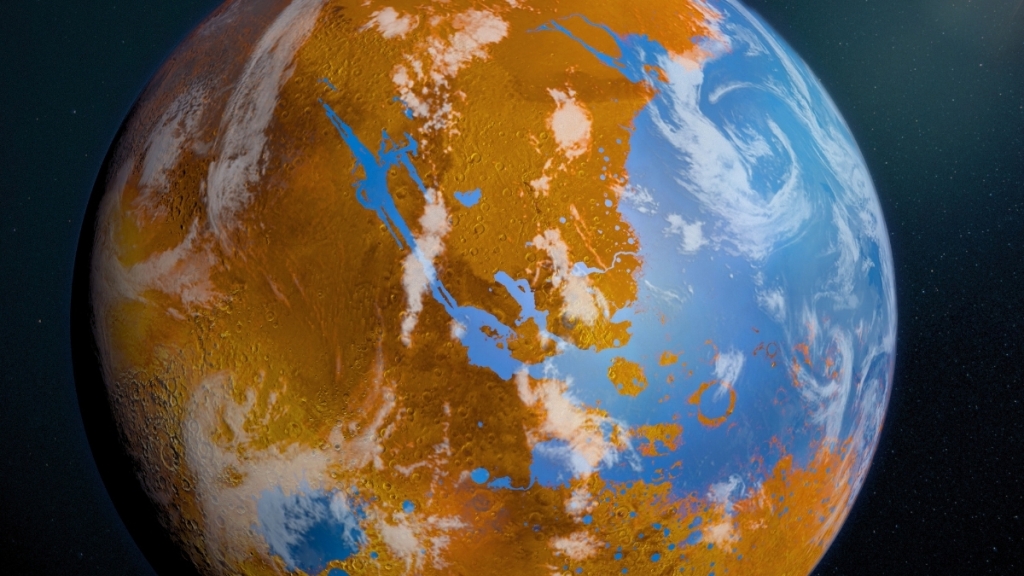
Mars’ Mysterious Water Vanishing Act: New Study Reveals Year-Round Destruction
Mars, the Red Planet, has long been a source of fascination for scientists and space enthusiasts alike. Today, it’s a barren, dusty world, but evidence from rovers and orbiters tells a different story of its past—one where rivers flowed, lakes shimmered, and perhaps even oceans stretched across its surface. The big question that has puzzled researchers for years is: where did all that water go?
A groundbreaking new study, published in Communications Earth & Environment, sheds light on this cosmic mystery. By analyzing data from multiple spacecraft—including the ExoMars Trace Gas Orbiter, the Emirates Mars Mission (EMM), and NASA’s Mars Reconnaissance Orbiter—scientists have uncovered a surprising mechanism that could explain Mars’ dramatic water loss.
The Deuterium Clue: A Chemical Fingerprint
To understand Mars’ watery past, scientists use a clever trick involving the ratio of deuterium to hydrogen (D/H) in water molecules. Deuterium is a heavier form of hydrogen, and because it’s less likely to escape Mars’ thin atmosphere, the D/H ratio increases over time as lighter hydrogen is lost to space. By measuring this ratio, researchers estimate that ancient Mars once held enough water to cover most of its surface to a depth of hundreds of meters.
But how did all that water disappear? The answer lies in the planet’s dynamic atmosphere and its infamous dust storms.
Dust Storms: The Unsung Villains
For years, scientists believed that water loss on Mars was primarily driven by seasonal dust storms during the southern summer, when the planet is closest to the Sun. These storms heat the atmosphere, preventing water ice clouds from forming and allowing water vapor to rise higher into the atmosphere, where it’s broken apart by ultraviolet radiation and lost to space.
However, the new study reveals that this process isn’t limited to southern summers. In 2022-2023, during Mars Year 37, a powerful dust storm erupted in the northern hemisphere—a region and time previously thought to be less active in water loss. This “rocket storm,” as researchers call it, behaved just like its southern counterparts, injecting water into the upper atmosphere and triggering its destruction.
A Year-Round Water Loss Machine
This discovery is a game-changer. It suggests that water loss on Mars isn’t just a seasonal phenomenon but a continuous process driven by dust storms throughout the year. The study’s authors propose that in Mars’ distant past, when its axial tilt was even more extreme, these storms could have been even more intense, accelerating the planet’s water loss.
What This Means for Mars’ History
The implications of this research are profound. It helps explain the discrepancy between the amount of water Mars is believed to have had and the amount we see today. It also raises new questions about the planet’s climate history and its potential to have once supported life.
As scientists continue to unravel the mysteries of Mars, one thing is clear: the Red Planet’s story is far more complex—and more dramatic—than we ever imagined. From its watery past to its dusty present, Mars continues to captivate us, reminding us that even the most familiar worlds can hold secrets waiting to be discovered.
Tags: Mars, water loss, dust storms, deuterium, hydrogen, ExoMars, Emirates Mars Mission, Mars Reconnaissance Orbiter, planetary science, space exploration, UV radiation, solar wind, axial tilt, climate history, astrobiology
Viral Sentences:
- “Mars’ water didn’t just vanish—it was destroyed by dust storms all year round!”
- “The Red Planet’s secret water loss machine has been uncovered!”
- “Dust storms on Mars are more than just a nuisance—they’re a planetary water thief!”
- “Mars used to be blue—now we know how it turned red and dry!”
- “A single Martian storm triggered massive water loss—here’s how!”
,


Leave a Reply
Want to join the discussion?Feel free to contribute!