
Accidental discovery hints at mystery structures within our brain
Hidden Brain Vessels Discovered: A Potential Game-Changer for Neuroscience
In a discovery that could rewrite the textbooks of neuroscience, researchers at Harvard University have identified what may be a previously unknown network of microscopic vessels within the human brain. These structures, dubbed nanoscale lymphatic-like vessels (NLVs), could revolutionize our understanding of how the brain clears waste—and potentially unlock new treatments for devastating neurological diseases like Alzheimer’s.
For decades, scientists believed the brain lacked the lymphatic vessels found throughout the rest of the body. Instead, the brain was thought to rely on the glymphatic system—a network of channels that surrounds blood vessels and helps flush out metabolic waste into the body’s broader lymphatic system. But now, a serendipitous discovery has challenged that assumption.
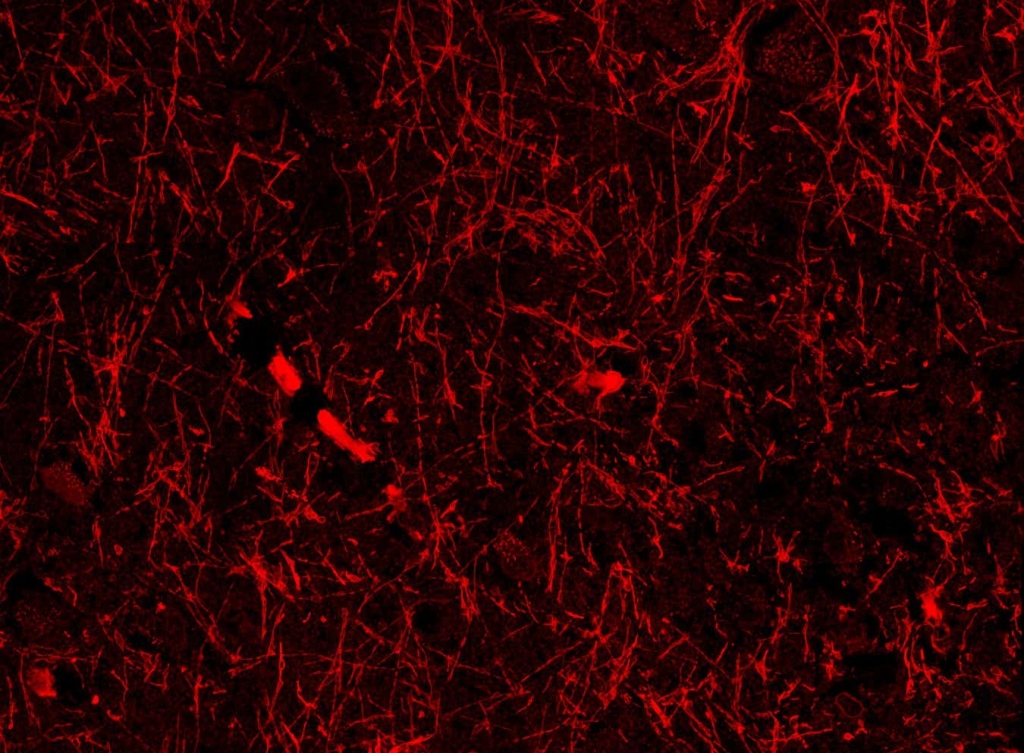
The breakthrough came when Shiju Gu, a researcher in the lab of Chongzhao Ran, was examining brain tissue from mice with Alzheimer’s-like disease. While searching for beta-amyloid—a protein that forms toxic clumps in Alzheimer’s—Gu noticed something unexpected: dozens of tiny, tube-like structures wrapping around blood vessels in multiple brain regions, including the cortex, hippocampus, and hypothalamus. These structures appeared in both diseased and healthy mice, and even in human brain tissue from individuals with and without Alzheimer’s.
“This is my most significant discovery in 30 years,” Ran said. “It is the dream of a scientist.”
The team hypothesized that these NLVs might be a new type of lymphatic vessel, distinct from the larger vessels found in the brain’s protective outer layer. To test this, they applied protein markers that typically highlight lymphatic vessels to brain slices from mice. The markers consistently stained the tube-like structures, though less strongly than known lymphatic vessels. This led the researchers to conclude that NLVs are indeed lymphatic-like, though their exact nature remains under investigation.
If confirmed, the implications are staggering. Poor waste clearance in the brain is thought to contribute to the buildup of toxic proteins like beta-amyloid and tau, which are hallmarks of Alzheimer’s disease. NLVs could explain how the brain efficiently drains these waste products—and how this process might go awry in disease.
“If it’s true, this is huge,” said Per Kristian Eide of Oslo University, who was not involved in the study. “It would represent a paradigm shift in our understanding of all neurodegenerative diseases, but also conditions like stroke and traumatic brain injury, and our normal brain function.”
However, not all experts are convinced. Christopher Brown of the University of Southampton cautioned that the structures could be artifacts caused by the imaging technique used. If tissue samples expanded unevenly, for example, it could create vessel-like fractures. Brown also noted that prior studies using more reliable methods, such as electron microscopy, haven’t reported NLVs, raising questions about their existence.
Ran and his team are planning to address these concerns by using electron microscopy in the coming weeks. They also point to another experiment where fluorescently tagged beta-amyloid in mice seemed to enter nearby NLVs, suggesting these structures do transport waste fluid.
The discovery could have far-reaching consequences. If NLVs are confirmed, they could become a new target for therapies aimed at enhancing waste clearance in the brain. For instance, drugs that dilate these vessels might help prevent or slow the progression of Alzheimer’s and other neurodegenerative diseases.
“This could be a breakthrough,” Brown said. “If we can find ways to manipulate these vessels, we might be able to treat conditions that have long been considered untreatable.”
As the scientific community awaits further validation, one thing is clear: this accidental discovery has opened a new frontier in neuroscience. The brain, it seems, still has secrets to reveal—and the stakes couldn’t be higher.
Tags: Brain Discovery, Neuroscience, Alzheimer’s Research, Lymphatic System, Glymphatic System, Neurodegenerative Diseases, Waste Clearance, Medical Breakthrough, Brain Health, Scientific Revolution
Viral Sentences:
- “This is my most significant discovery in 30 years.”
- “If it’s true, this is huge.”
- “It would represent a paradigm shift in our understanding of all neurodegenerative diseases.”
- “This could be a breakthrough.”
- “The brain, it seems, still has secrets to reveal.”
,


Leave a Reply
Want to join the discussion?Feel free to contribute!