
‘Accountability has arrived’: dual US court losses show shifting tide against Meta and co | Meta
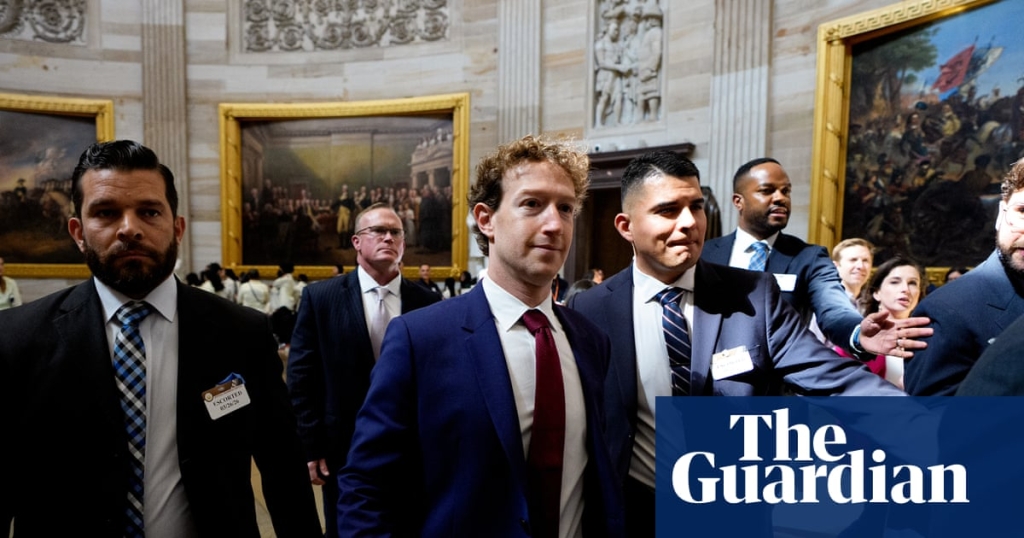
Meta Faces Historic Legal Reckoning as Juries Find Social Media Giants Liable for Harming Youth
In a stunning legal blow that sent shockwaves through Silicon Valley, Meta and YouTube were hit with back-to-back jury verdicts that could fundamentally reshape the social media landscape. Within just 48 hours, juries in New Mexico and California delivered unprecedented rulings finding the tech giants liable for products that allegedly addict and harm young users.
The New Mexico jury ordered Meta to pay $375 million in damages, finding the company enabled child sexual exploitation through its platforms. Just one day later, a California jury delivered an even more devastating blow, ordering Meta and YouTube to pay $6 million and finding both companies acted with malice, oppression, and fraud in designing addictive products targeting children.
These landmark cases represent the first social media addiction trials to reach verdict in U.S. history, marking a watershed moment for an industry that has long operated with minimal regulation and few consequences. The California verdict was particularly striking, with 10 out of 12 jurors finding in favor of the plaintiff on every question—a resounding rejection of Big Tech’s defense that social media is simply a neutral platform.
“This verdict is bigger than one case,” declared the lead plaintiff attorneys in a joint statement. “For years, social media companies have profited from targeting children while concealing their addictive and dangerous design features. Today’s verdict is a referendum—from a jury, to an entire industry—that accountability has arrived.”
The legal strategy mirrors the successful campaign against Big Tobacco in the 1990s, with thousands of plaintiffs across multiple states bringing coordinated lawsuits alleging that features like infinite scroll, autoplay videos, and algorithmic feeds are deliberately designed to hook young users. Internal company documents revealed during the trials paint a damning picture, with one YouTube executive asking in 2021, “How are we measuring wellbeing?” and answering, “We’re not.”
Meta’s response has been predictably defensive, with a spokesperson claiming that “teen mental health is profoundly complex and cannot be linked to a single app.” YouTube went further, bizarrely claiming it “is not a social media site” despite its core business model relying on user engagement and content sharing.
The cases have exposed a troubling pattern of corporate knowledge and deliberate design choices. Internal Meta documents described targeting teens as a “gateway” to attract entire families to their platforms, while another employee compared targeting 11-year-olds to “tobacco companies a couple decades ago.” Perhaps most damning was an email from Meta’s product team to Instagram head Adam Mosseri in 2019 stating that “Instagram had become the leading two-sided marketplace for human trafficking.”
The California case centered on a 20-year-old woman identified as KGM, who testified that Instagram addiction began at age nine and YouTube at six, leading to depression, self-harm, and diagnosed mental health disorders including body dysmorphic disorder and social phobia. Her testimony, along with expert witnesses and whistleblower accounts, created a compelling narrative of corporate malfeasance that jurors found impossible to ignore.
Legal experts see these verdicts as just the beginning. Former federal prosecutor Neama Rahmani likened the situation to the tobacco litigation that transformed cigarette packaging and public perception. “I’m old enough to remember when we had smoking sections on airplanes, and now, because of litigation, anyone who buys a pack of cigarettes sees cancer warnings all over the packaging,” Rahmani said. “These verdicts are going to dramatically change the way we view social media apps.”
The coordinated legal assault involves more than 2,000 plaintiffs, including families, school districts, and state attorneys general, who have brought lawsuits against Meta, YouTube, TikTok, and Snap. The strategy is clear: keep winning cases until the cost of litigation exceeds the cost of redesigning harmful features. With bellwether trials scheduled through 2026, the pressure on social media companies is only beginning.
Industry analyst Mike Proulx captured the shifting public sentiment, noting that “negative sentiment toward social media has been building for years, and now it’s finally boiled over.” The verdicts come at a time when parents, educators, and mental health professionals have increasingly raised concerns about social media’s impact on youth development, academic performance, and emotional well-being.
The next phase of litigation promises to be even more consequential. New Mexico’s attorney general is seeking court-mandated changes to Meta’s platforms, including effective age verification, predator removal, and protections against encrypted communications that shield bad actors. Federal lawsuits with hundreds of plaintiffs are set to begin trial in San Francisco in June, with additional California bellwether cases scheduled through the summer.
As these legal battles unfold, the social media industry faces an existential question: will they voluntarily reform their most addictive features, or will they continue fighting in court while public opinion and legal precedent turn decisively against them? The verdicts suggest that for an industry that has long claimed to connect the world, the greatest threat may come not from competitors, but from the very users they’ve been accused of exploiting.
Tags: Meta lawsuit, social media addiction, YouTube verdict, teen mental health, child exploitation, Silicon Valley reckoning, Big Tech accountability, tobacco litigation comparison, addictive design features, internal documents, whistleblower testimony, California jury verdict, New Mexico damages, platform liability, age verification, human trafficking, body dysmorphic disorder, self-harm, algorithmic feeds, infinite scroll, autoplay videos, school district lawsuits, state attorneys general, coordinated legal strategy, bellwether trials, court-mandated changes, encrypted communications, predator removal, Morgan & Morgan, Josh Autry, James Rubinowitz, Neama Rahmani, Mike Proulx, Raúl Torrez, Adam Mosseri, KGM testimony, 21st century landmark issue, public sentiment shift, smoking sections airplanes, cancer warnings packaging, multitrillion-dollar industry, minimal regulation, few consequences, industry transformation, user exploitation, corporate malfeasance, damning picture, compelling narrative, public opinion turn, existential question, voluntary reform, fighting court, legal precedent, decisive turn, connect world, greatest threat, competitors, exploiting users.
Viral Phrases: “Accountability has arrived,” “Data shows that Instagram had become the leading two-sided marketplace for human trafficking,” “Targeting 11 year olds feels like tobacco companies a couple decades ago,” “The young ones are the best ones for long-term retention,” “How are we measuring wellbeing? We’re not,” “This verdict is bigger than one case,” “Ten out of 12 jurors voted for the plaintiff on every single question,” “These verdicts mark an unsurprising breaking point,” “I’m old enough to remember when we had smoking sections on airplanes,” “The effect of social media on children is one of the landmark issues of the 21st century,” “As we push forward with additional bellwether trials… we expect jurors will continue to protect the mental health of future generations,” “For years, social media companies have profited from targeting children while concealing their addictive and dangerous design features,” “This is just the beginning,” “It’s finally boiled over,” “The greatest threat may come not from competitors, but from the very users they’ve been accused of exploiting.”
,


Leave a Reply
Want to join the discussion?Feel free to contribute!