
AfricaMuseum refuses to release Congo geological archive to US mining company, despite pressure from President Trump
Billionaires Bezos and Gates Locked in High-Stakes Battle Over Congo’s Mineral Wealth
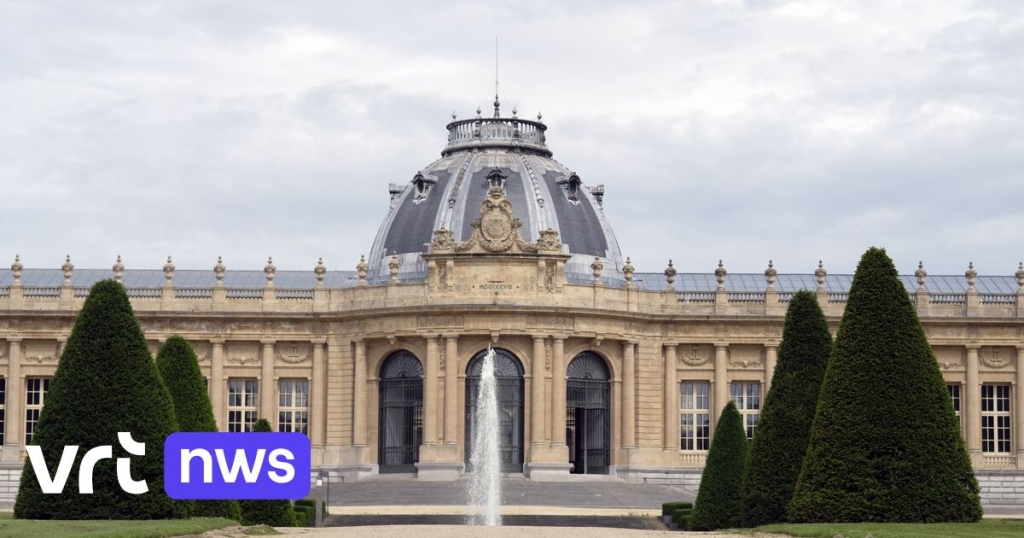
In a dramatic clash between technological ambition and national sovereignty, the Democratic Republic of Congo finds itself at the center of a global power struggle over its vast mineral resources. At the heart of this controversy lies an unlikely battleground: the dusty archives of the AfricaMuseum in Tervuren, Belgium.
The story begins with a bold proposal from Kobold Metals, an American mining company backed by some of the world’s most recognizable tech billionaires. Jeff Bezos, the Amazon founder whose wealth eclipses that of many nations, and Bill Gates, the Microsoft visionary turned global philanthropist, have invested heavily in this venture that promises to revolutionize how we discover and extract the critical minerals powering our digital future.
According to exclusive reporting by the Financial Times, the Congolese government entered into negotiations with Kobold Metals last year, signing an agreement that would grant the company unprecedented access to decades-old geological surveys and mining records. The company’s ambitious plan? To deploy cutting-edge artificial intelligence algorithms to sift through this historical data, potentially uncovering mineral deposits that have remained hidden for generations.
The stakes couldn’t be higher. The Congolese subsoil is estimated to contain approximately 70% of the world’s cobalt reserves—a metal absolutely essential for the lithium-ion batteries that power everything from smartphones to electric vehicles. Add to this the country’s vast copper and coltan deposits, and you have what many experts consider the most valuable patch of earth on the planet.
But what seemed like a straightforward business deal has exploded into an international incident, with the AfricaMuseum in Tervuren refusing to hand over its precious archives. Museum director Bart Ouvry has taken a defiant stance, arguing that these are public documents that belong to the Congolese people, not commodities to be privatized by Silicon Valley elites.
“We want to carry out the digitisation ourselves, in a scientific manner, and not leave it to a private company,” Ouvry stated emphatically. His position reflects a growing concern among African nations about the continued exploitation of their natural resources by foreign interests, a pattern that dates back to the colonial era.
The archives in question are a treasure trove of geological information, containing documents from Belgian mining companies that operated in the region until the late 1960s. These records don’t just cover Congo—they encompass data from Rwanda, Burundi, and other African nations, making them invaluable for understanding the continent’s mineral potential.
What makes this situation particularly complex is the involvement of the European Union, which is supporting the digitization project as part of broader efforts to promote sustainable development in Africa. The Geological Services of Congo are also deeply involved as scientific partners, ensuring that any technological advancement benefits the host nation.
However, the plot thickens with revelations that the Trump administration has been applying political pressure to accelerate the transfer of these archives to Kobold Metals. This development has raised eyebrows across diplomatic circles, given President Trump’s well-documented interest in securing access to Congo’s mineral wealth.
A spokesperson for Belgian Foreign Minister Maxime Prévot confirmed that there have been “technical contacts with the Congolese government a few months ago,” and that the American embassy had engaged with Belgium’s Africa desk. However, they emphasized that these discussions occurred at “diplomatic and technical level, not at ministerial level.”
Minister Prévot’s office has thrown its support behind the AfricaMuseum’s position, arguing that the ongoing digitization process between the museum and the Congolese government should not be derailed by granting private companies “privileged or exclusive access” to these public archives.
The controversy highlights a fundamental tension in our increasingly digital world: how do we balance the promise of technological innovation with the principles of national sovereignty and equitable resource distribution? On one side, we have billionaires and their companies promising to use AI to unlock the secrets of the earth more efficiently than ever before. On the other, we have nations and institutions fighting to maintain control over their own geological heritage.
As the standoff continues, one thing is clear: the outcome of this battle could reshape not just the mining industry, but the geopolitical landscape of Africa and the global supply chain for critical minerals. With electric vehicles and renewable energy technologies driving unprecedented demand for cobalt and other battery metals, whoever controls access to these resources will wield enormous influence in the coming decades.
The AfricaMuseum’s refusal to simply hand over its archives represents more than just bureaucratic stubbornness—it’s a statement about the changing relationship between resource-rich nations and the global corporations that have historically profited from their wealth. In an era where data is often called the new oil, the question of who controls access to geological information has become as politically charged as debates over drilling rights or mining permits.
As negotiations continue behind closed doors, observers around the world are watching closely. The decision made in this Belgian museum could determine whether Congo’s mineral wealth continues to flow primarily to foreign interests, or whether the digital age finally brings a more equitable distribution of the benefits derived from Africa’s natural resources.
The coming months will reveal whether technological progress and national sovereignty can find common ground, or whether this high-stakes game of mineral rights will devolve into yet another chapter in the long history of resource exploitation in Africa. One thing is certain: the dusty archives of Tervuren have become the unlikely center of a global drama that could shape the future of technology, geopolitics, and economic justice for generations to come.
Tags:
Congo mineral wealth, Bezos Gates investment, AI mineral exploration, AfricaMuseum archives, critical raw materials, cobalt reserves, geopolitical tech battle, mineral resource sovereignty, digital colonialism, battery metals race, Trump administration pressure, technological innovation vs sovereignty
Viral Phrases:
“Billionaires battle for Congo’s treasure”
“AI digs through history to find tomorrow’s wealth”
“Museum stands firm against Silicon Valley giants”
“The new gold rush: data meets dirt”
“Colonial ghosts haunt modern tech ambitions”
“Who owns the earth’s secrets?”
“Digital tools, age-old exploitation”
“The mineral that powers our future”
“When billionaires knock on museum doors”
“Technology’s hunger for Congo’s riches”
,


Leave a Reply
Want to join the discussion?Feel free to contribute!