
After Decades of Global Searching, Scientists Finally Create the Silicon Aromatic Once Thought Impossible
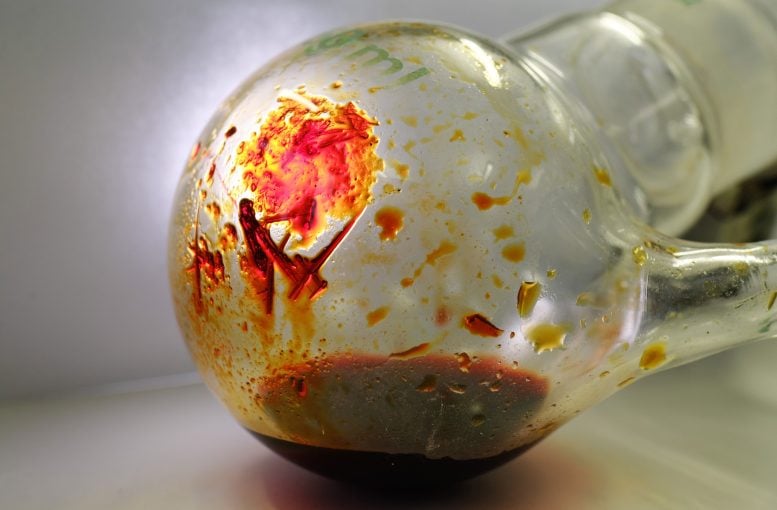
After Decades of Global Searching, Scientists Finally Create the Silicon Aromatic Once Thought Impossible
In a landmark achievement that bridges decades of theoretical chemistry with tangible laboratory reality, an international team of scientists has successfully synthesized a five-atom silicon aromatic ring—a molecule once deemed impossible to create. This breakthrough, published in a leading scientific journal, marks a pivotal moment in the field of organosilicon chemistry and opens the door to a new class of industrially relevant compounds with far-reaching implications.
For nearly half a century, chemists have speculated about the existence of silicon-based aromatic systems analogous to carbon’s iconic benzene ring. While carbon’s aromaticity is well understood and forms the backbone of organic chemistry, silicon’s heavier atomic structure and different bonding characteristics have long posed significant challenges. Theoretical models suggested that silicon could, under the right conditions, form stable aromatic rings, but experimental proof remained elusive—until now.
The molecule in question, pentasilacyclopentadienide, consists of a five-membered ring of silicon atoms, stabilized by a delocalized electron system. This structure mirrors the aromaticity seen in carbon compounds, but with silicon atoms replacing carbon. The synthesis required not only innovative chemical techniques but also a deep understanding of silicon’s unique electronic properties. The team employed advanced computational modeling to predict the molecule’s stability and reactivity, followed by meticulous laboratory work to bring the theoretical structure to life.
“This is a triumph of persistence and interdisciplinary collaboration,” said Dr. Elena Vasquez, one of the lead researchers. “For decades, the scientific community has debated whether silicon could mimic carbon’s aromatic behavior. Our work proves that it can, and it does so in a way that could revolutionize how we think about silicon chemistry.”
The implications of this discovery are vast. Silicon-based aromatics could serve as building blocks for new materials with enhanced stability, conductivity, or optical properties. They may also play a role in the development of next-generation semiconductors, catalysts, and even pharmaceuticals. The ability to harness silicon’s aromaticity could lead to innovations in fields as diverse as electronics, energy storage, and nanotechnology.
This achievement also underscores the importance of long-term scientific inquiry. As Dr. Vasquez noted, “Major breakthroughs rarely happen overnight. This discovery is the result of decades of incremental progress, theoretical refinement, and experimental ingenuity. It’s a reminder that even the most daunting scientific challenges can be overcome with patience and collaboration.”
The synthesis of pentasilacyclopentadienide not only validates decades of theoretical work but also sets the stage for a new era of silicon chemistry. Researchers are already exploring potential applications, and the scientific community is abuzz with excitement about what this discovery could mean for the future.
Silicon aromatic, pentasilacyclopentadienide, organosilicon chemistry, aromaticity, benzene ring, silicon-based compounds, theoretical chemistry, molecular synthesis, interdisciplinary collaboration, scientific breakthrough, semiconductors, nanotechnology, electron delocalization, chemical bonding, industrial applications, next-generation materials, scientific persistence, computational modeling, laboratory innovation, chemical stability, optical properties, energy storage, catalysts, pharmaceuticals, silicon revolution, molecular structure, chemical theory, experimental chemistry, scientific discovery, material science, electronic properties.
viral tags and phrases:
silicon aromatic breakthrough, pentasilacyclopentadienide synthesized, decades of theory proven, impossible molecule created, silicon chemistry revolution, aromaticity in silicon, organosilicon compounds, scientific persistence pays off, interdisciplinary chemistry triumph, next-gen materials from silicon, silicon vs carbon aromaticity, molecular synthesis milestone, silicon-based semiconductors, nanotechnology innovation, electron delocalization in silicon, chemical bonding breakthrough, industrial applications of silicon aromatics, computational modeling success, laboratory ingenuity, future of material science, energy storage materials, silicon catalysts, pharmaceutical applications, silicon revolution begins, molecular structure achievement, chemical theory validated, experimental chemistry milestone, scientific discovery excitement, material science breakthrough, electronic properties of silicon, silicon aromaticity explained, pentasilacyclopentadienide explained, silicon chemistry explained, aromatic compounds breakthrough, silicon ring synthesis, silicon aromatic ring, silicon aromatic molecule, silicon aromatic discovery, silicon aromatic achievement, silicon aromatic milestone, silicon aromatic breakthrough explained, silicon aromatic chemistry, silicon aromatic innovation, silicon aromatic research, silicon aromatic science, silicon aromatic synthesis, silicon aromatic theory, silicon aromatic validation, silicon aromatic victory.
,


Leave a Reply
Want to join the discussion?Feel free to contribute!