
AI Impact Summit 2026: 4 highlights from Google CEO Sundar Pichai
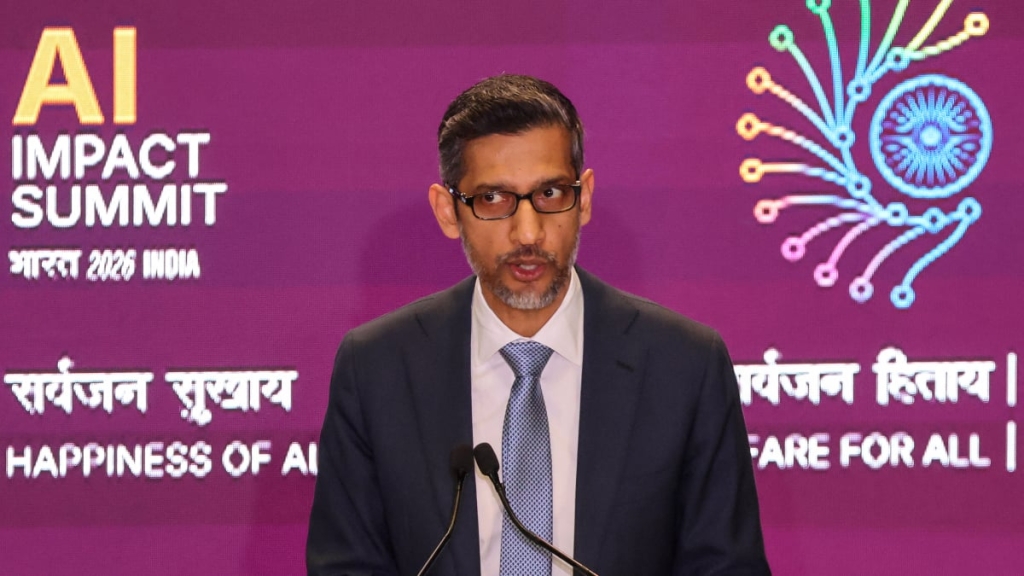
Google CEO Sundar Pichai Unveils Bold AI Future at Global Summit—Including Data Centers in Space
At the AI Impact Summit 2026 in New Delhi, Google CEO Sundar Pichai delivered a visionary keynote that sent shockwaves through the tech world. Speaking before a global audience of industry leaders, policymakers, and innovators, Pichai outlined Google’s ambitious roadmap for artificial intelligence—revealing plans that range from undersea cable networks connecting continents to experimental data centers orbiting Earth.
India Takes Center Stage in Google’s AI Expansion
Pichai’s speech underscored India’s pivotal role in Google’s AI future. The company is investing $15 billion in Indian infrastructure, creating what Pichai called a “full-stack AI hub” designed to position the country as a global leader in artificial intelligence development. This massive investment includes the deployment of four new subsea fiber optic cable systems as part of Google’s America-India Connect Initiative—literally laying the digital foundation for the next era of global connectivity.
“India has always been a place of innovation and possibility,” Pichai told the audience, reflecting on his own roots in the country. “What we’re building here isn’t just infrastructure—it’s the nervous system for the AI economy of tomorrow.”
The subsea cables, while not entirely new technology, represent a significant expansion of Google’s global network. These underwater fiber optic highways will dramatically increase data transfer speeds and reliability between the world’s two largest democracies, potentially reshaping everything from cloud computing to real-time AI applications.
Google Eyes the Final Frontier: Data Centers in Space
In one of the summit’s most surprising revelations, Pichai casually mentioned that Google is exploring the possibility of placing data centers in orbit around Earth. “I never imagined I’d be spending time with teams figuring out how to put data centers into space,” he admitted, drawing audible gasps from the audience.
This cosmic concept isn’t as far-fetched as it might sound. The idea addresses several pressing challenges in data center management, including cooling costs, energy consumption, and physical space limitations. In space, data centers could theoretically operate using solar power without the need for extensive cooling systems, while also being positioned closer to global users through orbital networks.
The revelation comes on the heels of Elon Musk’s SpaceX announcing plans to acquire his AI company xAI, with space-based data centers cited as a primary motivation. Now, with Google signaling similar ambitions, the race to establish extraterrestrial computing infrastructure appears to be heating up.
Industry analysts suggest we’re still in the “very early days” of this concept, with numerous technical, regulatory, and economic hurdles to overcome. Questions about maintenance, security, and the extreme conditions of space all present significant challenges. However, the fact that both Google and SpaceX are actively exploring the concept suggests it may transition from science fiction to reality sooner than many expect.
AI’s Medical Revolution: From Protein Folding to Drug Discovery
Pichai devoted considerable time to discussing AI’s transformative potential in healthcare and medicine. He highlighted Google DeepMind’s AlphaFold, an AI system capable of predicting a protein’s 3D structure from its amino acid sequence—a breakthrough that could revolutionize drug discovery and our understanding of biological processes.
The implications are staggering. Traditional methods of determining protein structures can take years and cost millions of dollars. AlphaFold can accomplish similar results in hours or days, potentially accelerating the development of new treatments for diseases ranging from cancer to Alzheimer’s.
However, this medical AI revolution comes with complex questions. In the United States, works produced by AI are not copyrightable, creating uncertainty about who would own patents for drugs or treatments discovered through AI systems. Would it be the company that created the AI, the researchers who prompted it, or the AI itself? These legal and ethical questions remain unresolved, but Google appears to be forging ahead regardless.
Pichai also discussed how AI is being used to analyze medical imaging, predict patient outcomes, and personalize treatment plans. From rural clinics in India to cutting-edge hospitals in Silicon Valley, AI is rapidly becoming an indispensable tool in modern medicine.
Navigating the AI Responsibility Challenge
As AI capabilities grow more powerful, so do concerns about their potential misuse. Pichai dedicated a significant portion of his speech to addressing what he called “the responsibility challenge”—how to harness AI’s benefits while mitigating its risks.
Google, like many tech giants, has faced criticism over AI ethics, from concerns about bias in algorithms to the environmental impact of training massive models. Pichai acknowledged these challenges directly, outlining several initiatives Google has implemented to address them.
To combat the growing threat of deepfakes and synthetic media, Google has developed SynthID—an invisible watermark embedded into AI-generated content that allows it to be identified as artificially created. This technology, Pichai explained, is crucial for maintaining trust in digital media as AI-generated content becomes increasingly sophisticated and difficult to distinguish from reality.
Pichai also addressed the economic disruption AI will inevitably cause. “AI will undeniably reshape the workforce,” he stated plainly. “We’re navigating profound economic shifts that will affect every industry and every job.”
To prepare for this transition, Google has launched extensive AI training programs aimed at upskilling workers whose jobs may be impacted by automation. Pichai emphasized that governments, too, have a critical role to play in regulating AI and ensuring its benefits are distributed equitably.
The responsibility discussion extended to environmental concerns as well. Training large AI models requires enormous computational resources and energy. Pichai highlighted Google’s commitment to running on carbon-free energy by 2030 and developing more efficient AI models that deliver better performance with less environmental impact.
The Road Ahead
Pichai’s speech at the AI Impact Summit painted a picture of a future where artificial intelligence is deeply integrated into every aspect of human life—from the cables beneath our oceans to potentially orbiting our planet, from discovering new medicines to reshaping entire economies.
Yet, for all the technological optimism, Pichai’s message was ultimately one of balance. The AI revolution, he suggested, will be defined not just by what we can build, but by how responsibly we choose to build it. As Google continues to push the boundaries of what’s possible with artificial intelligence, the company is simultaneously grappling with the profound questions of what’s responsible, what’s ethical, and what’s best for humanity.
The AI Impact Summit 2026 may well be remembered as a turning point—the moment when plans for space-based data centers moved from the realm of speculation to active development, when India’s role in the global AI ecosystem was solidified, and when the tech industry’s commitment to responsible AI development was tested in real-time.
As the summit continues in New Delhi, one thing is clear: the future of artificial intelligence is being written right now, and companies like Google are holding the pen.
Tags & Viral Phrases:
- Google CEO Sundar Pichai drops bombshell: Data centers in SPACE!
- India becomes AI superpower as Google invests $15B
- AI Impact Summit 2026: The moment tech history changed forever
- DeepMind’s AlphaFold could cure cancer—but who owns the patent?
- SynthID: Google’s invisible weapon against deepfakes
- The great AI workforce revolution: Adapt or get left behind
- Space race 2.0: Google vs SpaceX for orbital computing dominance
- Responsible AI: The tech industry’s biggest challenge yet
- From protein folding to planet-saving: AI’s medical miracle
- The nervous system of tomorrow’s AI economy is being built today
- Google’s America-India Connect Initiative: Digital silk road unveiled
- Pichai’s confession: “I never imagined putting data centers in space”
- AI responsibility: Not just a buzzword, but a survival strategy
- The $15 billion question: Can India lead the global AI revolution?
- Deepfakes apocalypse averted? Google’s watermarking tech explained
- The ethical minefield of AI-discovered medicines
- Carbon-free AI by 2030: Google’s environmental moonshot
- Workforce disruption 101: Google’s AI training programs revealed
- The invisible revolution: How AI is transforming medicine from within
,


Leave a Reply
Want to join the discussion?Feel free to contribute!