
AI is rewiring how the world’s best Go players think
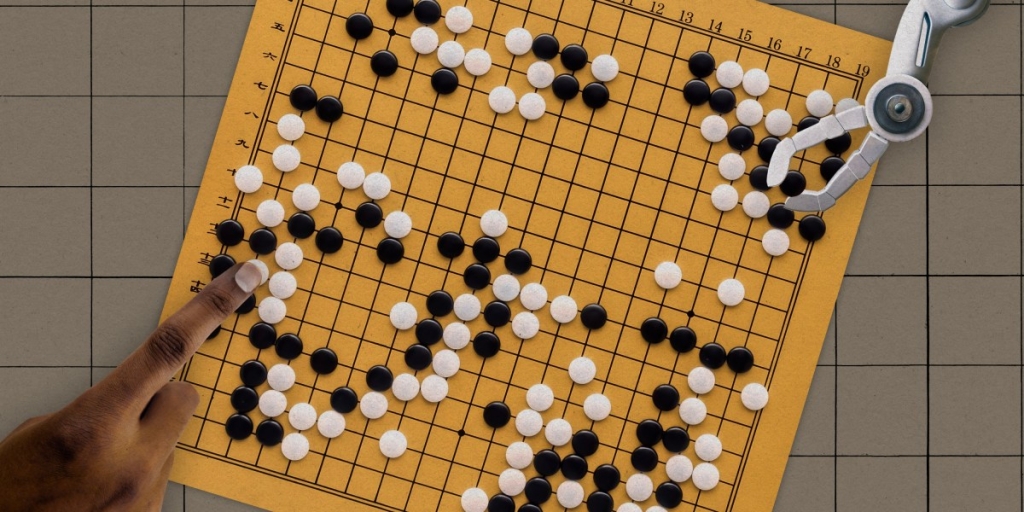
How AlphaGo Rewrote the Rules of a 2,500-Year-Old Game — and Changed the Future of Human Play
A decade ago, the world watched in disbelief as an artificial intelligence program called AlphaGo defeated Lee Sedol, one of the greatest Go players in history. The match wasn’t just a win for machine learning—it was a seismic shift in how humanity approaches one of the oldest and most complex games ever created.
Go, a board game born in ancient China over 2,500 years ago, is deceptively simple. Two players alternate placing black and white stones on a 19×19 grid, aiming to control the most territory by surrounding their opponent’s pieces. But beneath that simplicity lies staggering complexity. The number of possible board configurations in Go—roughly 10^170—exceeds the number of atoms in the known universe. If chess is a battle, Go is an all-out war fought across a vast landscape where every move ripples across the entire board.
When AlphaGo emerged from Google DeepMind’s labs, it didn’t just play Go—it transformed it. Trained on 30 million human moves and refined through millions of self-play games, AlphaGo developed strategies that baffled even the game’s elite. Some of its moves seemed nonsensical to human eyes, only to reveal devastating brilliance several turns later. Players watching the matches against Lee Sedol described feeling as if they were seeing Go for the first time.
In the years since that historic victory, AI has completely upended the game’s traditional wisdom. Centuries-old principles about optimal play have been overturned. Opening sequences once considered sacred have been abandoned. Entire schools of thought have been rendered obsolete overnight. The machine didn’t just learn to play Go—it reinvented it.
Today, professional Go players like Shin Jin-seo, the world’s top-ranked player, begin each day by consulting AI. Every morning, Shin opens KataGo, a powerful open-source Go engine, and studies its recommendations. He traces the glowing “blue spot” that indicates the program’s suggested move, rearranging stones on the digital board to understand the machine’s reasoning. “I constantly think about why AI chose a move,” he explains. His dedication has earned him the nickname “Shintelligence” because his play style so closely mirrors the AI’s.
When preparing for major matches, Shin spends most of his waking hours analyzing KataGo’s moves. “It’s almost like an ascetic practice,” he says. The intensity of this AI-driven training has paid off. A 2022 study by the Korean Baduk League found that Shin’s moves match AI’s suggestions 37.5% of the time—significantly higher than the 28.5% average among all professional players.
This shift toward AI-guided play has fundamentally changed how the game is learned and played. Where once players developed their own styles through years of study and competition, now the goal is to replicate AI’s precision as closely as possible. “My game has changed a lot,” Shin admits. “I have to follow the directions suggested by AI to some extent.”
The Korea Baduk Association has reached out to Google DeepMind about arranging a commemorative match between Shin and AlphaGo to mark the 10th anniversary of its victory over Lee Sedol. While DeepMind hasn’t confirmed whether such a match will happen, Shin is confident about the outcome. “AlphaGo still had some flaws then,” he says. “I think I could beat it if I target those weaknesses.” His confidence stems from training on more advanced AI programs that have evolved far beyond the 2016 version that defeated Lee.
But this AI revolution in Go hasn’t been without controversy. Some players and fans argue that the technology has drained the game of its creativity and soul. The unique styles and personalities that once defined great players are being smoothed away in favor of AI-optimal play. Where once matches were showcases of individual genius and innovation, now they often feel like contests to see who can better imitate the machine.
Others see a different future. They argue that while AI may have solved many of Go’s strategic problems, there’s still room for human creativity in how those solutions are applied. The machine can tell you what the best move is, but it can’t tell you when to break the rules, when to take risks, or how to read your opponent’s psychology. Human players are finding new ways to express themselves within the framework AI has provided.
AI is also democratizing access to world-class Go education. Historically, becoming a top player required access to elite training facilities and master teachers—resources available only to a privileged few, primarily in East Asia. Now, anyone with a computer can study with the world’s best “teacher.” This accessibility is having a profound impact on the game’s demographics. More female players are climbing the professional ranks than ever before, breaking down barriers that have existed for centuries.
The transformation extends beyond just how the game is played. Go is being used as a testing ground for AI research that has applications far beyond the board. The algorithms developed to master Go are being adapted for drug discovery, materials science, and complex optimization problems. The game that once served as a philosophical metaphor for life’s complexity has become a laboratory for artificial intelligence.
As we mark ten years since AlphaGo’s victory over Lee Sedol, the question isn’t whether AI has changed Go—it’s how much further the transformation will go. Will human players continue to find ways to innovate within the AI framework? Will new styles emerge that blend machine precision with human creativity? Or will Go become a game where the only path to victory is perfect imitation of the machine?
What’s certain is that the ancient game has entered a new era. The stones on the board still fall the same way they did 2,500 years ago, but the minds that move them have been forever changed by their encounter with artificial intelligence. In trying to understand the machine’s thinking, human players may be discovering something unexpected: that in learning to think like AI, they’re also learning to think in ways no machine ever could.
tags
AlphaGo #GoGame #ArtificialIntelligence #DeepMind #ShinJinSeo #KataGo #AIinGames #MachineLearning #BoardGames #TechHistory #AIvsHuman #FutureOfPlay #GameStrategy #NeuralNetworks #DigitalTransformation
viralphrases
“AlphaGo changed everything we thought we knew about Go”
“The machine didn’t just learn to play—it reinvented the game”
“Following the glowing blue spot of AI wisdom”
“37.5% match rate with artificial intelligence”
“Shintelligence: when human play becomes machine-like”
“Centuries of wisdom overturned in a decade”
“The ascetic practice of AI training”
“Democratizing access to world-class Go education”
“More female players climbing the ranks thanks to AI”
“Learning to think like AI to discover what makes us human”
“The 10^170 possible configurations that dwarf the universe”
“Breaking the rules after learning them perfectly”
“From philosophical metaphor to AI laboratory”
“Commemorating the match that changed everything”
“Target those weaknesses: the human advantage”
“The soul of the game: creativity vs. optimization”
,

Leave a Reply
Want to join the discussion?Feel free to contribute!