
AI Mistake Throws Innocent Grandmother in Jail for Nearly Six Months
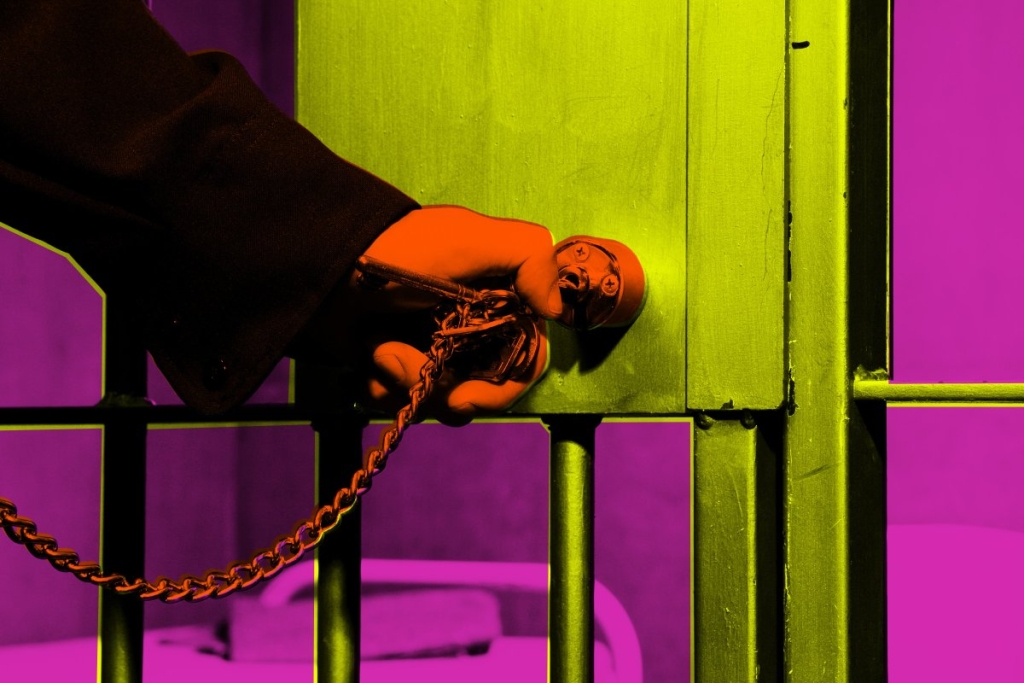
AI Facial Recognition Error Sends Innocent Grandmother to Jail for Six Months in Devastating Case of Mistaken Identity
When Technology Meets Human Error: A Perfect Storm of Injustice
In what can only be described as a catastrophic failure of both artificial intelligence and human judgment, a 50-year-old grandmother from Tennessee found herself imprisoned for nearly half a year due to a single misidentification by facial recognition technology. The case of Angela Lipps represents one of the most troubling examples yet of how AI systems, when combined with inadequate police procedures, can destroy lives in mere moments.
The story begins in Fargo, North Dakota, where detectives were investigating a series of bank fraud cases that had occurred in April and May of 2025. Surveillance footage showed a woman using a fraudulent US Army military ID to withdraw tens of thousands of dollars from multiple banks. Rather than conducting traditional investigative work, the officers turned to AI-powered facial recognition software to identify their suspect.
The technology flagged Angela Lipps, a mother of three and grandmother of five who had lived her entire life in north-central Tennessee—approximately 1,200 miles away from Fargo. The system’s confidence in this match would set in motion a chain of events that would devastate Lipps’s life and expose critical flaws in how law enforcement agencies are using AI tools.
The Arrest That Changed Everything
On a summer day in July 2025, US marshals arrived at Lipps’s home while she was babysitting four children. They arrested her at gunpoint, treating her as a fugitive from justice. The psychological trauma of being confronted by armed federal agents in front of children cannot be overstated, yet this was only the beginning of Lipps’s ordeal.
Due to her classification as a fugitive, Lipps was held without bail in a Tennessee county jail. For nearly four months, she sat in a cell, separated from her family, her job, and her life, all based on what would later prove to be a fundamental error. During this time, she had limited contact with the outside world and faced the terrifying uncertainty of not knowing when—or if—she would be released.
The legal system’s treatment of Lipps as a fugitive meant she couldn’t even fight the charges from Tennessee. Court documents show that her court-appointed lawyer advised her that she would need to travel to North Dakota to contest the accusations. For someone who had never left her home state, this prospect was daunting enough—but she wouldn’t even have the opportunity to make that journey for months to come.
The Journey to North Dakota: A Kafkaesque Nightmare
After 108 days in the Tennessee jail, authorities finally transported Lipps to North Dakota. The logistics of this transfer alone raise questions about the efficiency and priorities of the justice system. Why did it take over three months to move a suspect across state lines when she was being held without bail anyway?
Upon arrival in North Dakota, Lipps faced another layer of uncertainty. She was held in a local lock-up, where she would spend Christmas Eve—not with family, but in a cold cell, thousands of miles from everything she knew. It wasn’t until December that investigators finally sat down to interview her, more than five months after her initial arrest.
During this interview, Lipps maintained her innocence, explaining that she had never been to North Dakota and knew no one there. Her story was consistent and credible, yet the wheels of justice continued to grind slowly. It took the intervention of her court-appointed attorney, Jay Greenwood, to provide the evidence that should have prevented this entire situation from occurring in the first place.
The Evidence That Should Have Existed All Along
Greenwood, recognizing the fundamental weakness of a case based solely on facial recognition, obtained bank records that definitively proved Lipps was in Tennessee at the time of the alleged crimes in North Dakota. This evidence was not difficult to obtain—it was basic investigative work that should have been conducted before any arrest was made.
The fact that this exculpatory evidence had to be provided by the defense attorney, rather than discovered by law enforcement, speaks volumes about the thoroughness of the original investigation. Greenwood’s frustration was palpable when he told WDAY, “If the only thing you have is facial recognition, I might want to dig a little deeper.”
This statement encapsulates the core problem with how AI tools are being deployed in criminal investigations. Facial recognition technology, while impressive in many contexts, is not infallible. It can produce false positives, particularly when dealing with low-quality surveillance footage, partial images, or when the algorithm’s training data doesn’t adequately represent the population it’s analyzing.
The Aftermath: A Life in Ruins
On Christmas Eve, authorities dropped all charges against Lipps and released her from custody. But freedom came with a bitter twist—the Fargo police department offered no apology, no compensation, and no assistance in returning home. Lipps found herself stranded in North Dakota, wearing summer clothes in the middle of winter, with no money, no transportation, and no clear path forward.
The situation became so dire that local defense attorneys had to pool their own money to pay for a hotel room where Lipps could stay. A nonprofit organization called the F5 Project eventually arranged for her transportation back to Tennessee. The fact that the criminal justice system left an innocent person in such a vulnerable position speaks to a profound lack of accountability.
The consequences of this wrongful arrest extended far beyond the six months of incarceration. Lipps lost her home, her car, and her dog—all the tangible assets that represent stability and security for most people. The psychological trauma of being arrested at gunpoint, separated from her children and grandchildren, and treated as a criminal for crimes she didn’t commit will likely last far longer than her physical imprisonment.
A Pattern of AI-Related Misidentifications
Lipps’s case is not an isolated incident. In April of the previous year, the New York Police Department arrested Trevis Williams based on a facial recognition match from grainy CCTV footage. The problem? Williams was over half a foot taller than the actual suspect in the video. Basic observational skills should have prevented this arrest, yet the AI-generated lead was apparently sufficient to override common sense.
In February of the same year, a Detroit woman sued her city’s police department after being arrested as a murder suspect based on faulty facial recognition technology. Again, the physical discrepancies between the suspect and the person identified by the AI were significant enough that a simple visual comparison should have raised red flags.
These cases reveal a disturbing trend: law enforcement agencies are increasingly relying on AI tools as a substitute for thorough investigation rather than as a supplement to it. The technology is being treated as infallible, with human judgment taking a back seat to algorithmic output.
The Broader Implications for AI in Criminal Justice
The Angela Lipps case raises serious questions about the current state of AI deployment in law enforcement. While facial recognition and other AI tools can be valuable investigative aids, their use must be accompanied by rigorous verification procedures, human oversight, and a recognition of their limitations.
Several key issues emerge from this case:
First, the lack of basic investigative follow-up is alarming. No one from the Fargo police department attempted to verify Lipps’s identity through simple means such as a phone call or comparison of alibis. The fact that she lived 1,200 miles away and had no connection to North Dakota should have been the first clue that something was amiss.
Second, the reliance on a single piece of evidence—the AI match—without corroborating information demonstrates a dangerous over-dependence on technology. In criminal investigations, multiple lines of evidence should converge to support probable cause, not a single algorithmic match.
Third, the system’s treatment of Lipps as a fugitive, which prevented her from contesting the charges from Tennessee, created a catch-22 situation. She couldn’t fight the charges without traveling to North Dakota, but she couldn’t travel to North Dakota without first being extradited—a process that took months.
Fourth, the lack of accountability and remediation after the mistake was discovered is perhaps the most troubling aspect. No apology, no compensation, no assistance—just abandonment of an innocent person in a strange city during winter.
The Human Cost of Technological Failure
Behind the statistics and the legal procedures lies a human story of profound suffering. Angela Lipps, a law-abiding grandmother who had never faced criminal charges in her life, found herself treated as a dangerous fugitive. The psychological impact of being arrested at gunpoint while caring for children, of being imprisoned for six months for crimes she didn’t commit, and of losing everything she owned cannot be measured.
The children who witnessed her arrest will carry those memories, just as Lipps will carry the trauma of her experience. Her family, unable to help her from 1,200 miles away, could only watch as their mother and grandmother disappeared into the criminal justice system.
This case also highlights the disproportionate impact that such errors can have on certain communities. While we don’t have information about Lipps’s racial or ethnic background, studies have shown that facial recognition technology often performs less accurately on people of color, women, and younger individuals. This means that the risk of misidentification—and the resulting harm—may not be evenly distributed across society.
Moving Forward: The Need for Reform
The Angela Lipps case should serve as a wake-up call for law enforcement agencies, policymakers, and technology companies. Several reforms are necessary to prevent similar injustices in the future:
-
Mandatory human verification: AI matches should never be the sole basis for arrest warrants or probable cause determinations. Human investigators must conduct basic verification steps, including alibi checks and direct communication with potential suspects.
-
Transparency requirements: When AI tools are used in investigations, this should be documented and disclosed, allowing for proper scrutiny of the methods used.
-
Accountability measures: Agencies that wrongfully arrest individuals based on AI errors should be required to provide compensation, assistance, and formal apologies.
-
Training and education: Law enforcement officers need comprehensive training on the capabilities and limitations of AI tools, including understanding error rates and potential biases.
-
Independent oversight: The use of AI in criminal investigations should be subject to independent review to ensure that proper procedures are being followed.
-
Legislative action: State and federal laws may be necessary to regulate the use of AI in law enforcement, establishing clear standards for when and how these tools can be deployed.
The Future of AI in Law Enforcement
Artificial intelligence will undoubtedly continue to play an increasing role in criminal justice and law enforcement. The technology offers powerful capabilities for analyzing vast amounts of data, identifying patterns, and generating leads that might otherwise be missed. However, the Angela Lipps case demonstrates that these tools must be deployed with extreme caution and appropriate safeguards.
The future of AI in law enforcement should be one where technology enhances human capabilities rather than replacing human judgment. AI can help identify potential suspects, analyze crime patterns, and process evidence more efficiently. But the final decisions—particularly those involving arrest, detention, and prosecution—must remain firmly in human hands, subject to human oversight, and protected by human rights.
As we move forward into an increasingly AI-driven world, cases like Angela Lipps’s remind us that technology, no matter how advanced, cannot replace the fundamental principles of justice: the presumption of innocence, the requirement for evidence beyond reasonable doubt, and the protection of individual rights. When we allow algorithms to override these principles, we risk creating a system where the very tools designed to enhance public safety instead become instruments of injustice.
For Angela Lipps, the nightmare may be over, but the scars—both visible and invisible—will likely last a lifetime. Her story serves as a powerful reminder that in our rush to embrace technological solutions, we must never lose sight of the human lives that are affected by our choices. The true measure of a justice system is not how efficiently it processes cases, but how carefully it protects the innocent. In this case, that protection failed spectacularly, and the consequences will echo far beyond one grandmother’s six-month ordeal.
Tags: AI facial recognition error, grandmother jailed by AI, wrongful arrest technology, police AI failure, facial recognition bias, criminal justice technology, AI misidentification, wrongful imprisonment, technology gone wrong, police accountability
Viral Phrases: “Grandma jailed by AI for six months,” “When facial recognition fails catastrophically,” “The $10,000 mistake that cost everything,” “AI’s little oopsie lands innocent woman in jail,” “Technology’s human cost,” “The system that couldn’t see the truth,” “From babysitting to jail cell,” “When algorithms decide your fate,” “The price of blind trust in AI,” “Justice delayed, justice denied by technology”
,


Leave a Reply
Want to join the discussion?Feel free to contribute!