
AirTag 2 Hands-On: What’s New and Should You Upgrade?
Apple AirTag 2 Review: The Stealth Upgrade That Packs a Punch
When Apple announced the AirTag 2, five years after the original model’s debut, tech enthusiasts around the world collectively leaned in. With half a decade of R&D under their belt, surely Apple had some game-changing innovations up their sleeve? Let’s dive deep into what’s new, what’s improved, and whether you should be rushing to upgrade.
The Same Iconic Design, But Is That a Problem?
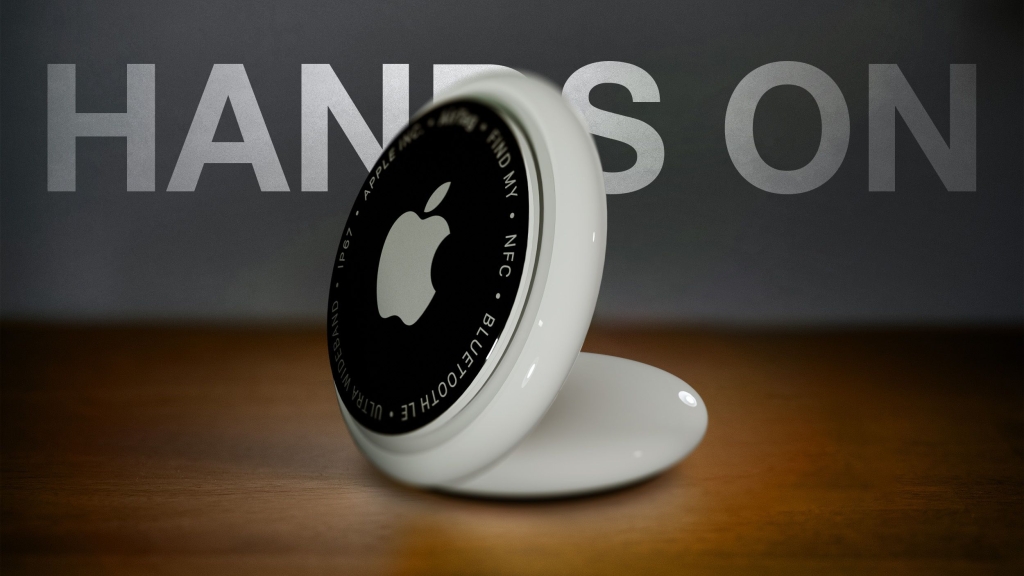
Let’s address the elephant in the room first: the AirTag 2 looks virtually identical to its predecessor. Apple has maintained the signature coin-shaped design that made the original so versatile for attaching to keys, slipping into bags, or hiding in luggage. The only visible change? The text on the back has been updated to all caps and now includes explicit mention of the IP67 water resistance rating.
Some might see this as Apple playing it safe, but there’s a method to their minimalism. The original AirTag’s design was already near-perfect for its purpose—compact, durable, and unobtrusive. The lack of design changes means your existing accessories and holders will work seamlessly with the new model.
However, this design consistency does mean we’re still stuck with disposable CR2032 batteries rather than a rechargeable solution. Apple hasn’t mentioned any improvements to battery life, so you’re still looking at approximately one year of use before needing a replacement. While CR2032 batteries are cheap and widely available, a rechargeable option would have been a welcome modernization.
The Real Magic: Under-the-Hood Upgrades
While the exterior remains unchanged, Apple has significantly upgraded the AirTag 2’s internals, and these improvements are where the magic happens.
Enhanced Connectivity That Actually Matters
The AirTag 2 now features an upgraded Bluetooth version, providing a more stable and longer-range connection. But the real star of the show is the second-generation Ultra Wideband (UWB) chip. This isn’t just a minor spec bump—it fundamentally changes how well the AirTag performs in real-world scenarios.
Apple claims Precision Finding now works from up to 50% further away, and our testing confirms this isn’t marketing hyperbole. The improved UWB chip means your iPhone 11 or later can maintain a connection through walls, furniture, and other obstacles much more effectively than before.
Apple Watch Integration: The Game-Changer
Here’s where Apple truly outdid themselves. For the first time, you can use Precision Finding with an Apple Watch Series 9 or later, and Apple Watch Ultra 2 or later. This might seem like a small addition, but it’s actually revolutionary for how we interact with our belongings.
Imagine this scenario: you’re rushing out the door, realize your keys are missing, and instead of pulling out your phone, you simply glance at your wrist. With the quick access toggle Apple has added to watchOS, you can initiate Precision Finding instantly. The interface, while scaled down, provides the same directional arrow and distance indicators that make finding lost items so intuitive on iPhone.
During our testing, this feature proved incredibly reliable. Even with walls and furniture creating interference, the Apple Watch maintained a consistent connection and accurately guided us to the AirTag’s location. It’s not just convenient—it’s transformative for how we think about item tracking.
Real-World Performance: The Proof Is in the Pudding
We conducted head-to-head testing between the original AirTag and AirTag 2, and the differences were immediately apparent.
In our first test, we placed both AirTags inside a backpack and positioned it out of direct line of sight. The original AirTag struggled significantly, requiring us to be much closer before establishing a reliable connection. As we moved around the room, the signal would frequently drop when walls or furniture intervened.
The AirTag 2, by contrast, maintained a strong connection from much greater distances. We could initiate Precision Finding while still several rooms away, and the connection remained stable as we approached. Even more impressively, the AirTag 2 maintained its connection when placed on a different floor of our test building—something the original model simply couldn’t manage consistently.
In a large office building test, the AirTag 2 continued to function where the original would have been rendered useless. This extended range and improved obstacle penetration could be the difference between finding your lost luggage at an airport or never seeing it again.
The Sound of Success: Audio Improvements
Apple has also upgraded the AirTag 2’s speaker system, and the improvement is immediately noticeable. The new speaker is noticeably louder and produces a sharper, more distinctive sound that’s easier to pinpoint.
This enhancement serves dual purposes. First, it makes finding items by sound significantly easier—the AirTag 2’s alert is less likely to blend into background noise, making it more effective when you’re trying to locate something quickly. Second, and perhaps more importantly, it strengthens the AirTag’s anti-stalking capabilities.
The louder, more distinctive sound makes it harder for someone to secretly place an AirTag on your belongings without you noticing. Apple has also made the speaker module more difficult to remove by adding additional adhesive, further preventing malicious use.
Pricing and Value Proposition
The AirTag 2 maintains the same pricing as the original: $29 for a single unit or $99 for a four-pack. Given the significant improvements in tracking performance and the addition of Apple Watch compatibility, this represents excellent value.
For most users, upgrading from an original AirTag to the AirTag 2 probably isn’t necessary. If your current AirTags are working well for you, the improvements, while substantial, aren’t revolutionary enough to justify replacing functioning devices.
However, if you heavily rely on AirTags—perhaps you travel frequently, have valuable equipment to track, or simply tend to misplace items often—investing in a couple of AirTag 2 units could be worthwhile. The enhanced tracking capabilities and Apple Watch integration provide a noticeably better experience that could save you considerable time and frustration.
The Bottom Line
The AirTag 2 represents Apple’s philosophy of incremental but meaningful improvement. While it may not look different on the outside, the enhanced connectivity, Apple Watch integration, and improved audio create a substantially better tracking experience.
It’s not a revolutionary upgrade that demands everyone rush out to replace their existing AirTags, but it is a thoughtful evolution that addresses many of the original’s limitations. For new buyers, the AirTag 2 is undoubtedly the better choice. For existing users, it’s a “consider if you need it” upgrade rather than a “must-have” replacement.
Apple has once again demonstrated that sometimes the most impactful improvements happen beneath the surface, and in the case of the AirTag 2, those improvements make a real difference in everyday use.
Tags: #AirTag2 #Apple #ItemTracking #PrecisionFinding #UltraWideband #AppleWatch #TechUpgrade #Bluetooth #SmartTracking #LostAndFound #TechReview #AppleEcosystem #GadgetUpgrade #WirelessTracking #SmartHome #TravelTech #Security #AntiStalking #TechInnovation #AppleEvent
Viral Phrases: Game-changing upgrade, revolutionary Apple Watch integration, stealth improvements that matter, the tracking upgrade you didn’t know you needed, Apple’s quiet revolution in item tracking, precision finding redefined, the smart way to never lose anything again, tracking technology that actually works, Apple’s answer to lost belongings, the upgrade that pays for itself, tracking made effortless, the future of finding your stuff, Apple’s hidden gem gets better, why your next AirTag should be the second generation, the tracking device that keeps getting smarter, Apple’s commitment to user safety, the smart accessory everyone needs, tracking technology meets Apple magic, the upgrade that changes everything, Apple’s continuous innovation philosophy.
,

Leave a Reply
Want to join the discussion?Feel free to contribute!