
All the important news from the ongoing India AI Impact Summit
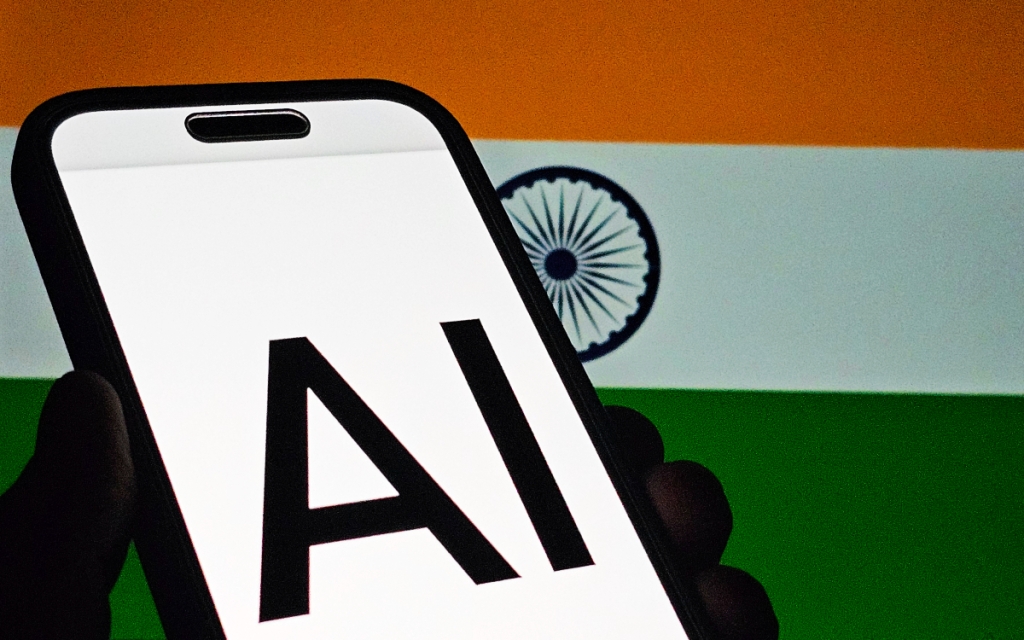
India’s AI Revolution: Tech Titans Converge at Global Summit as Nation Aims to Become AI Powerhouse
India is making a bold play to become a global leader in artificial intelligence, hosting a massive four-day AI Impact Summit that has drawn executives from the world’s most influential AI labs and Big Tech companies. The event, which is expected to attract 250,000 visitors, represents India’s most ambitious push yet to position itself as an AI powerhouse and attract billions in investment to the country.
The summit has brought together an unprecedented gathering of tech royalty, with OpenAI CEO Sam Altman, Anthropic CEO Dario Amodei, Alphabet CEO Sundar Pichai, Google DeepMind CEO Demis Hassabis, and Reliance Chairman Mukesh Ambani all in attendance. The event will culminate with a joint address by Indian Prime Minister Narendra Modi and French President Emmanuel Macron, underscoring the geopolitical significance of India’s AI ambitions.
Massive Investment Commitments Signal India’s AI Ambitions
The scale of investment being directed toward India’s AI ecosystem is staggering. The Indian government has earmarked a whopping $1.1 billion for its state-backed venture capital fund, specifically targeting artificial intelligence and advanced manufacturing startups across the country. This fund represents one of the largest government-backed AI investment initiatives globally and demonstrates India’s commitment to building domestic AI capabilities.
Blackstone has made a major move in the Indian AI space, acquiring a majority stake in AI startup Neysa as part of a $600 million equity fundraising round. The investment includes participation from Teachers’ Venture Growth, TVS Capital, 360 ONE Asset, and Nexus Venture Partners. With plans to raise another $600 million in debt and deploy more than 20,000 GPUs, Neysa is positioning itself as a major player in India’s AI infrastructure buildout.
Indian conglomerate Adani has made the most eye-popping commitment of all, announcing plans to allocate $100 billion to build AI data centers that would use renewable energy in India by 2035. The company projects that this investment will catalyze an additional $150 billion in related investments across server manufacturing, advanced electrical infrastructure, sovereign cloud platforms, and supporting industries.
India’s AI Market Explodes with User Growth
The numbers tell a compelling story about India’s AI adoption. OpenAI CEO Sam Altman revealed that India accounts for more than 100 million weekly active ChatGPT users, making it the second-largest market after the United States. Even more impressively, Indians account for the most students using ChatGPT globally, highlighting the country’s massive youth population and their rapid embrace of AI tools.
This explosive growth isn’t limited to consumer applications. Indian AI company Sarvam has been particularly active, releasing multiple new models in recent weeks including a dubbing model, speech-to-text model, text-to-speech model, and a vision model for Optical Character Recognition. The company has also teased smart glasses under the name Sarvam Kaze, signaling India’s ambitions in AI hardware as well as software.
Traditional IT Giants Pivot to AI
India’s traditional IT services companies are facing both disruption and opportunity from AI. HCL CEO Vineet Nayyar made waves by declaring that Indian IT companies will focus on turning profits rather than being job creators, a significant shift in the industry’s traditional narrative. These comments come as Indian IT stocks have dipped amid growing fears that AI could disrupt the IT services sector.
Venture capitalist Vinod Khosla delivered a stark warning, suggesting that industries like IT services and BPOs (Business Process Outsourcing) could “almost completely disappear” within five years due to AI. He told Hindustan Times that India’s 250 million young people should be selling AI-based products and services to the rest of the world, rather than relying on traditional outsourcing models.
Major Tech Partnerships Transform India’s AI Landscape
The summit has catalyzed numerous high-profile partnerships that will reshape India’s AI infrastructure. AMD is teaming up with Tata Consultancy Services to develop rack-scale AI infrastructure based on AMD’s “Helios” platform, bringing cutting-edge hardware capabilities to the Indian market.
Anthropic is making a significant commitment to India, opening its first office in Bengaluru and partnering with IT giant Infosys to deploy Claude models and tools like Claude Code to Indian enterprises. The partnership will begin in the telecommunications sector with a dedicated Anthropic Center of Excellence.
OpenAI is also expanding its presence dramatically, announcing plans to open two new offices in India in Bengaluru and Mumbai. The company has partnered with the Tata group to deploy 100 megawatts of compute in India, with ambitions to scale up to 1 gigawatt—a truly massive infrastructure commitment.
India’s Push for AI Infrastructure Investment
India’s tech minister Ashwini Vaishnaw has set an ambitious target, stating that the country wants to attract over $200 billion in investment for AI infrastructure in the next two years. This aggressive timeline reflects India’s determination to move quickly in the AI race and establish itself as a major player before other nations consolidate their positions.
The country has also joined the Pax Silica group led by the United States, creating a smooth supply chain network for materials used in creating AI infrastructure. Other members include the U.K., United Arab Emirates, Singapore, Qatar, Japan, Israel, South Korea, and Australia, positioning India as a key node in the global AI supply chain.
Open Source AI Models Flood the Market
Indian AI companies are making significant contributions to the open-source AI movement. Sarvam released two new open-sourced models: Sarvam 30B and Sarvam 105B, positioning itself as a major player in the open-source AI ecosystem. The company has also announced partnerships with Qualcomm, HMD, and Bosch to deploy its AI models to devices including smartphones, feature phones, cars, laptops, and smart glasses.
BharatGen, a government-backed AI consortium, released a 17 billion parameter model called Param 2 that works across 22 languages, demonstrating India’s commitment to multilingual AI capabilities. Tech Mahindra released an 8 billion parameter Hindi-oriented model for educational use cases, while Cohere Labs launched a family of multilingual models with open weights that support over 70 languages.
Controversial Comments and Industry Debates
The summit hasn’t been without controversy. On the sidelines of the event, Sam Altman made headlines by dismissing concerns about AI’s water usage as “totally fake,” though he acknowledged the issue when “we used to do evaporative cooling in data centers.” He went further, suggesting that arguments about ChatGPT’s power consumption are “unfair” because “it also takes a lot of energy to train a human.”
Altman’s comments that “it takes like 20 years of life and all of the food you eat during that time before you get smart” drew mixed reactions, with some praising his perspective on the energy requirements of intelligence while others criticized the comparison as apples-to-oranges.
Global AI Governance and India’s Role
India has positioned itself as a leader in global AI governance, with over 88 countries and organizations signing the New Delhi AI declaration for working toward using AI for social and economic good. Signatories include major powers like the United States, China, and Russia, giving India significant diplomatic influence in shaping the future of AI governance.
The declaration represents a rare moment of international cooperation on AI, with nations agreeing on the importance of using AI for positive social and economic outcomes rather than purely commercial or military applications.
India’s AI ecosystem is evolving at breakneck speed, with massive investments, strategic partnerships, and innovative startups all contributing to what could become one of the world’s most dynamic AI markets. As traditional IT giants pivot to AI, new players emerge, and global tech leaders commit billions to the Indian market, the country appears poised to become a major force in shaping the future of artificial intelligence.
Tags: #AI #India #ArtificialIntelligence #TechSummit #OpenAI #Anthropic #Google #Microsoft #Nvidia #Investment #Startups #DataCenters #Infrastructure #OpenSource #MultilingualAI #GlobalAI #TechNews #Innovation #DigitalTransformation
Viral Sentences:
– India aims to attract $200 billion in AI infrastructure investment by 2028
– 100 million Indians use ChatGPT weekly – second only to the US
– Adani pledges $100 billion for AI data centers powered by renewable energy
– IT services could “completely disappear” in 5 years due to AI, says Vinod Khosla
– India joins US-led Pax Silica group for AI supply chain dominance
– 88 countries sign New Delhi AI declaration for social and economic good
– OpenAI plans 1 gigawatt of compute capacity in India
– Indian AI startup Sarvam releases 105B parameter open-source model
– Blackstone invests $600 million in Indian AI startup Neysa
– AI Impact Summit expects 250,000 visitors – India’s biggest tech event ever
– Anthropic opens first Indian office in Bengaluru
– India earmarks $1.1 billion for state-backed AI venture capital fund
– 18-24 year olds drive nearly 50% of ChatGPT usage in India
– UAE’s G42 to deploy 8 exaflops of compute in India with Cerebras
– Voice AI startup Gnani releases zero-shot voice cloning model,


Leave a Reply
Want to join the discussion?Feel free to contribute!