
Amazon is getting drier as deforestation shuts down atmospheric rivers
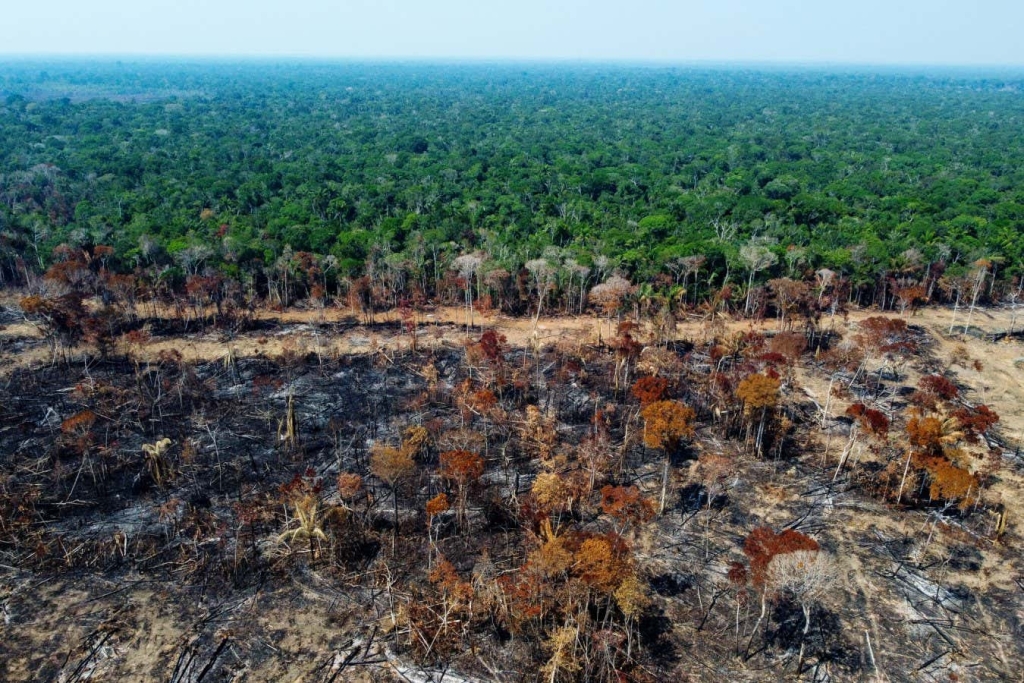
Amazon Rainforest Faces Catastrophic Tipping Point as Deforestation Accelerates Rainfall Decline
In a chilling revelation that has sent shockwaves through the scientific community, new research reveals that deforestation in the Amazon rainforest has triggered a dramatic decline in rainfall, pushing the world’s largest tropical ecosystem closer to a catastrophic tipping point than previously imagined. The study, published in Nature, combines satellite observations, rain gauge data, and advanced atmospheric modeling to paint a stark picture of an ecosystem under siege.
Between 1980 and 2019, the southern Amazon basin experienced an 8 to 11 percent reduction in rainfall, coinciding with a 16 percent loss of tree cover. This deforestation, primarily driven by cattle ranching and soy farming, has disrupted the delicate balance of the rainforest’s hydrological cycle. The northern Amazon, which has seen far less deforestation, experienced only a slight and statistically insignificant increase in precipitation, highlighting the direct link between forest loss and rainfall decline.
Dominick Spracklen, a professor at the University of Leeds and co-author of the study, warns that the consequences extend far beyond the forest itself. “Some people in agribusiness might see a bit of forest as wasted land they could clear,” he says. “But that bit of forest is working really hard to maintain regional rainfall that our bit of agriculture is benefiting from.” The research found that the impact of deforestation on rainfall extends across a basin more than 3,000 kilometers wide, far beyond the 300-kilometer radius previously thought to be affected.
The Amazon’s unique hydrological cycle relies on a phenomenon known as “flying rivers”—moisture-laden air currents that transport water from the Atlantic Ocean across the rainforest. Trees play a crucial role in this process, returning up to three-quarters of the rainfall to the atmosphere through evaporation and transpiration. This moisture then falls as rain again, cycling through the forest multiple times. When trees are removed, more than half of the rainwater runs off into streams, starving the flying rivers of moisture and reducing rainfall. Additionally, deforestation diminishes atmospheric instability, which is essential for storm cloud formation, and accelerates wind speeds, carrying moisture out of the region.
Yadvinder Malhi, an ecosystem scientist at the University of Oxford, praised the study for its innovative approach. “The atmosphere becomes smoother; in some ways, it glides,” he explains. “The moisture can travel further out of the forest region because there’s less friction on the ground.” This nuanced understanding of atmospheric processes underscores the complexity of the Amazon’s climate system and the far-reaching consequences of deforestation.
The findings are particularly alarming given the Amazon’s vulnerability to climate change. Extreme droughts, exacerbated by global warming, have already led to record wildfires in 2024, further degrading the forest. While climate change contributes to the drying of the Amazon, the study found that deforestation is responsible for 52 to 75 percent of the decline in rainfall. This suggests that the rainforest could reach a tipping point—where it transforms into a savannah—much sooner than expected.
A separate study last year estimated a 37 percent chance of some Amazon dieback by 2100 if global warming reaches 1.5°C. While this wouldn’t necessarily mean the complete collapse of the rainforest, it would result in a shrubbier forest with fewer species and less carbon storage. “The Amazon is more sensitive than we think, which is bad news,” Spracklen says. “Maybe we’re closer to a deforestation threshold than we thought. But I think there’s lots of uncertainty.”
The research also highlights a critical flaw in current climate models, which underestimate the impact of deforestation on rainfall by up to 50 percent. This underestimation could have profound implications for global climate predictions and underscores the urgent need for more accurate modeling.
As the Amazon teeters on the brink, the stakes couldn’t be higher. The rainforest is not only a biodiversity hotspot but also a crucial carbon sink, playing a vital role in regulating the Earth’s climate. Its loss would have devastating consequences for the planet, from accelerated global warming to the extinction of countless species.
The study serves as a stark reminder of the interconnectedness of ecosystems and the far-reaching impacts of human activity. It also underscores the need for immediate and decisive action to protect the Amazon. Without urgent intervention, the world’s largest rainforest could be lost forever, with catastrophic consequences for the planet and future generations.
Tags: Amazon rainforest, deforestation, rainfall decline, climate change, tipping point, flying rivers, biodiversity, carbon sink, wildfires, cattle ranching, soy farming, global warming, atmospheric modeling, ecosystem collapse, environmental crisis, conservation, sustainability, climate models, hydrological cycle, storm cloud formation, wind patterns, moisture transport, transpiration, evaporation, carbon storage, species extinction, climate predictions, urgent action, environmental protection, planetary health.
,


Leave a Reply
Want to join the discussion?Feel free to contribute!