
Amazon stock sinks 10% after Q4 profit miss as Jassy signals $200B in capital spending
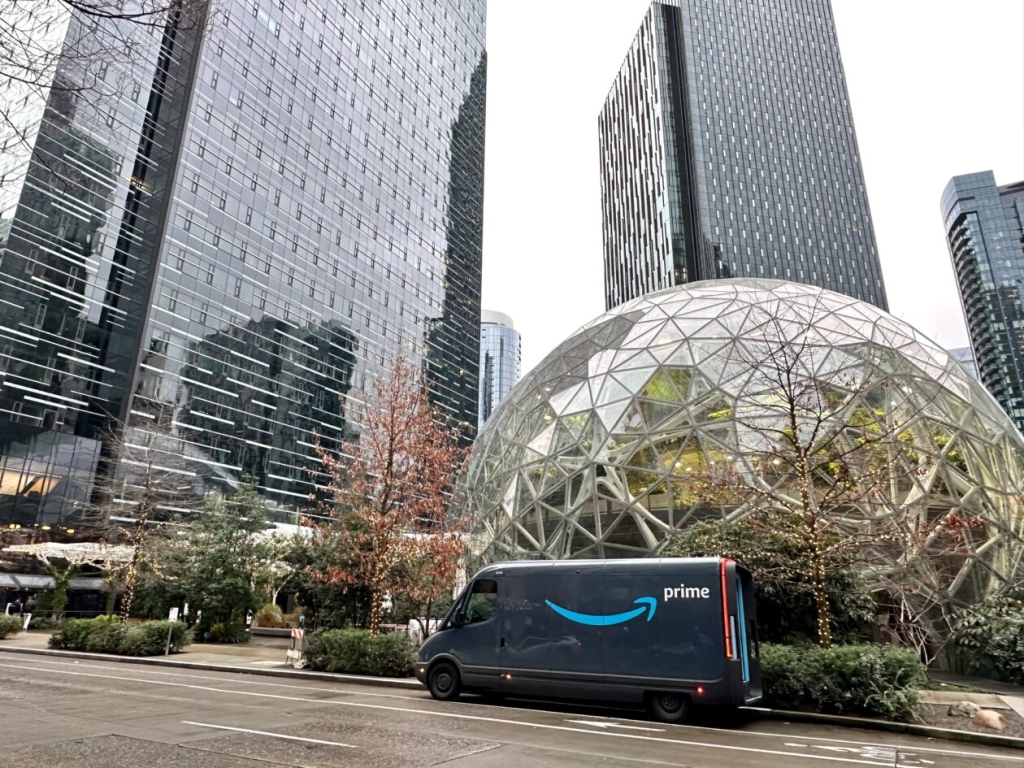
Amazon’s $200 Billion AI Gamble: Tech Titan’s Bold Bet Shakes Wall Street
In a move that’s sending shockwaves through Silicon Valley and beyond, Amazon has unveiled an unprecedented $200 billion capital expenditure plan for 2026, sending its stock tumbling despite record-breaking quarterly results. The e-commerce and cloud computing giant is doubling down on artificial intelligence, robotics, and next-generation infrastructure in what CEO Andy Jassy calls “the most transformative opportunity of our generation.”
Record-Breaking Numbers, Market Skepticism
Amazon shattered expectations with $213.4 billion in Q4 revenue—its first time crossing the $200 billion quarterly threshold—representing a robust 14% year-over-year growth. The company’s cloud computing powerhouse, Amazon Web Services (AWS), delivered its fastest growth in three years at 24%, generating $35.6 billion in sales and outpacing analyst projections of 21%.
Yet Wall Street’s reaction was swift and severe. After-hours trading saw Amazon’s stock plummet more than 10% as investors grappled with the magnitude of the company’s spending ambitions. The $200 billion capex figure—up from the previously estimated $125 billion for 2025—represents one of the largest corporate investment plans in history.
The AI Infrastructure Arms Race
Amazon’s massive spending commitment places it squarely in the center of the tech industry’s AI infrastructure arms race. Google recently signaled it could double its capital expenditures to $185 billion this year, while Meta announced potential spending of up to $135 billion. Microsoft’s capital spend reached $37.5 billion in its most recent quarter, up 66% year-over-year.
“This isn’t some sort of quixotic top-line grab,” Jassy insisted during the earnings call, defending the ambitious spending plan. “We’re seeing extraordinary demand for AI capabilities, and we need to build the infrastructure to meet it.”
The CEO revealed that the bulk of the $200 billion will flow into AWS, with additional investments in “seminal opportunities” including custom AI chips, robotics, and low Earth orbit satellite initiatives through Project Kuiper.
AWS: The Engine Driving Amazon’s Future
AWS continues to be Amazon’s crown jewel, showing no signs of slowing despite intensifying competition from Microsoft Azure and Google Cloud. Jassy noted that AWS could be growing even faster if capacity weren’t constrained, revealing that Amazon added more data center capacity than any company globally in 2025.
“What we’re continuing to see is, as fast as we install this AI capacity, we are monetizing it,” Jassy explained. “So it’s just a very unusual opportunity.” The company’s custom AI chips, Trainium and Inferentia, have surpassed $10 billion in annualized revenue, positioning AWS as a formidable competitor to Nvidia’s GPU dominance.
E-Commerce Evolution and Strategic Shifts
While AWS captures headlines, Amazon’s core e-commerce business remains formidable. Holiday quarter online store sales grew 10% to $83 billion, narrowly beating estimates. However, the company faces mounting pressure from Walmart, which recently achieved a $1 trillion market capitalization and continues gaining e-commerce market share.
In a strategic pivot, Amazon announced it will close all 72 Amazon Go and Amazon Fresh locations, concentrating its physical retail efforts on Whole Foods Market and grocery delivery. The company spent $31.5 billion on shipping in Q4, up 10%, highlighting the ongoing challenges of its vast logistics network.
Financial Performance and Future Outlook
Despite missing Wall Street’s profit expectations with earnings per share of $1.95 (versus estimates of $1.98), Amazon’s financial health remains robust. Net income reached $21.2 billion, up from $20 billion year-over-year. The company’s advertising business continues to thrive, generating $21.3 billion in Q4 revenue, up 23%.
Looking ahead, Amazon forecasts Q1 sales between $173.5 billion and $178.5 billion, with operating income expected to range between $16.5 billion and $21.5 billion. The company employs 1.58 million people, up 1% year-over-year, though this figure doesn’t reflect recent job cuts.
The $200 Billion Question
As Amazon embarks on this historic spending spree, the tech industry watches with bated breath. Is this the visionary investment that will secure Amazon’s dominance in the AI era, or an overreach that could strain the company’s financial flexibility?
Jassy remains confident, pointing to the company’s track record of generating strong returns on invested capital. “With such strong demand for our existing offerings and seminal opportunities like AI, chips, robotics, and low earth orbit satellites, we expect to invest about $200 billion in capital expenditures across Amazon in 2026,” he stated, “and anticipate strong long-term return on invested capital.”
The coming year will reveal whether Amazon’s massive bet on AI infrastructure proves to be the masterstroke that defines the next era of technology—or a cautionary tale about the perils of overspending in the race to artificial intelligence supremacy.
Amazon #AI #AWS #TechInvestment #CloudComputing #ArtificialIntelligence #BigTech #CAPEX #AndyJassy #TechNews #SiliconValley #DataCenters #Robotics #ProjectKuiper #TechStocks #WallStreet #TechIndustry #Innovation #FutureOfTech #TechGiants #DigitalTransformation #TechTrends #Investment #Technology #BusinessNews #TechEconomy #TechLeadership #TechStrategy #TechGrowth #TechFuture
,

Leave a Reply
Want to join the discussion?Feel free to contribute!