
AMD HDR/Color Improvement For Their Linux Driver & KDE – Co-Developed By Claude Code
AMD GPU HDR Color Pipeline Breakthrough: AI Co-Developed Patches Revolutionize Linux Display Technology
In a groundbreaking development for Linux desktop graphics, AMD engineer Harry Wentland has unveiled a revolutionary color-space conversion (CSC) enhancement to the DRM color pipeline API, co-developed with Claude Sonnet 4.5 AI. This breakthrough represents a significant leap forward in high dynamic range (HDR) display support and color management for Linux systems, promising users unprecedented visual fidelity and color accuracy.
The Evolution of Linux HDR Support
The journey toward comprehensive HDR support on Linux has been long and complex. With the release of Linux 6.19, the DRM color pipeline API was introduced, marking a crucial milestone in the platform’s ability to handle modern display technologies. However, as Wentland’s latest work demonstrates, this was merely the beginning of a more extensive transformation of Linux’s color management capabilities.
The current implementation, while functional, lacked crucial features for professional-grade color management, particularly in the realm of color-space conversion. This limitation has now been addressed through Wentland’s innovative approach, combining human expertise with artificial intelligence assistance.
The AI-Assisted Development Revolution
What makes this development particularly noteworthy is the extensive use of Claude Sonnet 4.5 in the code creation process. According to Wentland, the AI essentially wrote all the code for this implementation, representing a significant milestone in the practical application of large language models in complex systems programming.
Wentland’s approach to AI-assisted development offers valuable insights for the broader tech community. Rather than viewing AI as a replacement for human developers, he demonstrates how it can be leveraged as a powerful tool when used correctly. His methodology emphasizes understanding complex codebases, creating code that fits within established patterns, and maintaining active ownership and review of AI-generated content.
Technical Deep Dive: CSC Implementation
The color-space conversion enhancement addresses a critical gap in the DRM color pipeline API’s functionality. Color-space conversion is essential for ensuring that content displayed on HDR monitors maintains accurate color representation across different color spaces. This is particularly important for professional applications, content creation, and media consumption where color accuracy is paramount.
The implementation involves modifications to both the DRM kernel components and the AMDGPU driver, ensuring seamless integration with existing hardware acceleration frameworks. Additionally, KDE’s KWin compositor has been updated to exercise these new kernel capabilities, providing users with immediate access to enhanced color management features.
Beyond Basic Implementation
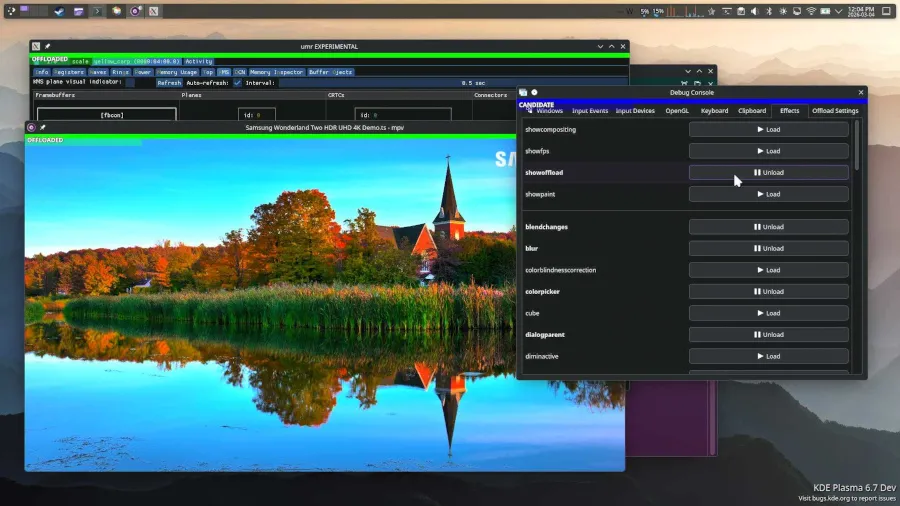
The AI’s contribution extended beyond simple code generation. Claude Sonnet 4.5 also developed a plugin system for marking surfaces and their GPU offload status, adding another layer of sophistication to the implementation. This plugin system allows for more granular control over how different surfaces are processed and displayed, enabling more efficient use of GPU resources and better overall system performance.
Impact on the Linux Ecosystem
This development has far-reaching implications for the Linux desktop experience. By improving HDR support and color management, AMD and the broader Linux community are addressing a long-standing weakness in the platform’s appeal to creative professionals and multimedia enthusiasts.
The integration with KDE’s KWin compositor means that users of one of the most popular Linux desktop environments will immediately benefit from these improvements. This strategic choice ensures that the enhancements will reach a wide audience quickly, potentially accelerating the adoption of Linux in professional creative workflows.
The Future of AI in Open Source Development
Wentland’s experience with Claude Sonnet 4.5 raises intriguing questions about the future of open-source development. The successful collaboration between human expertise and AI assistance suggests a model for future development that could accelerate the pace of innovation while maintaining the high standards of quality and reliability that open-source software demands.
However, Wentland’s cautionary notes about maintaining ownership and conducting thorough reviews of AI-generated code are crucial. This balanced approach ensures that while AI can dramatically increase development speed and potentially improve code quality through its ability to analyze vast codebases, human oversight remains essential for maintaining software integrity and security.
Community Response and Next Steps
The Linux and open-source communities have responded with a mixture of excitement and cautious optimism to this development. Many see it as a validation of Linux’s growing maturity as a platform for professional creative work, while others are intrigued by the implications of AI-assisted development for the future of open-source software.
Wentland is now working to upstream these changes to the mainline Linux kernel and KDE’s KWin, a process that will involve careful review and potential modifications by other developers. This collaborative approach to development, even when AI is involved, remains a cornerstone of open-source philosophy.
Technical Specifications and Requirements
For users interested in implementing these enhancements, the requirements include:
– Linux kernel 6.19 or later
– AMDGPU driver with the CSC patches applied
– KDE Plasma desktop environment with the modified KWin compositor
– Compatible HDR display hardware
Performance and Compatibility Considerations
While the AI-assisted development process has produced impressive results, users should be aware that performance characteristics may vary depending on their specific hardware configuration. AMD GPU users with newer hardware will likely see the most significant benefits, while older hardware may have limited or no support for some of the advanced features.
The implementation has been designed with backward compatibility in mind, ensuring that systems without HDR capabilities or those using different GPU architectures can still function normally, albeit without access to the enhanced color management features.
Conclusion: A New Era for Linux Graphics
This development represents more than just a technical improvement; it signals a new era for Linux graphics capabilities. By combining human expertise with AI assistance, the Linux community has taken a significant step toward matching and potentially exceeding the color management capabilities of other operating systems.
As these changes make their way into mainstream distributions, users can expect a noticeably improved visual experience, particularly those working with HDR content or requiring precise color accuracy. The success of this project may also encourage further exploration of AI-assisted development in other areas of open-source software, potentially accelerating the pace of innovation across the entire ecosystem.
#AMD #Linux #HDR #AI #ColorPipeline #DRM #KWin #OpenSource #Graphics #GPU #Development #Technology #Innovation #SoftwareEngineering #ColorManagement #DisplayTechnology #KernelDevelopment #DesktopEnvironment #CreativeWork #Multimedia #HardwareAcceleration
Viral tags and phrases:
AI co-developed Linux patches, HDR revolution, color-space conversion breakthrough, Claude Sonnet 4.5 coding, AMD GPU enhancements, Linux color pipeline, KWin compositor improvements, DRM API evolution, open-source AI collaboration, graphics technology innovation, professional color accuracy, multimedia experience enhancement, software development future, hardware acceleration optimization, creative workflow improvement, display technology advancement, kernel development milestone, desktop environment upgrade, visual fidelity enhancement, color management breakthrough,

Leave a Reply
Want to join the discussion?Feel free to contribute!