
AMD Preps More GFX12.1 Enablement For Linux 7.1, Initial VCN 5.0.2 & JPEG 5.0.2 IP
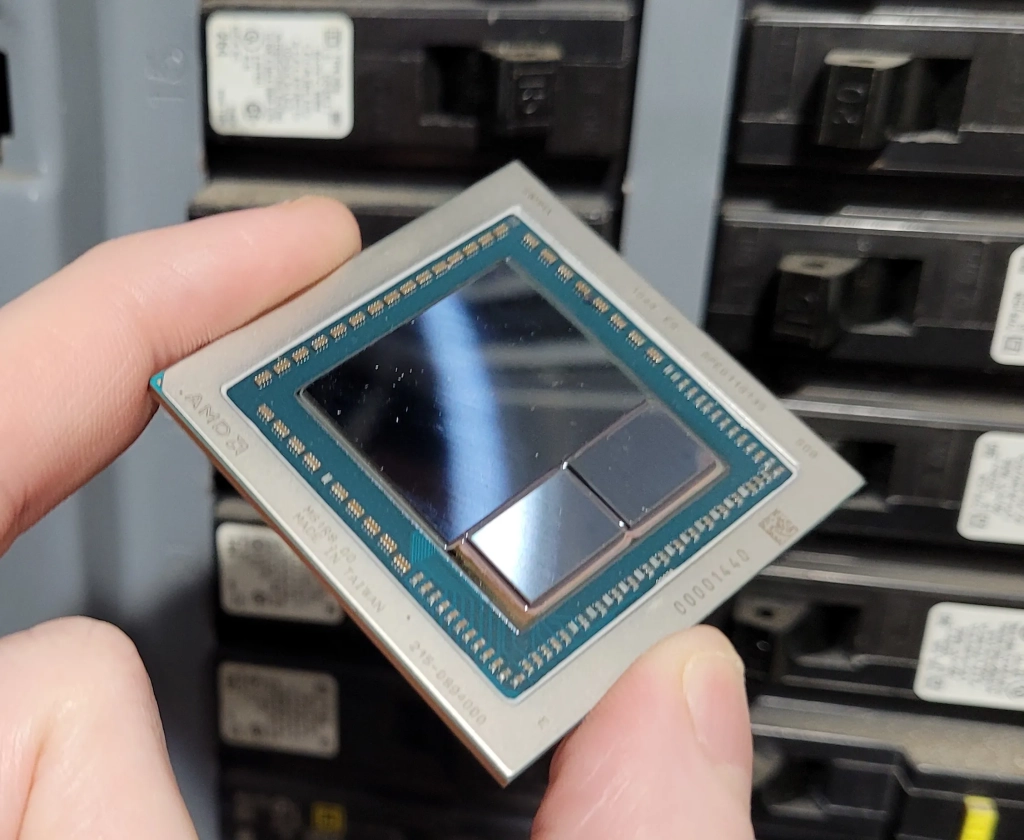
AMD Unleashes Next-Gen Graphics Power: GFX12.1 Support Arrives in Linux 7.1
In a move that’s sending shockwaves through the open-source graphics community, AMD has just dropped a massive payload of kernel driver updates for the upcoming Linux 7.1 kernel, bringing unprecedented support for next-generation graphics hardware that’s been shrouded in mystery until now.
The tech giant’s latest contribution to the DRM-Next staging area represents months of meticulous engineering work, with the patches targeting everything from unreleased RDNA4 variants to the enigmatic GFX12.1 graphics IP block. This isn’t just incremental improvement—it’s a quantum leap forward in graphics driver architecture that could redefine performance benchmarks when these technologies finally hit consumer hardware.
The GFX12.1 Revolution: What We Know So Far
AMD’s graphics IP roadmap has been following a fascinating trajectory. The GFX12.0 architecture, which powers the current Radeon RX 9000 series, represented a significant milestone in GPU design. But GFX12.1? That’s where things get really interesting.
Sources close to AMD’s development pipeline suggest that GFX12.1 represents an evolutionary step beyond what we’ve seen in current hardware—possibly an unreleased RDNA4 variant that’s been cooking in AMD’s labs. The fact that AMD is already enabling this IP in kernel space suggests we’re looking at hardware that’s either very close to release or represents a significant architectural refinement of existing technology.
What makes this particularly noteworthy is the timing. Linux 7.1 is still months away from its official release, yet AMD is already laying the groundwork for hardware that may not even be announced publicly for some time. This level of coordination between hardware development and software enablement speaks volumes about AMD’s commitment to the open-source ecosystem.
The Kernel Driver Deep Dive
The pull request submitted by Alexander Deucher contains a treasure trove of technical improvements that showcase AMD’s sophisticated approach to driver development. Let’s break down the key components:
AMDKFD Compute Driver Updates: The AMD Kernel Fusion Driver (AMDKFD) receives substantial updates, optimizing compute workloads and improving task scheduling efficiency. These changes are particularly crucial for professional applications and scientific computing where GPU acceleration is essential.
AMDGPU Graphics Driver Enhancements: The main graphics driver sees comprehensive updates, including refined memory management, improved power efficiency algorithms, and enhanced support for new display technologies. The driver now better handles dynamic topology changes, allowing for more flexible multi-GPU configurations.
MES 12.1 Scheduler Updates: The Memory Export Service (MES) scheduler receives a major overhaul for GFX12.1, introducing new algorithms for memory allocation and data transfer optimization. This could translate to significant performance gains in memory-intensive applications.
DML and PSP Updates: Display Stream Compression (DML) support sees improvements, potentially enabling higher refresh rates at 4K and 8K resolutions. The Platform Security Processor (PSP) updates to version 13.0.15, enhancing security features and firmware reliability.
The Mystery IP Blocks
Perhaps the most intriguing aspect of this release is the inclusion of several new IP blocks whose purposes remain unclear. AMD’s block-by-block enablement strategy means that each component can be activated independently, making it challenging to determine the full capabilities of unreleased hardware from software alone.
Industry analysts speculate that these could be related to:
- Advanced display controllers supporting new HDR standards
- Enhanced video encoding/decoding capabilities
- Next-generation machine learning acceleration features
- Improved ray tracing hardware support
- Novel memory architectures or cache designs
The dynamic topology handling mentioned in the release notes suggests AMD is preparing for hardware configurations that can adapt on-the-fly to different workloads, potentially enabling hybrid architectures that combine multiple processing paradigms.
Critical Fixes and Stability Improvements
Beyond the headline-grabbing new features, this release includes numerous stability and compatibility fixes that demonstrate AMD’s commitment to supporting their entire product stack:
DisplayID Handling: Fixes for DisplayID interpretation ensure better compatibility with modern monitors and TVs, reducing configuration headaches for users.
TLB Fences: Improvements to Translation Lookaside Buffer (TLB) fence handling enhance memory management efficiency and reduce the likelihood of graphical artifacts.
UserQ Queue Management: Refinements to user-queue handling improve the responsiveness of graphics applications and reduce latency in multi-tasking scenarios.
Legacy Support: Remarkably, this release even includes fixes for ancient AMD Hainan GCN 1.0 GPUs, showing AMD’s dedication to maintaining support for hardware that’s over a decade old. This kind of long-term commitment is increasingly rare in the tech industry.
The Bigger Picture: AMD’s Open-Source Strategy
This release represents another milestone in AMD’s evolving relationship with the open-source community. By contributing these changes upstream well before hardware release, AMD is giving Linux developers and enthusiasts early access to optimizations that will benefit the entire ecosystem.
The strategy appears to be paying dividends. AMD’s open-source drivers have matured significantly over the past few years, often matching or exceeding the performance of their proprietary Windows counterparts in many scenarios. This level of transparency and collaboration has helped AMD gain significant market share in the Linux gaming and professional markets.
What This Means for Users
For the average user, these changes might not be immediately apparent, but they lay the groundwork for:
- Better performance in upcoming games and applications
- Improved stability and fewer driver-related crashes
- Enhanced support for new display technologies
- More efficient power consumption
- Better compatibility with professional software suites
For developers and enthusiasts, this release provides early access to optimizations that could give them a competitive edge when new hardware finally launches.
Looking Ahead to Linux 7.1
With Linux 7.1’s merge window approaching, this AMD contribution sets a high bar for other hardware vendors. The comprehensive nature of these changes, combined with AMD’s track record of reliable driver support, suggests that Linux 7.1 could be one of the most significant kernel releases in recent memory for graphics performance.
The inclusion of GFX13 IP preparation in these patches also hints at AMD’s long-term planning, with the company already laying foundations for RDNA5 architecture support. This forward-thinking approach ensures that when next-next-generation hardware arrives, the software ecosystem will be ready to take full advantage of its capabilities.
Industry Impact
AMD’s aggressive push into kernel space is forcing the entire industry to up its game. NVIDIA, Intel, and other graphics vendors are likely watching these developments closely, as AMD’s open-source strategy continues to pay dividends in terms of market perception and actual performance metrics.
The success of AMD’s approach could influence how other hardware vendors approach driver development, potentially leading to a future where open-source drivers are the norm rather than the exception—a future that would benefit users, developers, and the open-source community as a whole.
Tags: AMD, Linux 7.1, GFX12.1, AMDGPU, AMDKFD, DRM-Next, RDNA4, graphics driver, open source, kernel development, Mesa, display technology, GPU acceleration, compute driver, memory management, display stream compression, platform security processor, long-term support, hardware enablement, dynamic topology, Linux gaming, professional graphics, ray tracing, machine learning acceleration
Viral Sentences:
- AMD just dropped the most comprehensive graphics driver update in years
- GFX12.1 support in Linux 7.1 could change everything we know about GPU performance
- These patches hint at unreleased RDNA4 hardware that’s been hiding in plain sight
- AMD is giving Linux users early access to next-gen graphics technology
- The open-source revolution in graphics drivers just reached a new milestone
- Linux 7.1 might be the most important kernel release for gamers in a decade
- AMD’s block-by-block strategy keeps us guessing about unreleased hardware capabilities
- Even ancient GCN 1.0 GPUs are getting love in this massive update
- The future of graphics is being written in kernel space right now
- AMD’s commitment to open source continues to pay massive dividends
- This isn’t just an update—it’s a glimpse into the future of computing
- Professional users should be extremely excited about these scheduler improvements
- The graphics arms race just shifted into a higher gear
- AMD is playing 4D chess while others are still learning checkers
- These changes could make Linux the ultimate platform for graphics professionals
- The mystery IP blocks have the entire industry buzzing with speculation
- Dynamic topology handling could enable hybrid architectures we’ve never seen before
- This level of coordination between hardware and software is unprecedented
- AMD is setting a new standard for how hardware vendors should support open source
- The next generation of graphics performance is being optimized right now
,


Leave a Reply
Want to join the discussion?Feel free to contribute!