
AMD will bring its “Ryzen AI” processors to standard desktop PCs for the first time
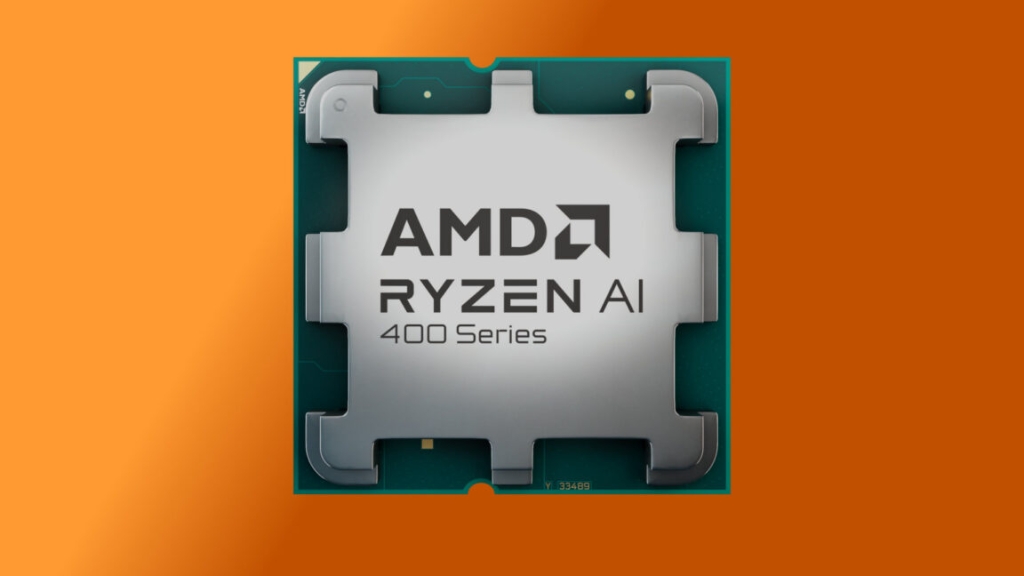
AMD Rethinks Desktop Strategy: Ryzen AI 400 Series Chips Target Business PCs, Not Gaming Rigs
In a surprising strategic pivot that has tech enthusiasts buzzing, AMD has unveiled its new Ryzen AI 400 series desktop processors—a lineup that represents a fundamental shift in how the company approaches the desktop CPU market. The announcement, which came with far less fanfare than typical AMD launches, signals a pragmatic response to today’s challenging PC component landscape.
Business-First Approach in an Era of Component Scarcity
The Ryzen AI 400 series marks AMD’s first dedicated push into the business desktop segment with its Ryzen AI branding. Unlike previous generations where AMD simply repackaged laptop chips for desktop use, this lineup appears carefully calibrated for specific market conditions. The six-chip lineup splits between 65W and 35W TDP variants, explicitly targeting the enterprise desktop market where power efficiency and reliability trump raw gaming performance.
What’s immediately striking is what AMD hasn’t included. None of these processors match the specifications of flagship mobile chips like the Ryzen AI 9 HX 370, which boasts 12 CPU cores and a powerful 16-core Radeon 890M GPU. The desktop variants top out at 8 CPU cores—likely split between high-performance Zen 5 cores and efficiency-focused Zen 5c cores—paired with Radeon 860M integrated graphics featuring 8 RDNA 3.5 graphics cores.
The Economics of Modern PC Building
This conservative approach makes financial sense in today’s market. The frames-per-dollar calculation for desktop iGPU systems has become particularly unfavorable, with RAM prices skyrocketing over the past year. Fast DDR5 memory, essential for maximizing socket AM5 processor performance, has reached record price levels, making budget gaming PC builds increasingly impractical.
AMD’s decision to hold back its most powerful mobile silicon for desktop use reflects this reality. While the company could theoretically release higher-end options later, the current economics of mini gaming PC builds simply don’t justify the investment. Business desktops, with their emphasis on reliability, power efficiency, and integrated graphics, represent a more logical target for these processors.
Technical Architecture: Familiar Foundations
The Ryzen AI 400 series shares most specifications with the Ryzen AI 300 laptop processors, despite the higher series number. This architectural consistency ensures software compatibility and leverages existing optimization work. However, the laptop variants do include slightly faster 55 TOPS NPUs compared to their desktop counterparts, suggesting AMD is reserving its most advanced AI capabilities for mobile applications where battery life and efficiency are paramount.
Industry Context: A Year of Incremental Updates
AMD’s announcement aligns with its broader 2026 strategy, which CEO Lisa Su described as focusing on “predictable innovation” during the company’s recent earnings call. This approach follows a pattern established at CES earlier this year, where AMD primarily announced iterative updates to existing product lines rather than revolutionary new architectures.
This conservative strategy likely reflects multiple industry pressures. Global chip manufacturing capacity remains constrained, with all major players competing for limited TSMC production slots. Component shortages continue affecting the PC supply chain, particularly for RAM and storage solutions. In this environment, incremental improvements may represent the most sustainable path forward for semiconductor companies.
Market Implications and Future Outlook
The Ryzen AI 400 series launch suggests AMD is willing to segment its desktop strategy more aggressively than in previous years. Rather than pushing all its silicon into the high-performance gaming market, the company appears to be establishing distinct product lines for different use cases—business productivity, content creation, and gaming.
For consumers, this means more specialized options but potentially fewer crossover products that serve multiple purposes well. The business-focused nature of these chips doesn’t preclude their use in home office setups or light gaming scenarios, but enthusiasts seeking maximum performance will need to look elsewhere in AMD’s product stack.
Looking Ahead: What This Means for 2026
AMD’s pragmatic approach with the Ryzen AI 400 series may prove prescient if component shortages persist through 2026. By targeting specific market segments with appropriately specced products, the company can maintain market presence while avoiding the pitfalls of overpromising on performance in an environment where supporting components may not be readily available.
The success of this strategy will largely depend on how well AMD can communicate the value proposition of these business-focused chips to its traditional enthusiast audience, many of whom may view the Ryzen AI 400 series as a step backward rather than a strategic pivot.
tags
AMD #RyzenAI400 #DesktopCPUs #BusinessComputing #TechStrategy #ComponentShortages #DDR5Prices #Zen5Architecture #IntegratedGraphics #PCMarket #SemiconductorIndustry #TechNews2026
viral
AMDgoesbusiness #NoGamingRigHere #RAMpricesskyrocket #Zen5vibes #AIintheoffice #Desktoprevolution #Techpragmatism #Businessfirst #Componentcrisis #CPUsurvivalguide #Techadaptation #Marketstrategy
,


Leave a Reply
Want to join the discussion?Feel free to contribute!