
An Open-Source Discord Alternative for the Decentralized Web
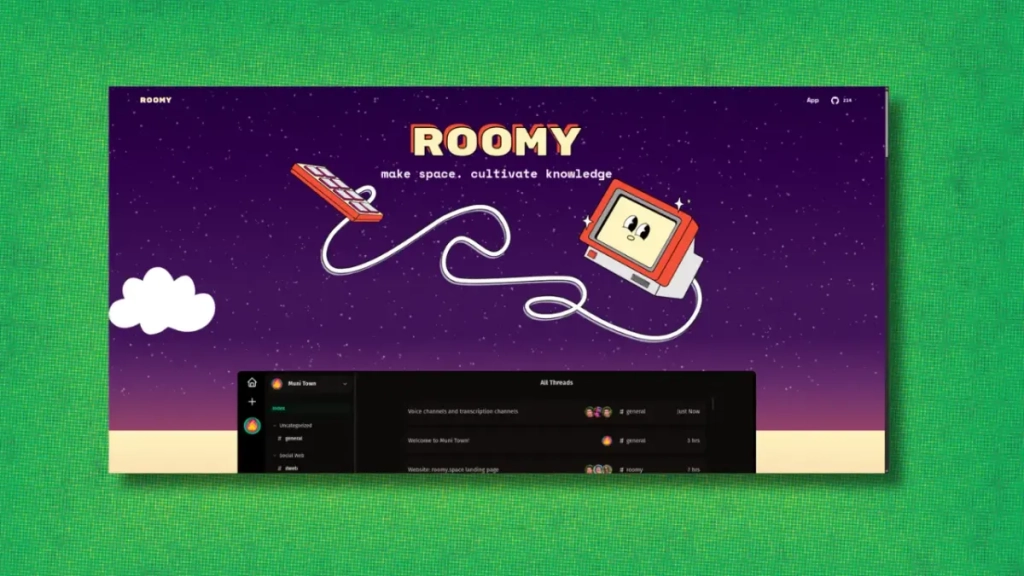
Roomy: The Open-Source Discord Challenger Built on Decentralized Protocols
In the ever-evolving landscape of online communication, a new contender has emerged that promises to shake up the status quo of community chat platforms. Roomy, currently in alpha development, represents a bold attempt to create a Discord alternative that prioritizes user freedom, privacy, and decentralization—all while maintaining the familiar features that have made Discord the go-to platform for communities worldwide.
The Genesis of Roomy: Why Another Chat Platform?
The digital world operates on an unspoken principle: whenever a proprietary platform gains dominance, an open-source alternative inevitably emerges. This pattern isn’t coincidental—it’s a natural response to the fundamental need for digital freedom and autonomy.
Discord has become the de facto standard for online communities, including many open-source projects that paradoxically rely on a closed platform for their day-to-day operations. While third-party clients exist, they can’t overcome the fundamental limitation: Discord remains a closed ecosystem controlled by a single entity.
Roomy enters this space with a clear mission: to provide the Discord experience without the vendor lock-in, using open protocols that ensure user identity remains portable and community data remains under community control.
Understanding Roomy’s Technical Foundation
At its core, Roomy is built on the AT Protocol (ATProto), the same technology that powers Bluesky. This choice isn’t arbitrary—ATProto offers a federated architecture that allows users to maintain their identity across different instances while keeping their data portable.
What makes Roomy particularly interesting is its planned integration with ActivityPub, the protocol behind Mastodon, Pixelfed, and other federated social platforms. This dual-protocol approach means users will eventually be able to sign in with any Fediverse identity, whether that’s from Bluesky, Mastodon, or other compatible platforms.
The Decentralization Advantage
Roomy’s approach to decentralization goes beyond simple federation. The platform stores data on users’ ATProto Personal Data Servers (PDS) while maintaining local browser copies that sync over time. This architecture ensures that community content isn’t locked into a single company’s database—instead, it exists in a decentralized manner where no single location holds the “ultimate data.”
However, this decentralization comes with important caveats. Roomy’s current implementation doesn’t support private data storage through ATProto PDS, and while direct messages are encrypted, this encryption is described as experimental and unaudited. Metadata visibility remains a concern, making Roomy unsuitable for sensitive communications at this stage.
Standout Features: Beyond Simple Chat
Roomy introduces several innovative concepts that distinguish it from being merely a Discord clone:
Content Portability
Perhaps the most intriguing feature is Roomy’s approach to content fluidity. Messages can be converted into threads, threads into channels, and channels into pages. While not all conversions are reversible, this feature represents a fundamental rethinking of how community knowledge evolves over time.
This approach allows communities to transform casual conversations into organized documentation, effectively bridging the gap between real-time chat and persistent knowledge bases.
Protocol-First Identity
By building on open protocols from the ground up, Roomy ensures that user identities remain portable. This means that if a community decides to migrate to a different hosting solution or even a different platform entirely, users can maintain their identity and connections without starting from scratch.
Current State: What Works and What’s Coming
As an alpha-stage project, Roomy demonstrates both promise and limitations. Here’s what’s currently functional:
Working Features:
- Space and channel creation with basic editing capabilities
- Invitation system using Bluesky accounts
- Page conversion for collaborative document spaces
- Thread functionality for organizing conversations
- Media uploads (images and videos in MP4 format)
- Basic moderation through admin roles
Planned Features:
- Robust moderation tools with granular permissions
- Emoji picker implementation
- Enhanced encryption with security audits
- Self-hosting capabilities
- Native desktop and mobile applications
The Privacy Question
Roomy’s approach to privacy reflects the complex trade-offs inherent in decentralized systems. While the platform encrypts direct messages and stores data across multiple locations, the experimental nature of these security measures means users should exercise caution with sensitive information.
The developers are transparent about these limitations, emphasizing that Roomy is currently best suited for general community chat rather than confidential communications.
How to Get Started
For those interested in exploring Roomy, the process is straightforward:
- Visit roomy.space
- Sign in with your Bluesky or ATProto account
- Create or join spaces
- Begin experimenting with the available features
Why Roomy Matters Beyond Being a Discord Alternative
Roomy represents more than just another chat application—it’s a proof of concept for how modern online communities can function on open protocols. If successful, it could demonstrate that:
- Communities can thrive without vendor lock-in
- User identities can remain portable across platforms
- Open protocols can support sophisticated social features
- Decentralization doesn’t require sacrificing user experience
The implications extend beyond chat platforms. A successful Roomy could inspire similar approaches in other areas of digital communication, potentially leading to a more open, user-controlled internet.
Looking Ahead
Roomy’s journey from alpha to production-ready software will likely involve significant evolution. The challenges are substantial: building robust moderation tools, ensuring security through proper audits, creating intuitive user experiences, and convincing communities to migrate from established platforms.
However, the project’s foundation on open protocols provides a solid base for growth. As concerns about data privacy and platform control continue to grow, solutions like Roomy may find increasingly receptive audiences.
The success of Roomy won’t just be measured by its feature set or user count, but by whether it can prove that open, decentralized community platforms can compete with centralized alternatives while offering greater user freedom and control.
In an era where digital autonomy is increasingly valued, Roomy represents an important experiment in reimagining how online communities can organize, communicate, and thrive without sacrificing user freedom to corporate platforms.
Tags: Roomy, Discord alternative, open-source chat, decentralized communication, AT Protocol, ActivityPub, Bluesky, Mastodon, federated social media, community chat, privacy-focused messaging, protocol-based identity, portable content, alpha software, Fediverse integration, digital autonomy, vendor lock-in, community building, encrypted messaging, self-hosting, Tauri app development
Viral Sentences:
- “Roomy proves you don’t need to sacrifice your privacy for community features”
- “The future of online communities doesn’t belong to corporations”
- “Your identity should be portable, not platform-locked”
- “Decentralization doesn’t mean complexity—it means freedom”
- “Roomy is Discord without the surveillance capitalism”
- “Open protocols are the backbone of digital freedom”
- “Why trust your community data to companies that profit from it?”
- “Roomy shows that privacy and features aren’t mutually exclusive”
- “The chat revolution starts with open standards”
- “Your community deserves better than corporate-controlled platforms”
,


Leave a Reply
Want to join the discussion?Feel free to contribute!